 French
  English
  German
  Spanish
  Polish
  Chinese
  Japanese
  Korean
  Russian
 Contenu
Introduction
Silicone products are widely used for baby feeding, pet care, outdoor travel, educational toys, kitchen accessories, and lifestyle products because they are soft, flexible, washable, and highly customizable.
However, brands and buyers sometimes receive samples or mass-produced products that quickly collect dust, fibers, hair, paper particles, or packaging debris.
This problem is especially visible on:
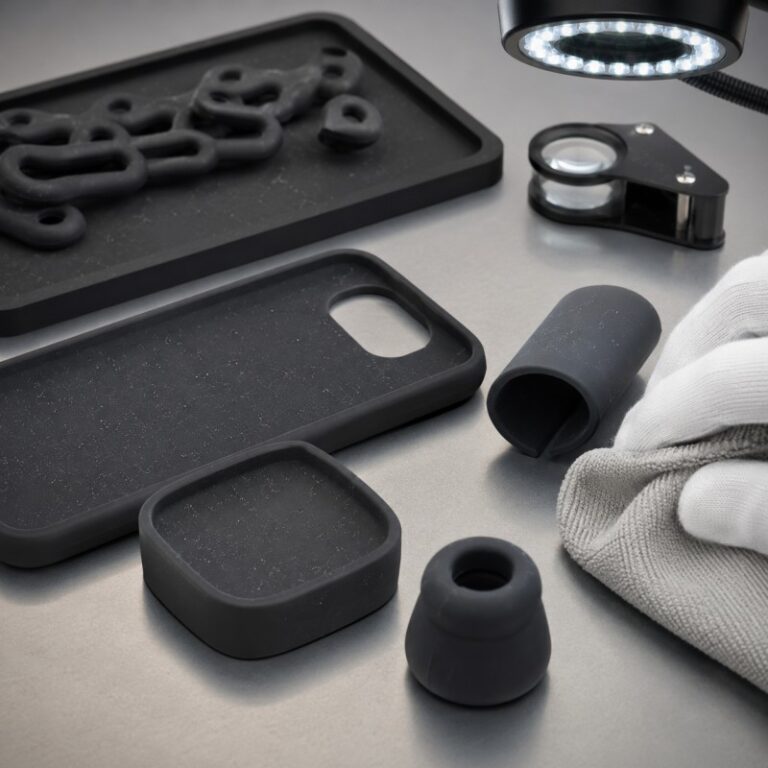
- Black or dark-colored silicone
- Matte silicone surfaces
- Soft silicone products
- Large flat products
- Pet products exposed to hair
- Baby products packed in paper boxes
- Products stored in plastic bags
- Silicone parts handled repeatedly during assembly
- Products photographed under strong lighting
Dust attraction does not automatically mean that the silicone material is unsafe or defective.
The final surface condition can be affected by material formulation, curing, surface texture, friction, static charge, mold release residue, oil contamination, packaging, handling, storage, cleaning, and production environment.
For OEM and private-label projects, the goal should not be an unrealistic promise that silicone will never collect any dust.
The practical goal is to design and manufacture a surface that remains commercially clean, easy to wipe, suitable for the application, and consistent during bulk production.
Answer Excerpt
Silicone products can attract dust when the surface has high friction, slight tackiness, electrostatic charge, rough texture, incomplete curing, processing residue, packaging debris, or contamination from handling and storage.
Soft matte products and dark-colored silicone often make dust more visible, even when the amount of contamination is small.
Reducing dust attraction may require changes to material selection, curing conditions, mold texture, surface finish, product design, cleaning procedures, packaging materials, production environment, and inspection standards.
For baby, pet, food-contact, or skin-contact products, any anti-dust treatment or additive should be evaluated according to the intended market and product requirements before production.
1. Does Silicone Absorb Dust?
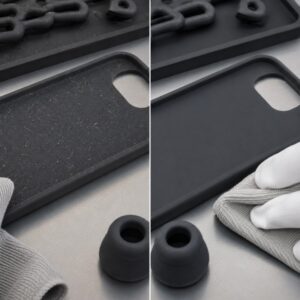
Silicone does not normally absorb dust into the material like a sponge.
Most visible dust remains on the surface.
The particles may include:
- Textile fibers
- Pet hair
- Paper dust
- Carton particles
- Plastic-film particles
- Human hair
- Skin particles
- Mold-cleaning residue
- Workshop dust
- Packaging debris
These particles may remain attached because of surface friction, static electricity, slight tackiness, moisture, oil, or surface texture.
This distinction is important.
A product that collects removable surface dust has a different problem from a product that remains sticky, oily, discolored, or contaminated after cleaning.
Buyers should first determine whether the issue is:
- Normal removable dust
- Excessive surface friction
- Static attraction
- Incomplete curing
- Oil or mold-release residue
- Material contamination
- Packaging transfer
- Surface degradation
The solution depends on the actual cause.
2. Soft Silicone Often Shows More Dust
Soft silicone products can sometimes collect more visible particles than firmer products.
This is not only because of the Shore A hardness number.
The apparent dust attraction may also be affected by:
- Product thickness
- Surface friction
- Surface texture
- Material formulation
- Product flexibility
- Handling pressure
- Packaging contact
- Product shape
A very soft, large, flat silicone mat may have more contact with tables, packaging, clothing, and hands than a small firm silicone component.
When the surface bends or presses against another material, fibers and particles can transfer more easily.
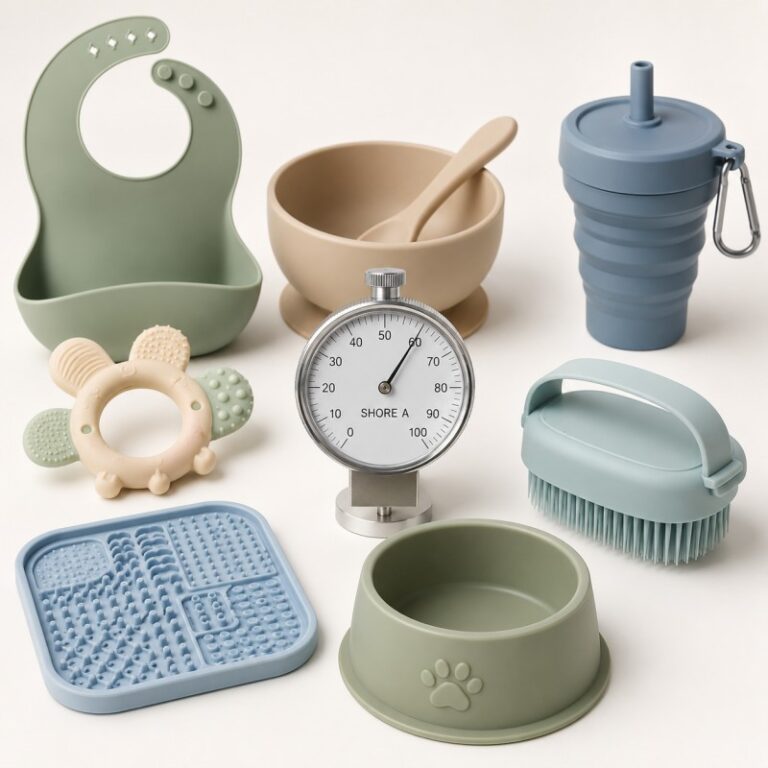
However, selecting harder silicone is not always the correct solution.Buyers should evaluate silicone hardness together with wall thickness, product structure and functional requirements.
Increasing hardness may negatively affect:
- Baby-product comfort
- Pet lick-mat flexibility
- Suction performance
- Folding function
- Grip
- Product recovery
- User experience
Hardness, structure, surface finish, and intended function must be evaluated together.
3. Matte Surfaces Can Make Dust More Noticeable
Matte finishes are popular for modern baby, pet, outdoor, and lifestyle products because they create a soft and premium appearance.
But matte surfaces contain fine microscopic texture.
Depending on the texture depth and geometry, particles may become more visible or more difficult to wipe away than on a highly polished surface.
Matte silicone may also scatter light, making small fibers more noticeable under photography or retail lighting.
The result depends on:
- Texture depth
- Texture spacing
- Mold condition
- Product color
- Silicone hardness
- Cleaning method
- Dust type
- Inspection lighting
A fine matte finish may provide a good balance between appearance and cleaning.
A very deep or coarse texture may improve grip but also create more places where particles can remain.
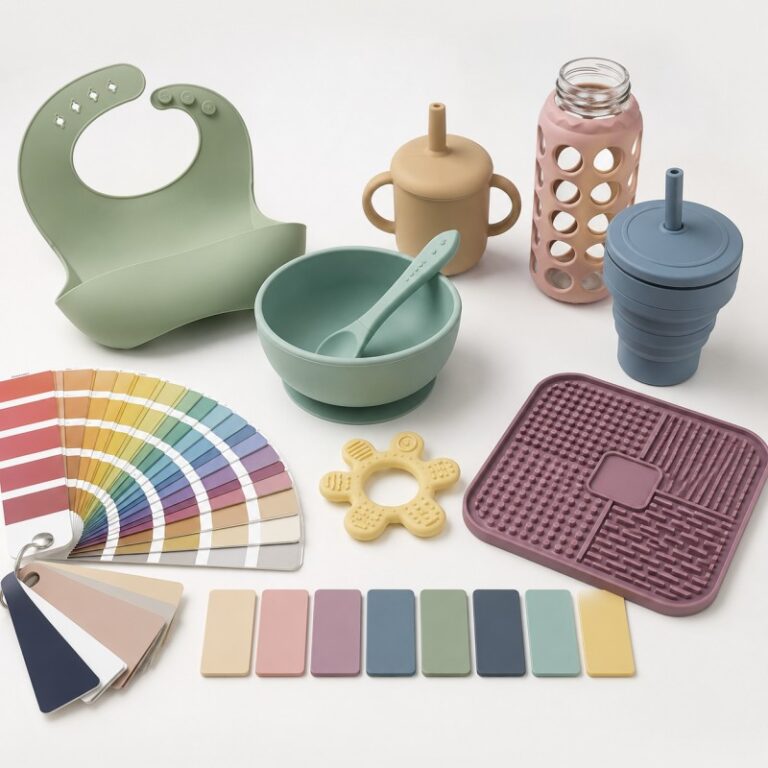
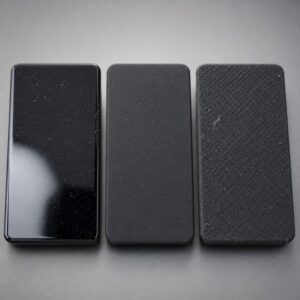
Surface texture should therefore be selected according to the product’s use, not only according to visual preference.Brands can compare matte, glossy and textured silicone surface finishes before confirming the mold specification.
4. Glossy Silicone Is Not Automatically Dust-Free
A polished silicone surface is usually easier to wipe than a deeply textured surface.
However, glossy silicone can still show:
- Fingerprints
- Oil marks
- Water spots
- Scratches
- Static-attracted fibers
- Packaging contact marks
- Uneven gloss
On dark colors, these marks may be very visible.
A glossy surface may also feel more adhesive against glass, plastic film, or another silicone product because the contact area is greater.
The correct choice is not always “matte” or “glossy.”
Brands should evaluate:
- Product function
- Desired appearance
- Grip requirement
- Cleaning method
- Packaging material
- Photography conditions
- Target user
- Surface-contact area
For some products, a combination is more practical—for example, a matte outer gripping surface and a smoother inner food-contact surface.
5. Incomplete Curing Can Create Surface Tackiness
A correctly cured silicone product should not have persistent wet or glue-like stickiness.Persistent odor or a sticky silicone surface should be investigated separately from normal removable dust.
If a product remains unusually tacky after molding, possible causes may include:
- Incorrect material ratio
- Insufficient curing time
- Unstable mold temperature
- Improper material mixing
- Contamination
- Incompatible additive
- Excess processing residue
- Inappropriate storage
- Material formulation problems
A tacky surface can collect dust quickly and may remain difficult to clean.
This is different from normal silicone friction.
A product can feel slightly high-friction without being chemically under-cured.
When investigating the issue, buyers should check:
- Whether the surface leaves residue
- Whether stickiness remains after washing
- Whether the product has an abnormal odor
- Whether the problem affects every sample
- Whether one mold cavity is different
- Whether the surface changes over time
- Whether the material batch is consistent
Persistent tackiness should be investigated before mass-production approval.
6. Mold-Release and Processing Residue Can Attract Particles
Depending on the product, mold design, and manufacturing process, processing residue may remain on the surface.
Possible contamination sources include:
- Mold-release agents
- Machine oil
- Mold-cleaning chemicals
- Operator gloves
- Assembly lubricants
- Dust from trimming
- Worktable contamination
- Packaging equipment
- Previous production materials
Even a very thin residue can change how the surface feels and how easily particles attach.
For baby, pet, food-contact, and skin-contact products, manufacturers should avoid casually applying surface chemicals without evaluating their suitability.
Good mold design and stable demolding should reduce unnecessary dependence on external release agents.
Cleaning and handling procedures should also be defined before packaging.
7. Electrostatic Charge Can Attract Light Fibers
Flexible products may develop electrostatic charge during:
- Demolding
- Trimming
- Conveying
- Rubbing
- Bagging
- Stacking
- Transportation
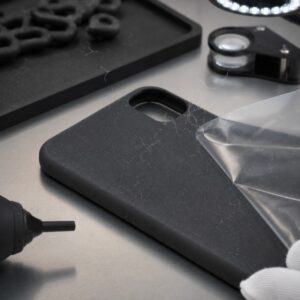
- Removing protective film
- Contact with synthetic fabrics
Light particles can then be attracted to the product surface.
This may be more noticeable in dry production or storage environments.
Electrostatic-related dust may appear suddenly after packaging or handling, even when the product looked clean immediately after molding.
Possible production controls include:
- Cleaner handling areas
- Reduced unnecessary rubbing
- Suitable humidity control
- Anti-static production equipment where appropriate
- Ionizing air equipment
- Clean packaging procedures
- Reduced open exposure time
- Immediate clean packaging after inspection
Any anti-static additive or surface treatment should be evaluated carefully according to the product application and target-market requirements.
8. Dark Colors Make Small Particles Highly Visible
Black, navy, dark gray, dark green, and dark red silicone can show light-colored fibers very clearly.
A similar amount of dust may be almost invisible on beige, cream, light gray, or pastel colors.
This creates an important quality-control issue:
The product may not physically attract more dust, but the contamination appears more serious because of stronger visual contrast.
Brands should consider this when selecting colors for:
- Pet-hair environments
- Baby feeding products
- Travel products
- Retail photography
- Matte products
- Large flat silicone mats
Dark colors may still be appropriate, but the cleaning, packaging, and inspection standards may need to be stricter.
Inspection should use consistent lighting and a defined viewing distance.
Otherwise, one inspector may accept a product that another inspector rejects.
9. Large Flat Products Have More Contact Area
Products such as silicone bibs, pet lick mats, feeding mats, placemats, baking mats, and large educational toys have broad surface areas.
This means they contact more:
- Tables
- Trays
- Cartons
- Plastic bags
- Operators’ gloves
- Other silicone products
- Shipping inserts
Large surfaces also make individual particles easier to notice.
During production, these products should not be placed directly on dusty cardboard, fabric, unfinished wood, or contaminated work surfaces.
Stacking methods should also be reviewed.
When two silicone products press against each other, friction can:
- Generate static
- Transfer particles
- Leave contact marks
- Create temporary deformation
- Make separation difficult
Protective sheets or suitable packaging separators may be required.
10. Deep Textures and Narrow Grooves Are Harder to Clean
Texture adds product function.
Examples include:
- Lick-mat feeding patterns
- Baby teether massage textures
- Non-slip ribs
- Educational toy details
- Decorative logos
- Surface grip patterns
- Pet grooming bristles
However, deep and narrow structures can trap fibers and particles.
During product design, buyers should evaluate:
- Texture depth
- Groove width
- Corner radius
- Cleaning accessibility
- Drainage
- Brush access
- Product flexibility
- Demolding direction
A pattern that looks detailed in a rendering may become difficult to clean in actual use.
For food-contact or pet-feeding products, cleaning accessibility should be reviewed before tooling.
11. Pet Products Face a Higher Hair-Exposure Environment
Pet products are frequently exposed to:
- Dog or cat hair
- Carpet fibers
- Blanket fibers
- Dust from floors
- Food particles
- Outdoor dirt
- Grooming residue
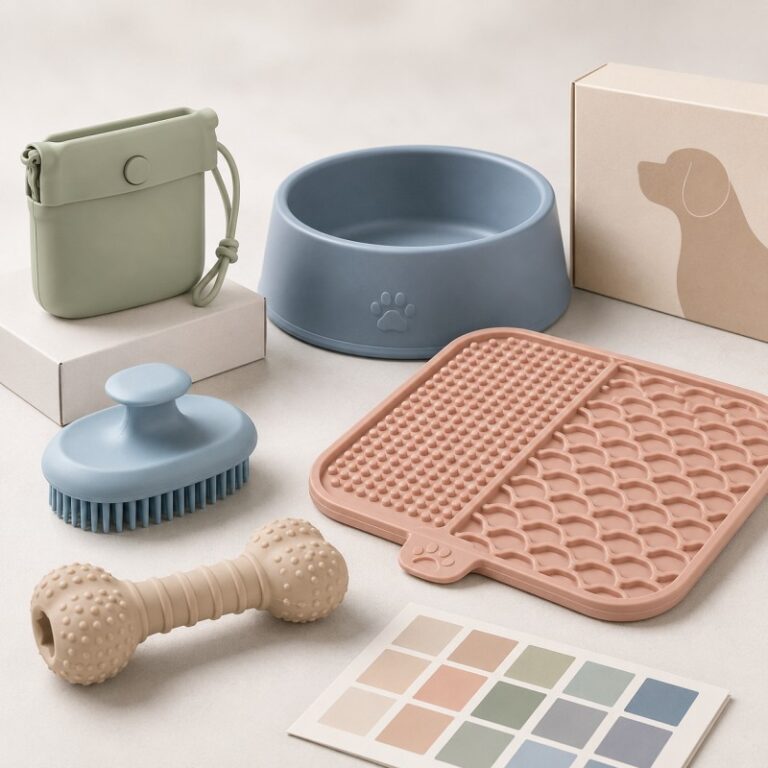
Products such as silicone lick mats, bowls, treat pouches, bath brushes, and travel accessories may therefore collect visible particles during normal use.
Brands should not evaluate pet products under the same conditions as products used only in clean kitchens.
Important design considerations include:
- Easy-rinse surfaces
- Rounded grooves
- Reasonable texture depth
- Suitable hanging or storage holes
- Quick-drying structures
- Packaging that does not add fibers
- Clear cleaning instructions
A product that can be cleaned easily often provides a better customer experience than one promoted with an absolute “dust-proof” claim.
12. Baby Products Require Clean Handling and Packaging
Baby products often use soft matte surfaces and pastel colors.
Common examples include:
- Silicone bibs
- Dentition en silicone pour bébé
- Feeding bowls
- Spoons
- Pacifier cases
- Straw cups
- Bath toys
- Sensory toys
During production, these products may pass through molding, trimming, inspection, assembly, logo processing, and packaging.
Every additional handling stage increases the possibility of:
- Hair contamination
- Fiber contamination
- Fingerprints
- Carton dust
- Packaging residue
- Worktable particles
For baby products, surface cleanliness should be controlled from molding through final packaging.
A clean product placed in a dusty paper box without protection may appear contaminated when the customer opens it.
Packaging design is therefore part of product quality, not only marketing.
13. Paper Packaging Can Transfer Fibers
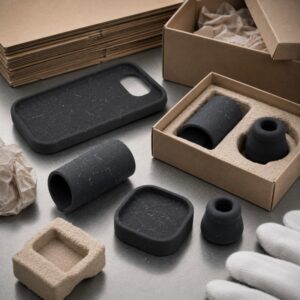
Paper boxes, kraft inserts, tissue paper, instruction cards, and cardboard dividers can release small fibers.
These fibers may attach to soft or static silicone surfaces during transportation.
This is particularly noticeable when:
- The product is dark
- The silicone is matte
- The product moves inside the box
- The paper surface is rough
- Shipping vibration is high
- There is no protective bag or insert
- Products are compressed against printed paper
Packaging trials should use actual production materials.
A digital packaging drawing cannot show whether paper fibers, ink, coatings, or friction will affect the silicone surface.
Possible solutions may include:
- Cleaner paper grades
- Suitable internal bags
- Smooth protective inserts
- Reduced product movement
- Separate product compartments
- Clean final assembly areas
- Surface inspection after packaging trials
14. Plastic Bags Can Also Cause Surface Problems
A plastic bag can protect silicone from external dust, but incorrect bag material or packing conditions may create other issues.
Possible problems include:
- Static generation
- Bag-film particles
- Surface marks
- Product sticking to the bag
- Deformation from tight packing
- Trapped odor
- Moisture condensation
- Ink transfer from printed film
The bag should be evaluated for:
- Material cleanliness
- Film thickness
- Bag size
- Seal method
- Printing position
- Conditions de stockage
- Product contact area
Products should not be forced into bags that are too small.
Excess compression may deform suction cups, rims, pockets, bristles, or folding structures.
15. Post-Molding Cleaning Must Be Controlled
Some products may require surface cleaning before final packaging.
The cleaning method should be selected according to the silicone grade, product use, and target requirements.
The process should define:
- Cleaning agent
- Water quality
- Rinsing method
- Drying method
- Drying time
- Handling gloves
- Clean storage
- Inspection
- Packaging time
Poor drying can create water spots or allow particles to attach to a damp surface.
Aggressive wiping may generate static or transfer fibers from cloths.
Reusable cleaning cloths can also become a contamination source if not managed correctly.
The cleaning procedure should be validated rather than improvised during mass production.
16. How to Evaluate an Anti-Dust Surface Sample
Buyers should not judge anti-dust performance only by touching one sample briefly.
A practical evaluation can include:
- Inspecting the product immediately after unpacking.
- Checking the surface under agreed lighting.
- Wiping the surface with the intended cleaning method.
- Placing the product on a clean reference surface.
- Exposing it to normal handling conditions.
- Checking particle adhesion after a defined period.
- Comparing matte, glossy, and textured samples.
- Evaluating dark and light colors.
- Testing the final packaging.
- Reviewing how easily particles can be removed.
The test should reflect real use.
A baby bib, pet lick mat, collapsible cup, and silicone toy do not need exactly the same acceptance standard.
17. Define a Realistic Surface Cleanliness Standard
Statements such as “must never attract dust” are difficult to manufacture and inspect.
A better specification should define:
- Product color
- Surface texture
- Inspection lighting
- Viewing distance
- Inspection time
- Acceptable particle size
- Acceptable particle quantity
- Cleaning method
- Packaging condition
- Reference sample
- Critical surface areas
- Non-critical hidden areas
For example, a visible front retail surface may require a stricter standard than an internal bottom surface.
The buyer and manufacturer should agree on the inspection method before bulk production.
This reduces disputes based on subjective photographs or different lighting environments.
18. A Practical Dust-Attraction Failure Analysis
When products collect excessive dust, investigate the issue systematically.
Recommended sequence:
- Compare the affected batch with the approved sample.
- Confirm the silicone material and hardness.
- Check whether the surface is genuinely tacky.
- Review curing temperature and cycle time.
- Inspect for oil or mold-release residue.
- Compare different mold cavities.
- Check surface texture and mold maintenance.
- Review trimming and handling procedures.
- Evaluate static generation.
- Inspect the production and packaging environment.
- Compare different packaging materials.
- Check storage temperature and humidity.
- Test whether particles are easy to remove.
- Separate material, process, packaging, and environmental causes.
Do not change material, texture, packaging, and curing conditions simultaneously.
Changing one controlled variable at a time makes it easier to confirm the root cause.
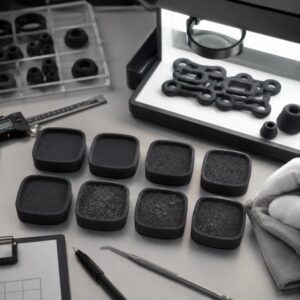
How LYA Silicone Supports Surface Quality Control
LYA Silicone supports OEM and ODM development for custom silicone baby, pet, outdoor, educational, household, and lifestyle products.
Our project support can include:
- Product and application review
- Silicone material selection
- Hardness evaluation
- Matte, glossy, and textured surface development
- Mold design
- Molded sample production
- Surface-cleanliness review
- Color matching
- Product-structure optimization
- Packaging coordination
- Pilot production
- Appearance inspection
- Batch quality control
- OEM/ODM mass production
With more than 25 years of silicone manufacturing experience, we help buyers evaluate dust attraction together with material, hardness, surface texture, curing, product structure, handling, packaging, and final inspection.
For baby, pet, food-contact, or skin-contact applications, the complete product and target-market requirements should be reviewed before selecting surface additives or post-treatment methods.
What Information Should Buyers Provide?
For a custom silicone surface project, buyers should provide:
- Product drawing or reference sample
- Product application
- Target user
- Silicone material requirement
- Hardness preference
- Product color
- Matte, glossy, or textured finish
- Wall thickness
- Product dimensions
- Cleaning method
- Packaging concept
- Retail-display conditions
- Target market
- Surface acceptance standard
- Estimated quantity
- Known dust or tackiness problem
Photos or videos should show the product under normal lighting and explain whether the particles can be removed by rinsing or wiping.
Frequently Asked Questions
Does dust attraction mean the silicone is low quality?
Not always. Silicone surfaces can collect removable particles because of friction, texture, static, packaging, or the use environment. Persistent stickiness, oil, abnormal odor, or residue requires further investigation.
Is matte silicone more likely to collect dust?
Matte texture can make particles more visible or harder to wipe if the texture is deep. The result depends on texture design, color, hardness, environment, and cleaning method.
Can harder silicone solve dust attraction?
Not necessarily. Hardness may influence surface behavior, but curing, formulation, texture, static, residue, handling, and packaging may be more important.
Can silicone be made completely dust-proof?
It is more realistic to reduce dust attraction and improve cleanability than to promise that a flexible silicone product will never collect any particle.
Why does black silicone look dirtier than light silicone?
Light-colored fibers create stronger contrast on black or dark silicone. The product may not physically attract more dust, but the particles are easier to see.
Can anti-static additives be used in baby or food-contact products?
Any additive or surface treatment should be evaluated according to the intended use, target market, material system, and applicable testing requirements before production.
Why is the sample clean but the mass-production batch dusty?
The difference may come from production exposure, trimming, operator handling, static, carton fibers, plastic bags, longer storage, or packaging conditions.
Conclusion
Silicone products may attract visible dust because of surface friction, static charge, texture, incomplete curing, residue, handling, packaging, or environmental exposure.
The issue should not be treated as one universal material defect.
For baby bibs, teethers, pet lick mats, travel cups, toys, and other custom silicone products, the correct solution depends on product function, hardness, color, surface finish, cleaning requirements, packaging, and target-market conditions.
The most reliable approach is to evaluate molded samples, test the final packaging, define a realistic surface-cleanliness standard, and control curing, handling, cleaning, and packaging during mass production.
If you are developing a custom silicone product or investigating excessive dust attraction, contact LYA Silicone and send us your drawing, sample, material requirement, hardness, color, surface finish, packaging concept, defect photos, target market, and estimated quantity. Our team will review the project and provide an appropriate OEM or ODM manufacturing proposal.