 Korean
  English
  French
  German
  Spanish
  Polish
  Chinese
  Japanese
  Russian
 콘텐츠
Answer Excerpt
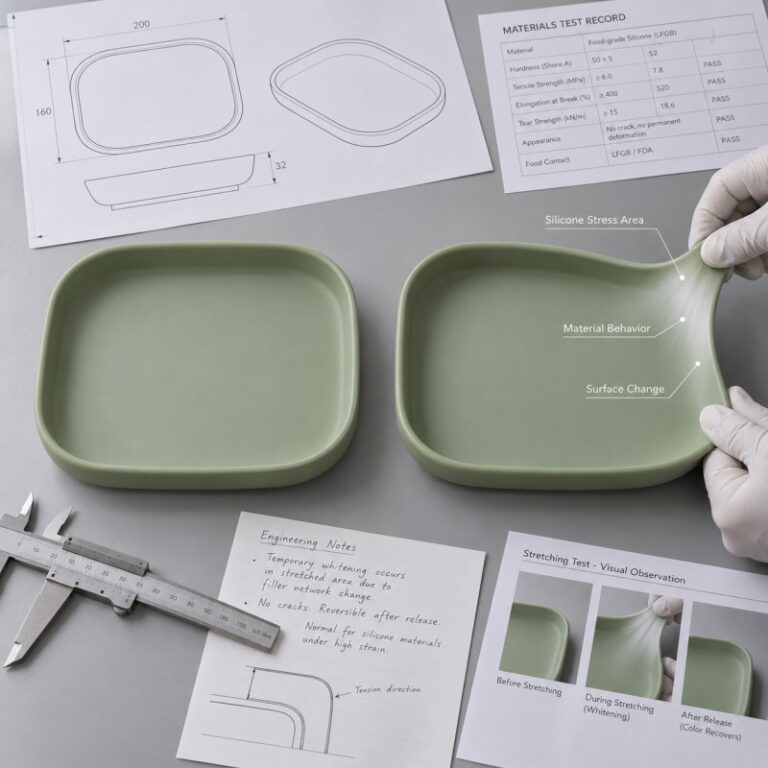
실리콘 제품 may develop temporary or permanent white marks after stretching, bending or repeated deformation. This phenomenon is related to silicone material properties, filler distribution, molding conditions, surface stress and product structure.
For OEM silicone brands, understanding the causes of whitening helps improve product appearance, durability and production consistency before mass manufacturing.
Why Does Silicone Turn White When It Is Stretched?
Many silicone products are designed to be flexible.
Examples include:
- 실리콘 유아용 제품
- 실리콘 반려동물 제품
- Silicone outdoor accessories
- Silicone educational toys
During daily use, these products may experience:
- Stretching
- Folding
- Bending
- Compression
Some customers notice that the silicone surface becomes lighter or develops white lines after deformation.
This does not always mean the product is damaged.
However, excessive whitening may indicate problems related to:
- Material formulation
- Product thickness
- Stress concentration
- Manufacturing control
What Causes White Marks on Silicone Products?
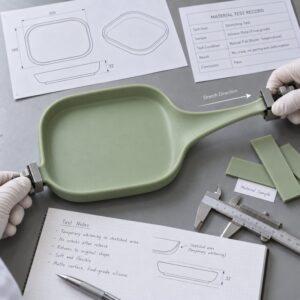
Silicone whitening usually happens because the internal structure changes when the material is stretched.
The main factors include:
- Silicone material characteristics
- Stress distribution
- Surface condition
- Manufacturing process
- Product design
A silicone product is not only judged by softness.
It must also maintain:
- Appearance
- Elastic recovery
- Surface quality
- Long-term durability
How Does Silicone Material Affect Whitening?
Silicone rubber contains silicone polymer and other components that influence:
- Elasticity
- Transparency
- Strength
- Surface appearance
Different silicone formulations can behave differently during deformation.
A properly selected silicone material should balance:
- Flexibility
- Tear resistance
- Recovery ability
- Appearance stability
For OEM products, choosing silicone only based on hardness is usually not enough.
The material should match the actual application.
Does Softer Silicone Cause More White Marks?
Not necessarily.
Soft silicone usually provides:
- Better flexibility
- Softer touch
- Easier deformation
However, if the structure requires frequent stretching, excessive softness may increase visible deformation.
A harder silicone material may reduce surface movement, but it may also affect:
- Product feeling
- User experience
- Flexibility
The best choice depends on:
- Product shape
- Usage frequency
- Expected deformation
- Customer requirements
How Does Product Thickness Influence Silicone Whitening?
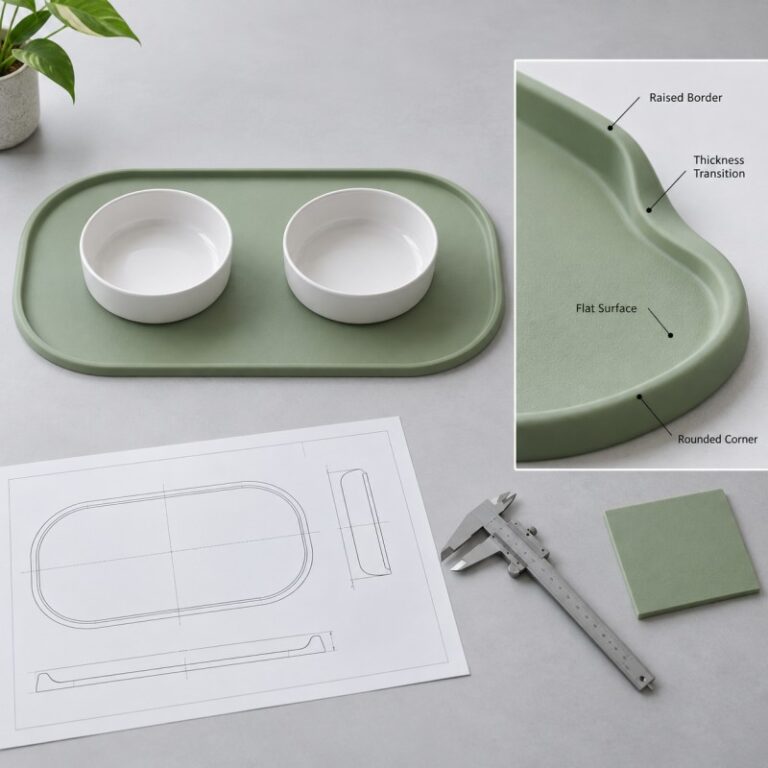
Thickness distribution is an important factor.
Areas with:
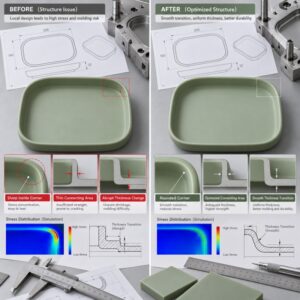
- Sharp thickness changes
- Thin edges
- Small corners
- Narrow connection points
may experience higher stress concentration.
For example:
A silicone toy with thin connecting sections may show whitening earlier than a product with smoother transitions.
A well-designed structure distributes stress more evenly.
Why Do Silicone Toys Show White Lines More Easily?
Silicone educational toys and baby products often include:
- Stretching features
- Soft structures
- Thin connecting areas
During use, children may repeatedly:
- Pull
- Twist
- Press
These actions create repeated deformation.
Good design should consider:
- Stretch direction
- Material thickness
- Rounded transitions
- Stress areas
before mold development.
Can Mold Design Affect Silicone Surface Whitening?
Yes.
The molding process influences the final silicone structure.
Important factors include:
- Mold surface condition
- Material filling
- Temperature control
- Pressure control
- Curing conditions
Poor process stability may create:
- Uneven material structure
- Surface variation
- Different elasticity between areas
For custom silicone products, stable production conditions are important for appearance consistency.
How Does Surface Texture Affect White Marks?
Surface texture changes how light reflects from silicone.
Different finishes may show deformation differently.
For example:
Smooth surfaces:
- Show color changes more clearly
Textured surfaces:
- May hide minor marks
However, deep textures may affect:
- Cleaning
- Appearance
- Manufacturing difficulty
Surface design should consider both visual requirements and practical usage.
Why Do Some Silicone Products Recover After Stretching?
Silicone has excellent elasticity.
After releasing external force, many products can return to their original shape.
Temporary whitening may disappear after recovery.
This depends on:
- Material quality
- Deformation level
- Product structure
- Production consistency
However, permanent whitening may indicate excessive stress or material limitations.
How Should OEM Brands Test Silicone Appearance?
Before mass production, brands should evaluate:
Stretch Test
Apply controlled stretching and observe:
- Color change
- Surface marks
- Recovery ability
Compression Test
Check whether repeated pressing causes:
- Permanent deformation
- Surface change
Bending Test
Evaluate flexible areas such as:
- Handles
- Thin sections
- Connecting structures
Appearance Inspection
Check:
- Color consistency
- Surface defects
- Texture uniformity
How Can Silicone Whitening Problems Be Reduced?
Solutions include:
Optimize Material Selection
Choose silicone according to:
- Product function
- Flexibility requirement
- Durability expectation
Improve Product Structure
Avoid:
- Sudden thickness changes
- Sharp corners
- Excessive thin areas
Improve Mold Design
Review:
- Filling balance
- Surface finish
- Mold precision
Control Production Parameters
Maintain consistency in:
- Temperature
- Pressure
- Curing time
Example: Custom Silicone Baby Product Development
A silicone baby feeding product may include:
- Soft body structure
- Flexible handle
- Rounded edges
If the handle area is too thin, repeated pulling may create visible whitening.
By adjusting:
- Thickness
- Radius transition
- Material hardness
the product can maintain better appearance during daily use.
The goal is not simply making silicone softer.
The goal is creating a balanced structure.
What Should Brands Confirm Before Mass Production?
Before production, OEM buyers should confirm:
- Silicone material type
- Hardness requirement
- Color standard
- Product thickness
- Stress areas
- Stretching conditions
- Surface requirements
- Inspection standard
Clear communication before tooling helps avoid expensive modifications later.
How LYA Silicone Supports Custom Silicone Product Development
LYA Silicone provides OEM and ODM support for:
- 실리콘 유아용 제품
- 실리콘 반려동물 제품
- Silicone outdoor products
- Silicone educational products
The development process includes:
- Product discussion
- Design review
- Mold development
- Sample confirmation
- 프로덕션
- Quality inspection
By considering material, structure and manufacturing together, brands can develop silicone products with stable appearance and reliable performance.
Frequently Asked Questions
Is silicone whitening after stretching normal?
Temporary whitening can occur because silicone changes under stress. Permanent marks require further evaluation.
Can silicone whitening be completely avoided?
The risk can be reduced through proper material selection, design optimization and production control.
Does silicone hardness determine whitening?
Hardness affects behavior, but it is only one factor. Structure and material formulation are also important.
Are white marks a sign of poor silicone quality?
Not always. The cause depends on material, stress level and product design.
Develop Silicone Products With Stable Appearance
Silicone products need more than attractive designs.
Successful OEM development requires coordination between:
- Material selection
- Product structure
- Mold design
- Manufacturing control
- Quality inspection
For custom silicone product projects, LYA Silicone helps brands transform ideas into stable mass-produced products.
문의하기 to discuss your silicone product development requirements.