 French
 English
 German
 Spanish
 Polish
 Chinese
 Japanese
 Korean
 Russian
Contenu
Answer Excerpt
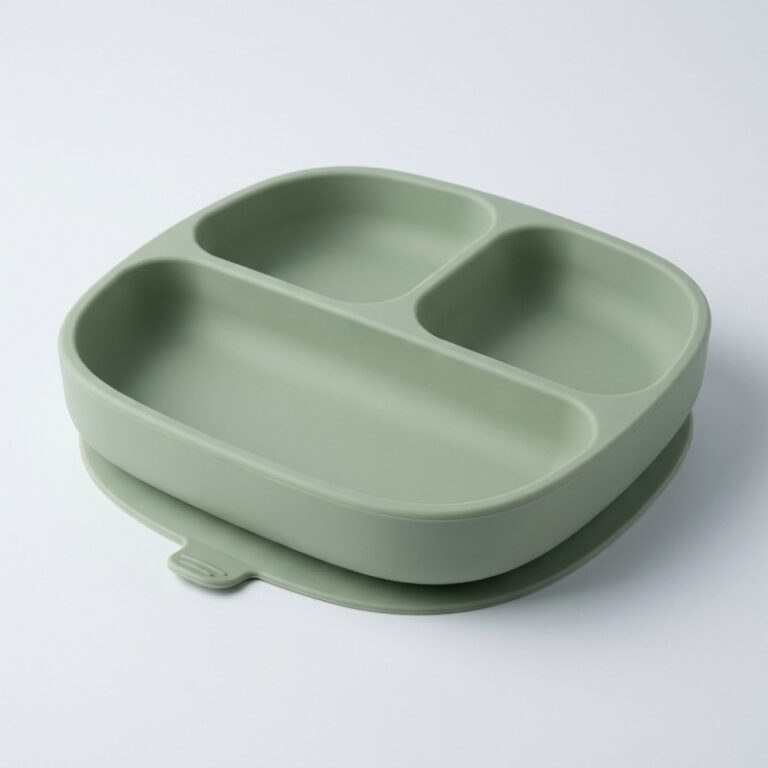
A silicone baby suction plate release tab may tear during removal when pulling stress concentrates at the tab root, the transition between the tab and suction base is too abrupt, or the material and geometry are not properly matched. OEM buyers should evaluate tab width, root thickness, edge radius, base flexibility, molding quality, and repeated-removal performance on the intended supporting surface before approving mass production.
Why Does a Silicone Suction Plate Need a Release Tab?
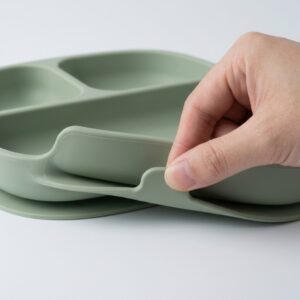
A suction plate uses a flexible silicone base to help hold the plate against a suitable smooth supporting surface. When an adult needs to remove the plate, a release tab provides a place to lift the edge of the suction base and allow air to enter beneath the sealing rim.
Without a practical release feature, users may try to pull the plate body upward, bend the rim, or use an uneven lifting motion. This can make removal inconvenient and place unnecessary stress on the product.
For a brand developing a custom silicone baby suction plate, the release tab is therefore more than a small decorative extension. It is a functional part of the suction-base structure.
A good design needs to balance two requirements:
- The tab should be accessible enough for an adult to release the suction base intentionally.
- The tab and its connection to the base should withstand the agreed removal procedure without unacceptable tearing or permanent deformation.
The exact design depends on the plate size, suction-base geometry, silicone material, wall thickness, and intended supporting surface. No single tab dimension or hardness value is suitable for every product.
What Causes a Silicone Suction Plate Release Tab to Tear?
1. Pulling Stress Concentrates at the Tab Root
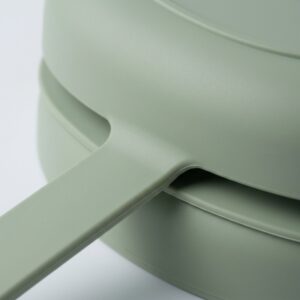
The tab root is the transition area where the projecting tab joins the suction base. When an adult pulls the tab, the force is transferred through this relatively small connection area.
If the root is narrow, thin, or sharply connected to the base, local deformation may become concentrated at the transition. Repeated pulling can then create a tear or visible damage in that area.
The design should distribute the pulling load through a sufficiently gradual transition rather than rely on a thin projecting feature attached to a broad base.
2. The Root Transition Is Too Sharp
A sharp internal corner can create a local stress concentration. This is particularly relevant when a flexible tab is repeatedly bent away from the suction base.
A rounded transition can help distribute deformation over a larger area. The required radius should be evaluated according to the product geometry, available space, mold structure, and intended removal motion.
Simply adding a larger radius everywhere is not always practical. The design must also preserve the sealing area and avoid making the tab difficult to grip.
3. The Tab Is Too Narrow or Difficult to Grip
If the tab is too narrow, an adult may need to pinch it tightly or pull from one small point. This can produce an uneven load across the root.
A wider tab may provide a more practical grip area, but increasing the width also changes the available space around the suction base and may affect the product appearance.
The tab should be evaluated using the actual removal motion. A feature that looks large enough in a CAD model may still be difficult to grip after molding.
4. The Tab Is Too Thin for the Intended Flexing Motion
A thin tab may bend easily, but excessive local flexing can increase deformation at the root.
On the other hand, making the tab much thicker may make it too stiff to lift comfortably. It may also transfer more of the applied force into the root instead of allowing the tab to flex in a controlled way.
Tab thickness, root geometry, silicone hardness, and base flexibility should therefore be reviewed together.
5. Silicone Hardness and Product Geometry Are Not Matched
Material hardness affects how the tab bends and how the suction base responds during removal.
If the tab is too stiff for its geometry, an adult may need more force to lift it. If it is too soft, it may stretch excessively or feel difficult to control.
The appropriate hardness cannot be selected from the tab alone. The plate body, suction chamber, sealing rim, and tab may have different functional requirements even when they are molded as one piece.
For a broader explanation of how silicone dimensions and material behavior affect inspection, see the silicone product dimensional tolerance guide.
6. Molding Defects Create a Weak Starting Point
A release tab can also be damaged by manufacturing issues rather than by the original design alone.
Potential areas to inspect include:
- Incomplete filling around a thin tab root
- Excessive or uneven flash along the tab edge
- Surface damage from trimming
- Local material inconsistency
- Visible cuts, nicks, or rough edges
- Deformation caused by demolding
These are possible inspection findings, not assumptions about every sample. The actual cause should be confirmed by examining the damaged area and comparing it with the approved drawing and production sample.
How Should the Release Tab Be Designed?
1. Give the Tab Root a Controlled Transition
The connection between the tab and suction base should avoid an unnecessarily abrupt change in section.
During design review, evaluate:
- Root width
- Root thickness
- Transition radius
- Tab projection length
- Distance from the sealing rim
- Available space beneath the plate
The goal is to distribute the removal load without interfering with the suction chamber or sealing surface.
2. Balance Grip Area with the Suction Base
The tab should be accessible to an adult but should not become an unintended lifting point during normal feeding.
Its position should be reviewed relative to the plate edge, suction-base perimeter, and expected hand approach. The tab should also remain clear of the surface when the plate is installed.
The final position needs to be confirmed using the actual product geometry and intended supporting surface.
3. Coordinate Tab Flexibility with Base Flexibility
The release tab and suction base work as one functional structure. If the base is very flexible but the tab root is comparatively stiff, deformation may concentrate at the connection.
If both areas are excessively soft, the tab may stretch rather than create a controlled opening beneath the sealing rim.
The material and wall thickness should be selected with the intended removal motion in mind. A sample should be used to confirm the result rather than relying on hardness alone.
4. Protect the Sealing Rim
The release tab must help open the seal when intentionally lifted, but its geometry should not damage the sealing rim or prevent the base from returning to its intended shape.
The tab should not create a permanent gap, local distortion, or unwanted contact point when the plate is pressed onto the supporting surface.
The suction base and sealing rim should be reviewed as a complete system. Buyers can compare the design principles with our silicone baby suction bowl design guide.
5. Review the Mold and Parting-Line Position
The mold design should allow the tab root and edges to be formed consistently.
The manufacturer should review the parting line, flash location, venting, demolding direction, and any local undercut around the tab. A parting line or trimming area placed directly across a high-flex region may create an appearance or functional concern.
The product drawing should identify the tab as a functional feature and show its critical dimensions and acceptable edge condition.
How Should OEM Buyers Test Release Tab Durability?
A release tab should not be approved only because it looks intact on a new sample. The sample should be evaluated using a repeatable removal procedure.
Step 1: Confirm the Reference Sample and Surface
Record the sample revision, material specification, hardness requirement, suction-base structure, and approved supporting surface.
A suction plate that works on smooth glass may behave differently on a textured, curved, scratched, or porous high-chair tray. The intended surface should be agreed before testing.
Step 2: Standardize the Removal Method
Define how the adult should grip and lift the tab. Use a consistent direction and a controlled removal motion.
Avoid comparing samples when one is pulled from the tab tip and another is lifted from the side of the base. Different loading directions can produce different stress patterns.
Step 3: Inspect the Tab Before and After Removal
Check the following areas:
- Tab tip and gripping edge
- Tab root and transition radius
- Upper and lower surfaces
- Connection to the suction base
- Nearby sealing rim
- Any visible flash, cut, or surface defect
Record visible tearing, whitening, permanent stretching, surface damage, or changes in the tab shape.
Step 4: Agree on the Repetition Requirement
If the product is expected to be removed repeatedly, define the required number of removal cycles and the inspection intervals before testing.
There is no universal cycle count that can be applied to every silicone baby suction plate. The acceptance requirement should be set according to the product design, intended use, buyer specification, and applicable test plan.
Step 5: Recheck Suction Function After Removal Testing
After the agreed removal sequence, reinstall the plate on the approved test surface.
Check whether the suction base returns to its intended shape and whether the sealing rim can make contact with the surface as expected.
A tab that remains intact but causes the base to deform permanently should not automatically be considered acceptable.
Step 6: Confirm Production-Representative Samples
The approved sample should represent the intended production material, tooling, geometry, color, and finishing process.
After any design or mold adjustment, repeat the relevant functional checks. The approved drawing, sample, inspection method, and acceptance criteria should refer to the same revision.
What Should Buyers Include in a Release Tab Design Brief?
A clear brief helps the manufacturer evaluate the structure before tooling or sample revisions.
| Project item | Information to provide |
|---|---|
| Plate geometry | Overall dimensions, shape, and compartment layout |
| Suction base | Base diameter, chamber shape, and sealing-rim design |
| Release tab | Position, grip area, root geometry, and intended removal direction |
| Matériau | Silicone material requirement and target hardness |
| Supporting surface | Glass, smooth plastic, high-chair tray, or other nominated surface |
| Use conditions | Expected removal method and frequency |
| Inspection | Tab appearance, tearing criteria, and agreed repeat-removal test |
| L'image de marque | Color, molded logo, and surface finish |
| Emballage | Individual pack, retail box, or feeding-set packaging |
| Order plan | Estimated quantity, target market, and launch schedule |
Before tooling, buyers should also review the custom silicone mold development checklist to confirm drawings, functional dimensions, material, testing, and sample-approval requirements.
Frequently Asked Questions
Why does a silicone suction plate tab tear at the base?
The root may be too narrow or thin, the transition may be too sharp, or the material and geometry may not be suitable for the removal motion. Molding damage or trimming defects should also be checked before deciding that the design alone is responsible.
Should the release tab be thicker to prevent tearing?
Not automatically. A thicker tab may improve local strength in some designs, but it can also become harder to lift and transfer more force to the root. Root geometry, width, transition radius, hardness, and suction-base flexibility should be evaluated together.
Does a softer silicone always make the tab more durable?
No. A softer material may bend more easily, but it can also stretch excessively or change the way the suction base releases. The correct material and hardness depend on the complete plate structure and the intended removal procedure.
Can a release tab be added to an existing suction plate design?
It may be possible, but the available space, suction-base geometry, sealing rim, mold structure, and intended removal motion must be reviewed. A design change may require tooling modification and new samples.
How many removal cycles should an OEM sample pass?
The buyer and manufacturer should agree on a cycle requirement and test method for the specific product. A universal number should not be assumed without a defined product specification or applicable test requirement.
What should be checked before mass production?
Confirm the approved tab geometry, root condition, sealing rim, material and hardness, appearance, suction function, removal method, repeat-removal acceptance criteria, and production-representative sample.
Develop a More Reliable Silicone Baby Suction Plate
A release tab is a small feature, but its design can influence removal convenience, local stress, suction-base condition, and the overall user experience.
For baby product brands, wholesalers, distributors, and private-label buyers, the most reliable approach is to evaluate the tab together with the suction base, sealing rim, material, mold design, and intended supporting surface.
LYA Silicone supports custom silicone baby feeding product development, including structure review, tooling, sampling, inspection, color customization, and OEM/ODM production. Explore our produits en silicone personnalisés pour bébés or review our OEM/ODM silicone manufacturing service.
To discuss a project, send your drawing, reference sample, target dimensions, release-tab requirements, intended supporting surface, material specification, test criteria, packaging plan, and estimated quantity through contact LYA Silicone.