 Chinese
 English
 French
 German
 Spanish
 Polish
 Japanese
 Korean
 Russian
目录
Answer Excerpt
A silicone pet grooming glove may feel too tight, restrict finger movement, or lose control during grooming when its palm width, finger length, thumb position, cuff circumference, wall thickness, and silicone flexibility are not matched to the target hand measurements. For OEM projects, glove fit should be validated with representative users under both dry and wet conditions rather than estimated from overall glove length alone.
Why Does a Wearable Silicone Grooming Glove Need a Fit Review?
A silicone pet grooming glove is different from a handheld grooming brush. The user wears it, moves each finger independently, and applies grooming pressure through the palm and fingers.
That makes hand fit part of the product’s core function.
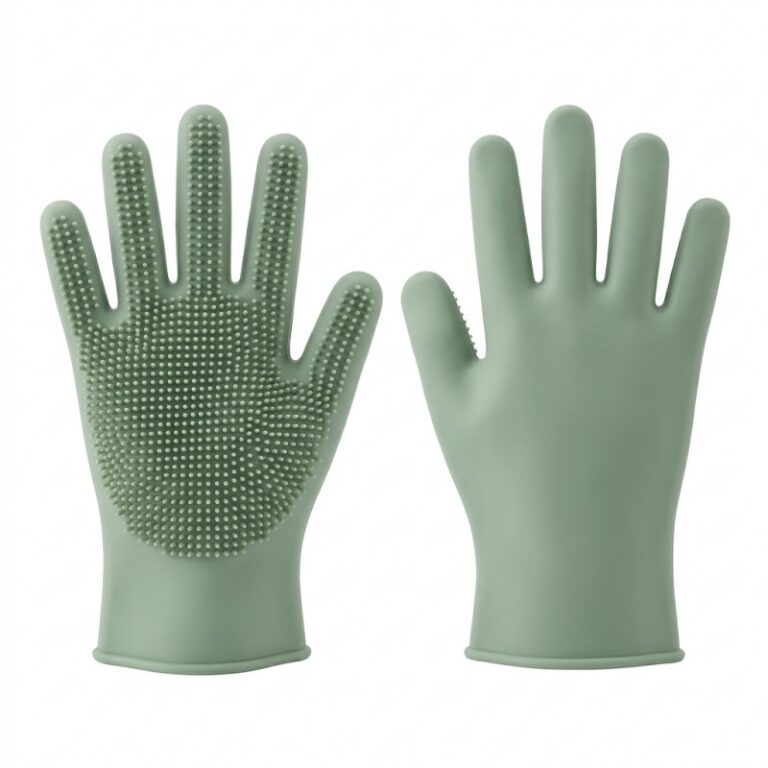
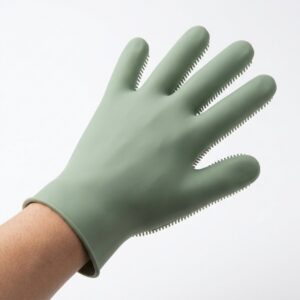
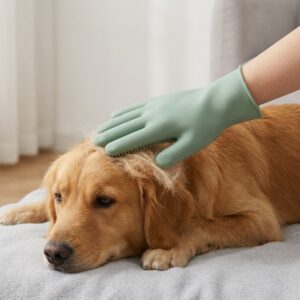
LYA’s reference concept is a one-piece, five-finger silicone glove with rounded grooming nubs on the palm and pet-contact surfaces of the fingers, a smooth back, and an open wrist cuff. The glove is designed for routine coat grooming and bathing assistance. Its dimensions, material hardness, and grooming texture should be confirmed through sample evaluation.
For brands developing a custom silicone pet products collection, the key design challenge is balancing three requirements:
- The glove must be easy to put on and remove.
- The fingers must move naturally during grooming.
- The cuff must help keep the glove in position without creating excessive wrist pressure.
A glove that fits one hand comfortably may feel restrictive on another. A design that is easy to put on may also feel loose during repeated grooming strokes.
The solution is not simply to make the glove larger or softer. Buyers should evaluate hand measurements, finger geometry, cuff structure, material flexibility, and the intended grooming scenario together.
1. Define the Target Hand Measurements Before Selecting a Size
A common development mistake is choosing glove dimensions from a product photograph or using only the overall length of the hand.
Overall length does not describe the full hand shape.
Two users may have similar hand lengths but different palm widths, finger lengths, thumb positions, and wrist circumferences. These differences can affect how a five-finger glove fits.
Before tooling, buyers should define the intended user group and record representative hand measurements.
| Measurement | What It Helps Evaluate |
|---|---|
| Hand length | Overall glove length and fingertip position |
| Palm width | Internal palm space and side-to-side fit |
| Palm circumference | General hand volume |
| Middle-finger length | Finger-cavity length |
| Individual finger lengths | Fit of each finger section |
| Finger circumference or width | Internal finger space |
| Thumb position and angle | Thumb-cavity alignment |
| Wrist circumference | Cuff opening and retention |
Use a consistent measurement method and record the hand size associated with each sample.
For a product intended for a broad consumer market, buyers should not automatically design around one average hand. Instead, identify the hand-size range that the product is expected to accommodate.
If the glove is intended for professional groomers, home pet owners, or a specific retail audience, those target users may have different fit priorities.
The current reference concept is a right-hand glove. Buyers who need a left-hand version or a matched pair should specify this at the beginning of the project because additional or mirrored tooling may be required depending on the selected mold structure.
2. Coordinate Finger Length, Width, and Separation
A five-finger silicone glove needs more than five correctly shaped finger sections. Each finger must work with the palm, thumb, and neighboring fingers.
Finger length
If a finger cavity is too short, the user’s fingertip may press against the end of the glove. This can make the glove uncomfortable and reduce control during grooming.
If it is too long, the extra material may fold or move during finger flexion.
The finger length should therefore be evaluated against actual hand measurements rather than estimated from the overall glove length.
Finger width
A narrow finger cavity may create excessive pressure around the fingers. A wide cavity may allow too much movement between the hand and glove.
The objective is to provide enough internal space for natural movement while keeping the glove controllable.
Finger separation
The geometry between adjacent fingers affects how easily the user can spread, bend, and close the hand.
If the separation is too restrictive, finger movement may feel limited. If the geometry is too loose, the glove may not follow the user’s hand movements accurately.
Thumb position
The thumb is particularly important because its direction and range of movement differ from those of the other fingers.
The thumb cavity should be reviewed together with palm width, finger separation, and the intended grooming movement.
Buyers should test the complete glove with natural hand actions such as opening the hand, closing the fingers, bending the thumb, and changing grip position.
3. Design the Open Cuff for Easy Entry and Stable Wear
The wrist cuff is one of the most important areas in a wearable silicone grooming glove.
The reference design uses an open, flexible cuff rather than a separate fabric strap or fastening component.
The cuff needs to provide enough opening for the user to put on and remove the glove while helping the glove remain in its intended position during normal grooming movements.
Cuff opening circumference
A cuff that is too small may require excessive stretching during entry. It may also create uncomfortable pressure around the wrist.
A cuff that is too large may allow the glove to move or slide during grooming.
Buyers should evaluate the cuff in both its relaxed condition and during normal stretching.
Cuff flare and edge shape
A slightly widened or flared cuff can help guide the hand into the glove.
However, the shape should not create an unnecessarily bulky edge or interfere with wrist movement.
The edge should also be smooth and free from sharp trimming marks or molding defects.
Cuff thickness
Cuff thickness influences flexibility, stretch behavior, and recovery.
A very thick cuff may be difficult to stretch over the hand. A very thin cuff may deform more easily and provide less structural support.
The final geometry should be confirmed using molded samples rather than selected from a drawing alone.
4. Evaluate Silicone Hardness and Wall Thickness Together
Silicone hardness is important, but it does not independently determine whether a glove will fit comfortably.
The same nominal hardness can behave differently when the wall thickness, finger geometry, and cuff dimensions change.
A very firm glove may feel restrictive when the user bends the fingers or stretches the cuff.
A very soft glove may feel comfortable initially but provide insufficient control if the internal space is too loose or the glove does not recover consistently.
Buyers should review:
- Silicone hardness
- Palm wall thickness
- Finger wall thickness
- Cuff thickness
- Finger-junction geometry
- Elastic recovery
- Overall glove flexibility
- Dimensional consistency
The palm, fingers, and cuff do not necessarily have identical structural requirements. Their geometry should be reviewed according to the intended function and the selected molding approach.
However, a change in wall thickness or material hardness should not be made without evaluating the complete glove. A modification that improves cuff flexibility may also affect shape recovery, demolding, or dimensional stability.
For a broader tooling review, buyers can use the custom silicone mold development checklist before approving the final structure.
5. Validate Fit Under Both Dry and Wet Grooming Conditions
A grooming glove may be used for dry coat care, bathing assistance, or both, depending on the final design and product instructions.
The hand-fit evaluation should therefore include the intended use conditions.
A glove that feels acceptable when dry may feel different when the user’s hand, the glove interior, or the grooming environment becomes wet.
During sample evaluation, buyers should check:
- Ease of putting on the glove with dry hands
- Ease of removing the glove
- Hand movement during dry grooming
- Cuff position during repeated grooming strokes
- Ease of putting on and removing the glove with wet hands
- Fit during representative wet grooming movements
- Water entry through the open cuff
- Cleaning access around the fingers and cuff
- Drying after use
The open cuff should not be described as a sealed or waterproof wrist structure. If a brand requires a particular moisture-management feature, that requirement should be defined and tested separately.
Buyers developing a wider grooming range can also compare a custom silicone pet bath brush for handheld bathing applications or a custom silicone pet hair remover for cleaning suitable household fabric surfaces.
These products have different use methods and should not be treated as interchangeable designs.
6. Make Sure the Grooming Texture Does Not Restrict Hand Movement
The grooming surface is another important part of the glove structure.
The reference concept uses short, flexible silicone nubs with rounded tips on the palm and pet-contact surfaces of the fingers.
These features need to be evaluated for grooming contact, comfort, cleaning access, and mold feasibility.
Important design factors include:
- Nub height
- Nub diameter
- Rounded tip geometry
- Nub spacing
- Texture density
- Palm coverage
- Finger-surface coverage
- Transitions around finger joints
A higher number of nubs does not automatically create better grooming performance.
If the texture is too dense, it may become more difficult to rinse away hair, shampoo, and residue. If the texture is concentrated around finger-joint areas, it may also affect how the glove bends.
The grooming surface should be reviewed together with the glove’s internal fit.
The goal is to preserve natural hand movement while maintaining a practical contact surface for the intended grooming application.
7. What Should Buyers Test During Sample Approval?
A product photograph cannot confirm whether a glove fits correctly.
Sample approval should include actual hand-fit evaluation using representative users from the intended target group.
A practical validation sequence can include:
Step 1 — Record hand measurements
Prepare the agreed hand measurements and identify the size range the glove is expected to accommodate.
Step 2 — Check putting on and removing
Evaluate whether the user can put on and remove the glove without excessive stretching or force.
Step 3 — Check finger movement
Ask the user to open and close the hand, bend individual fingers, move the thumb, and perform normal grooming movements.
Step 4 — Check cuff retention
Observe whether the cuff remains in its intended position during repeated grooming strokes. Record any movement, rolling, or excessive pressure.
Step 5 — Repeat under wet conditions
If the product is intended for bathing assistance, repeat the fit evaluation under representative wet-use conditions.
Step 6 — Evaluate grooming contact
Use the approved target grooming method and coat type. Review whether the glove follows the user’s hand movement and whether the grooming texture remains practical.
Step 7 — Review cleaning and drying
Check whether hair and residue can be removed from the grooming texture and whether the glove can dry appropriately after cleaning.
Step 8 — Record the results
Record the hand measurements, glove dimensions, cuff opening, fit observations, movement, cleaning results, and any required design changes.
The buyer and manufacturer should agree on acceptance criteria before sample approval. There is no single universal glove dimension or cuff circumference that will fit every target user.
8. Control Fit-Related Dimensions During Mass Production
Once the sample is approved, its fit-related dimensions should become part of the production inspection plan.
A glove may look visually correct but still feel different if the finger cavities or cuff opening vary between production batches.
A practical inspection checklist can include:
| Inspection Item | What to Check |
|---|---|
| Overall glove length | Consistency with the approved sample |
| Palm width | Internal hand-space consistency |
| Palm length | Position of finger and wrist areas |
| Finger lengths | Individual cavity dimensions |
| Finger widths | Internal finger space |
| Thumb position | Alignment and geometry |
| Cuff opening | Relaxed opening dimension |
| Cuff edge | Smoothness and deformation |
| Wall thickness | Critical areas and consistency |
| Grooming nubs | Height, spacing, and complete molding |
| Finger junctions | Flash, tearing, and visible thin areas |
| Surface finish | Smooth back and grooming-surface condition |
| 颜色 | Consistency with the approved reference |
| 包装 | Protection against deformation |
Flexible silicone dimensions should be measured under repeatable conditions. The inspection method should define how the glove is positioned and whether the cuff or fingers are stretched during measurement.
"(《世界人权宣言》) silicone product dimensional tolerance guide provides a broader reference for defining critical dimensions and measurement methods for flexible silicone products.
The approved sample, drawing, and inspection procedure should refer to the same revision.
9. What Should Buyers Include in an OEM RFQ?
A clear RFQ helps the manufacturer review glove fit before mold development.
| RFQ Information | What the Buyer Should Provide |
|---|---|
| Product concept | Reference photo, drawing, or physical sample |
| Glove hand | Right hand, left hand, or matched pair |
| Target user | Intended consumer or professional user group |
| Hand measurements | Hand length, palm width, finger lengths, and wrist circumference |
| Size range | Target hand-size range |
| Glove structure | Five-finger one-piece design or other requested structure |
| Cuff | Opening circumference, edge shape, and retention requirement |
| 材料 | Silicone material requirements |
| Hardness | Preferred hardness or hand-feel reference |
| Wall thickness | Drawing or sample reference, if available |
| Grooming texture | Nub shape, height, spacing, and coverage |
| 应用 | Dry grooming, bathing assistance, or both |
| 颜色 | Pantone reference or physical color sample |
| Branding | Molded logo or packaging logo |
| 包装 | Individual packaging, pair packaging, or retail box |
| Testing | Fit, movement, wet-use, cleaning, and inspection requirements |
| Commercial details | Target market and estimated order quantity |
If the buyer does not have a finished drawing, a physical reference glove and representative hand measurements can help start the design review.
Frequently Asked Questions
Why does a silicone pet grooming glove feel too tight?
Possible causes include a small cuff opening, narrow finger cavities, insufficient palm width, incorrect finger lengths, excessive wall thickness, or material flexibility that does not match the glove geometry.
The actual cause should be confirmed through hand-fit testing.
Why does a silicone grooming glove move during use?
Possible causes include an oversized internal cavity, an unsuitable cuff opening, insufficient shape recovery, or a glove size that does not match the user’s hand.
The cuff and finger fit should be evaluated together.
Can one silicone grooming glove fit every hand size?
A single design may accommodate a range of hand sizes, but it should not automatically be described as universal fit. The target hand-size range should be defined and validated with representative users.
Does softer silicone always make a more comfortable glove?
No. Softness is only one factor. Palm dimensions, finger geometry, cuff opening, wall thickness, and elastic recovery also influence comfort and control.
Can LYA develop left-hand and right-hand grooming gloves?
Left-hand and right-hand versions can be considered. Depending on the selected structure and tooling, a mirrored mold or additional tooling may be required.
What should be confirmed before mass production?
Buyers should confirm glove dimensions, hand-size range, cuff opening, finger movement, silicone material, hardness, wall thickness, grooming texture, color, packaging, and the approved sample-test criteria.
OEM/ODM Development for Pet Grooming Brands
A silicone pet grooming glove is a wearable product, so hand fit is just as important as the grooming surface.
For pet care brands, wholesalers, distributors, and private-label buyers, the key development points include palm dimensions, finger geometry, cuff opening, silicone flexibility, grooming texture, cleaning access, and production consistency.
LYA Silicone supports custom silicone product development, including design review, mold development, sample production, customization, inspection, and packaging coordination.
Buyers can review the OEM/ODM silicone manufacturing service 和 contact LYA Silicone with their reference glove, hand measurements, target user group, grooming requirements, and estimated order quantity.