 Russian
 English
 French
 German
 Spanish
 Polish
 Chinese
 Japanese
 Korean
Содержание
Answer Excerpt
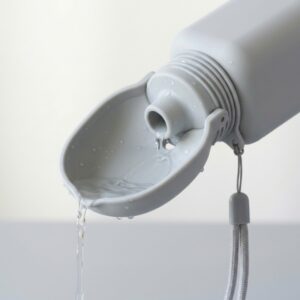
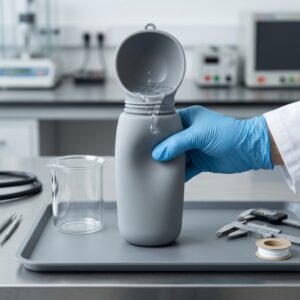
A squeeze-operated silicone pet travel water bottle may leave unused water in its drinking bowl when the bottle body does not recover as expected, the bowl-to-bottle flow path restricts return, the product is held at an unsuitable angle, or the design does not balance air and water movement effectively. OEM buyers should evaluate drain-back performance separately from transport leak resistance, using a consistent sample-testing method and the final approved product structure.
Why Is Drain-Back Important in a Silicone Pet Travel Water Bottle?
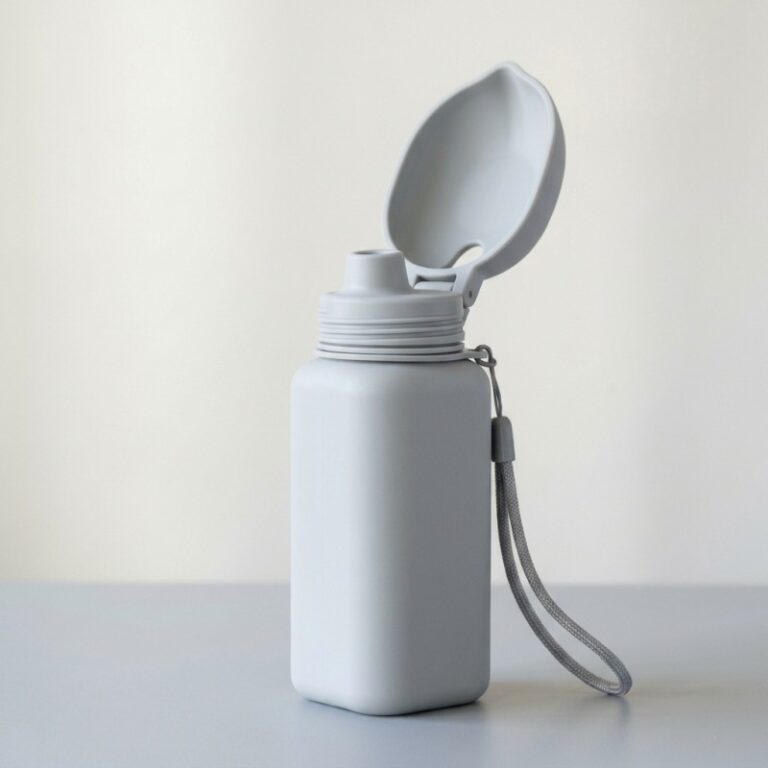
A portable pet water bottle often combines a water-storage body with an integrated drinking bowl. The user squeezes the bottle to dispense water, lets the pet drink, and then releases the bottle so that unused water can return to the container.
For a brand developing a silicone pet travel water bottle, this return function is part of the user experience. Water left in the bowl may spill during storage, make the product less convenient to carry, or lead users to believe that the dispensing mechanism is difficult to operate.
However, a small amount of water remaining in the bowl does not automatically mean the product is defective. The result depends on the final bowl shape, outlet geometry, body construction, operating method, and intended use. The first step is to define what acceptable drain-back means for the specific product rather than assume that every design should return every drop.
What Can Prevent Unused Water from Returning?
1. The Bottle Body Does Not Recover Consistently
In a squeeze-operated design, releasing the bottle changes the pressure inside the water-storage system. The body needs to respond as intended for the return flow to occur.
If the flexible section is too stiff for the intended operation, it may not recover easily after squeezing. If it is too flexible or lacks suitable structural support, it may deform in a way that makes operation inconsistent. These are possible design factors, not conclusions that can be made from appearance alone.
OEM development should consider the relationship between material selection, wall thickness, body geometry, squeeze area, and shape recovery. A material that feels soft in the hand is not necessarily the best option for every dispensing structure.
2. The Bowl-to-Bottle Flow Path Restricts Return
Water has to travel through the available opening between the drinking bowl and the storage body. The geometry around this connection can influence how easily water moves in either direction.
Potential issues include a restricted opening, an abrupt transition, a local low point where water remains, or a fold that partially obstructs the flow path during operation. The effect depends on the actual construction.
During design review, inspect the connection area in both the open drinking position and the storage position. The path should be evaluated in the real operating configuration, not only from a flat drawing or a product photograph.
3. The Bowl Angle Leaves Water at a Low Point
A bowl may look well shaped when viewed from above but retain water when held in the intended operating position. Its bottom slope, outlet location, sidewall transition, and angle relative to the bottle all influence where the remaining water collects.
The bowl should be assessed in the same orientation that a user will use it. If the outlet is not located where water naturally gathers, a small pool may remain even when the bottle body is working as intended.
For OEM buyers, this is a reason to test the complete bottle-and-bowl assembly rather than approve the bowl as an isolated component.
4. Air Movement Is Not Balanced with Water Movement
Some dispensing architectures depend on pressure changes and air movement to support the return flow. If the design makes air exchange difficult, the flow may behave differently from what the designer expects.
This does not mean every pet bottle requires a separate vent or valve. The appropriate arrangement depends on the selected structure. If a particular design uses an internal return channel or valve, its role should be reviewed against the actual drawing and bill of materials rather than assumed from a generic reference product.
5. The Operating Method Is Inconsistent
The amount of water remaining can also vary with the fill level, squeeze depth, release motion, and bottle orientation. An overly full bowl may leave more water exposed to spilling, while inconsistent hand pressure can make two samples appear to perform differently.
A sample should therefore be evaluated using a repeatable operating procedure. Otherwise, the team may change the mold or material to solve a problem that was caused by inconsistent testing.
How Should the Flow Path Be Reviewed During Design?
Before changing the material or opening a new mold, review the complete liquid path from the storage body to the bowl and back again.
- Outlet and connection: Confirm that the intended opening remains clear when the bowl is deployed and when the product is handled.
- Bowl geometry: Review the bottom slope, corner radii, sidewall shape, and the relationship between the lowest point and the return opening.
- Body response: Evaluate whether the squeeze area can be operated comfortably and whether the body returns to its intended shape.
- Component interfaces: Check the fit between the bowl, neck, cap, and any locking or sealing parts used in the chosen design.
- Cleaning access: Make sure the water-contact surfaces can be reached and cleaned according to the product’s intended maintenance instructions.
These checks should be made against the actual design. A change to the bowl angle may affect the way the product folds, while a change to the connection area may affect sealing or assembly. The best solution is the one that improves the required function without introducing a new problem elsewhere.
For a broader review of liquid movement and cleaning access, see the drainage and easy-clean design guide.
How Should OEM Buyers Validate Drain-Back Before Production?
A sample test should establish whether the product performs consistently under the agreed conditions. It should not rely on a single squeeze or an informal visual check.
Step 1: Confirm the Sample Configuration
Record the approved drawing or reference sample, component materials, bowl configuration, cap and gasket arrangement, locking method, and any other features that affect water movement. If the sample differs from the intended production design, the result may not represent the final product.
Step 2: Standardize the Test Conditions
Use a consistent fill level, bottle orientation, squeeze action, release motion, and observation method. If several fill levels or operating positions are relevant to the intended use, evaluate them separately.
The purpose is not to force every design into one universal test. It is to make the results comparable across samples and design revisions.
Step 3: Observe the Return Function
After dispensing water into the bowl, release the bottle as instructed and observe how much water returns, how the flow behaves, and whether the operation feels consistent.
Record visible residual water and any variation between repeated cycles. If the buyer has a specific acceptance threshold, agree on the measurement method and limit before testing. Do not invent a universal residual-water limit for all pet bottles.
Step 4: Test Transport Sealing Separately
Drain-back performance and leak resistance are different functions.
A bottle may return water well but still leak when its lid is not correctly seated. Conversely, a well-sealed bottle may retain water in the bowl because the return path is not performing as intended.
Where the product includes a sealing lid, gasket, or lock, check those features independently using the agreed handling and transport conditions. Do not use a successful leak test as proof that the drain-back function has passed.
Step 5: Repeat the Evaluation on Production-Representative Samples
After a design change, repeat the test on the revised sample. Before mass production, confirm that the approved reference sample, drawings, component fit, appearance, and functional acceptance criteria are documented.
What Should Buyers Include in an OEM Project Brief?
A clear project brief helps the manufacturer evaluate the design before tooling or sample revisions begin.
Include the following information:
- Product drawing, 3D model, reference sample, or clear photographs
- Target capacity and intended pet-use scenario
- Bowl shape, opening position, and storage configuration
- Intended dispensing and water-return operation
- Material requirements for the bottle body, bowl, cap, and other components
- Lid, gasket, and locking requirements, where applicable
- Target market and any applicable material or product-testing requirements
- Functional acceptance criteria for drain-back and transport sealing
- Color, logo, packaging, estimated order quantity, and launch schedule
For a new structure, review the dimensional relationships between the bowl, opening, and bottle body before finalizing tooling. The dimensional tolerance guide can help buyers understand why critical dimensions should be agreed upon rather than left to visual judgment.
If custom tooling is needed, use a custom silicone mold development checklist to organize design confirmation, sample approval, and production requirements.
Frequently Asked Questions
Why does a pet water bottle leave water in the bowl after use?
Possible causes include the body’s recovery behavior, a restricted return path, bowl geometry, trapped air in some designs, or inconsistent operating technique. The cause should be confirmed through controlled testing of the actual product.
Is drain-back the same as leak resistance?
No. Drain-back concerns the return of unused water from the drinking bowl to the storage body. Leak resistance concerns whether water escapes when the bottle is closed, locked, carried, or stored. They need separate acceptance criteria.
Should every pet travel bottle return all the water?
Not necessarily. The expected result depends on the product architecture and the acceptance criteria agreed for that project. Buyers should define the required behavior and validate it on production-representative samples instead of assuming that all designs work identically.
What should a buyer send for a custom quotation?
Provide the drawing or sample, target capacity, intended operation, component materials, bowl and outlet configuration, closure requirements, packaging plan, target market, estimated quantity, and any required testing or acceptance criteria.
Develop a More Reliable Pet Travel Water Bottle
For pet brands, wholesalers, and private-label buyers, the goal is not simply to create a bottle that dispenses water. The complete product should be convenient to operate, practical to clean, suitable for transport, and consistent with the approved sample.
A structured review of body recovery, bowl geometry, the return path, component interfaces, and separate sealing tests can help identify the right design changes before mass production.
LYA Silicone supports OEM/ODM product development, sample evaluation, customization, and manufacturing for custom silicone pet products. To discuss a project, review the OEM/ODM silicone manufacturing service и contact LYA Silicone with your drawings, reference sample, functional requirements, and estimated quantity.