 Russian
 English
 French
 German
 Spanish
 Polish
 Chinese
 Japanese
 Korean
Содержание
Answer Excerpt
A silicone pet finger toothbrush can slip when its inner cavity is too large for the intended finger, the sleeve is too short to resist movement, or the opening rim and silicone flexibility do not provide a stable fit. A reliable OEM design must balance easy insertion, secure retention, comfortable removal, and cleanability. Buyers should validate the fit across their target user range and intended use conditions before approving a production sample.
Why Finger Fit Is a Separate Design Requirement
A finger toothbrush is different from a conventional toothbrush with a rigid handle. The user’s finger becomes the support structure, so the fit between the silicone sleeve and the finger directly affects handling.
If the sleeve is too loose, it may rotate, slide toward the fingertip, or move during brushing. If it is too tight, users may find it difficult to put on or remove. Excessive pressure around the finger opening can also make repeated use uncomfortable.
For pet product brands, the important point is that pet size and user finger size are two different design considerations. A product intended for puppies and adult dogs still needs a clearly defined finger-fit range for the people using it.
A successful design should not rely on a general “one size fits all” statement. It should be developed and checked against the intended user group.
1. Start With the Actual Finger-Sleeve Structure
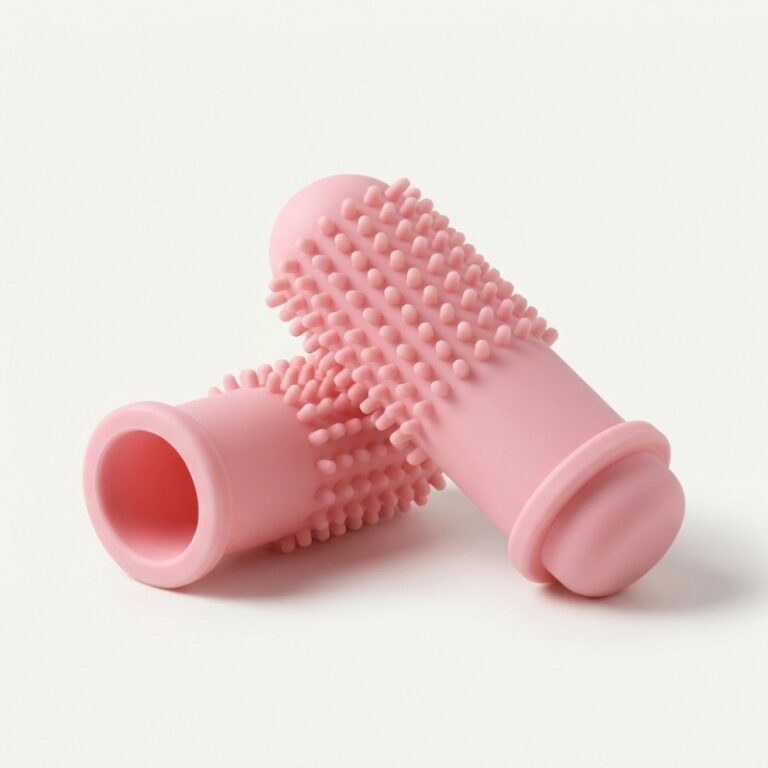
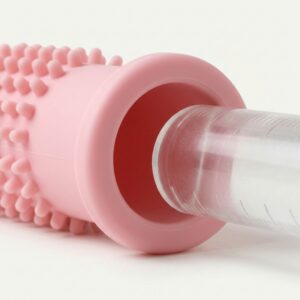
The current LYA reference product is a 360-degree silicone finger toothbrush. Its visible structure includes:
- A cylindrical finger sleeve
- A rounded, closed fingertip end
- An open lower insertion end
- A widened rim around the lower opening
- Short silicone bristles distributed around the outer surface
You can review the existing 360° silicone finger toothbrush kit as a product reference.
For this type of product, the sleeve is the main fit interface. The outer bristles are important to the brush design, but they cannot compensate for an inner cavity that is incorrectly sized.
The lower opening also deserves special attention. Its shape, edge thickness, and transition into the sleeve body may influence how easily the brush can be put on, how securely it stays in position, and how comfortably it can be removed.
The design should therefore be reviewed as a complete finger-mounted structure rather than as a simple silicone tube with bristles.
2. Why Can a Silicone Finger Toothbrush Slip or Feel Too Tight?
Several design factors can affect the fit.
Inner cavity does not match the target finger range
The inner diameter is one of the most important dimensions.
If the cavity is too large, the sleeve may not maintain sufficient contact with the finger. It can rotate or move when the user changes brushing direction.
If the cavity is too small, the sleeve may require excessive stretching during insertion. This can make the product difficult to put on and remove.
Buyers should define the intended user group and evaluate the finger-size range before approving the cavity dimensions.
Sleeve depth is not suitable
A sleeve that is too short may provide insufficient support along the finger. During movement, the brush may shift toward the fingertip.
A sleeve that is unnecessarily long may interfere with finger movement or make the product harder to position.
The correct depth depends on the intended finger position, product size, and how the brush will be handled. It should be confirmed using actual samples rather than selected only from a product rendering.
The lower opening and rim are poorly balanced
The opening needs to allow convenient insertion while helping the sleeve remain in position.
A narrow or overly rigid opening may make insertion difficult. An opening that is too loose may provide insufficient retention.
A widened lower rim can be evaluated as part of the retention structure, but it should not create excessive pressure or a sharp contact edge.
The rim should be reviewed together with the inner diameter and sleeve wall, not as an isolated decorative feature.
Silicone flexibility is not matched to the cavity
Silicone flexibility affects how the sleeve expands during insertion and how it returns afterward.
If the material and wall structure are too flexible for the selected geometry, the sleeve may deform more than expected during handling.
If the structure is too firm, the user may find it difficult to insert or remove the brush.
Hardness alone does not determine fit. Inner diameter, wall thickness, sleeve depth, opening geometry, and material flexibility must be considered together.
Wet-use conditions change the handling experience
A finger toothbrush may be handled in wet conditions. The user’s perception of grip and control can change when the finger and product are wet.
A sleeve that appears stable during a dry fitting check may behave differently during the intended use condition.
For this reason, the sample evaluation should include the actual use conditions specified by the buyer. Do not approve a finger-fit design based only on a dry visual inspection.
3. Design the Fit as a Complete Geometry
A reliable OEM design should consider several connected dimensions and structural features.
Define the intended finger-size range
Before tooling, buyers should identify the target user group and the finger sizes the product is expected to accommodate.
The manufacturer can then evaluate whether the project should use one size, multiple sizes, or a revised sleeve geometry.
The decision should be based on the target market and sample evaluation rather than an unsupported universal-fit claim.
Review the inner cavity
The cavity should allow the intended finger to enter without excessive force while maintaining enough contact for stable handling.
Important design points include:
- Inner diameter
- Cavity shape
- Sleeve depth
- Internal surface condition
- Dimensional consistency between samples
If the sleeve is tapered, the taper should be reviewed against the intended insertion depth. A tapered structure that feels secure at the opening may still be loose farther inside, or vice versa.
Review the opening and retaining rim
The opening should have a smooth transition and a suitable edge profile.
Buyers should compare the rim width, thickness, edge radius, and opening size. The rim should support positioning without becoming a pressure point.
A small change to the opening geometry may affect both insertion and removal. Therefore, the rim should be approved as part of the complete sleeve design.
Match wall structure and material flexibility
The sleeve wall should provide enough flexibility for insertion while maintaining the intended shape during use.
Wall thickness and silicone hardness should be evaluated together. A material specification cannot be selected independently of the sleeve geometry.
For new projects, a structured custom silicone mold development checklist can help buyers and manufacturers confirm drawings, dimensions, structural transitions, tooling requirements, and sample approval points before production.
4. Validate Finger Fit Before Approving the Sample
A visual sample review is not enough. Buyers should establish a repeatable fit-validation process.
Step 1: Define the test range
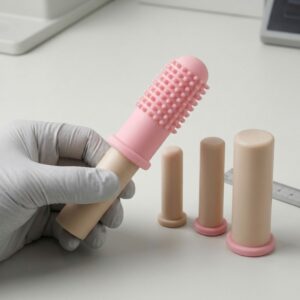
Confirm the intended user group and select representative finger-size gauges or fit references for that range.
Do not use the pet’s breed or body size as a substitute for the user’s finger measurements.
Step 2: Check insertion and removal
Evaluate whether the sleeve can be put on and removed without excessive stretching or force.
Record whether the opening catches, folds, rolls, or creates an uncomfortable pressure point.
Step 3: Check retention during movement
After insertion, evaluate whether the sleeve rotates or shifts during controlled hand movements.
The check should include the movements expected during the intended use scenario, not just a stationary fit.
Step 4: Repeat under intended use conditions
Repeat the fitting check under the wet-use conditions defined in the product brief.
Compare the result with the dry fitting check. Record any noticeable difference in retention, rotation, insertion, or removal.
Step 5: Inspect the sample after repeated handling
After repeated fitting and removal, check whether the opening rim has changed shape, whether the sleeve shows visible damage, and whether the cavity still matches the approved fit reference.
Step 6: Approve a representative sample
Once the design is accepted, retain an approved sample and record the key dimensions and fit requirements. This becomes the reference for subsequent production checks.
5. What Should Be Checked Before Mass Production?
Fit-related quality inspection should cover both dimensions and function.
| Inspection item | What to check |
|---|---|
| Inner cavity | Diameter, shape, and consistency |
| Sleeve depth | Overall insertion depth |
| Opening rim | Edge smoothness, shape, and thickness |
| Wall structure | Visible deformation and consistency |
| Silicone material | Agreed material and flexibility requirements |
| Outer bristles | Distribution, molding condition, and visible defects |
| Parting line | Flash, sharp edges, or unwanted excess material |
| Fit test | Retention and removal against the approved fit reference |
| Упаковка | Correct quantity, color, and packaging specification |
AQL sampling can support final inspection, but it should not replace the functional fit test used during sample approval.
Buyers should define which fit characteristics are critical before production. For a detailed explanation of sampling plans and defect classification, refer to the AQL inspection guide for custom silicone products.
6. What Should Buyers Include in an OEM RFQ?
A clear RFQ helps the manufacturer understand the intended fit and avoid repeated sample revisions.
| Information | What the buyer should provide |
|---|---|
| Product reference | Existing product photo, physical sample, or drawing |
| Target user | Intended user group |
| Finger-fit range | Target finger measurements or fit references |
| Inner cavity | Preferred diameter and shape, if known |
| Sleeve depth | Desired insertion depth |
| Opening rim | Reference shape or retention requirement |
| Материал | Required silicone material and flexibility expectations |
| Use condition | Dry or wet handling conditions |
| Outer structure | Bristle layout and appearance reference |
| Брендинг | Color, logo, and packaging requirements |
| Commercial details | Target market and estimated order quantity |
If the buyer does not have a complete technical drawing, a reference sample and a clear explanation of the intended fit range can help start the evaluation.
7. OEM/ODM Development for Pet Product Brands
A silicone finger toothbrush should be developed around a defined fit requirement, not only its outer appearance.
For private-label projects, buyers should confirm the target user group, inner cavity, sleeve depth, opening rim, material flexibility, cleaning conditions, and packaging before final sample approval.
The current LYA product page lists OEM color and logo options. Any changes to the sleeve dimensions, opening geometry, or material requirements should be reviewed and confirmed as part of the individual project scope.
LYA Silicone provides an OEM/ODM silicone manufacturing service for custom silicone product projects.
To discuss a pet finger toothbrush project, prepare your reference sample or drawing, target finger-fit range, intended use conditions, color and logo requirements, packaging reference, and estimated quantity. You can then contact LYA Silicone for a project review.
Frequently Asked Questions
Can one silicone pet finger toothbrush fit every finger size?
This should not be assumed. Finger sizes vary, so buyers should define the intended user range and validate the sleeve with representative fit references before approving a one-size design.
Should a finger toothbrush feel tight?
It should remain stable during the intended movement while still allowing convenient insertion and removal. Excessive tightness can make the product uncomfortable or difficult to use.
Can a harder silicone material prevent slipping?
Not by itself. A change in hardness may affect flexibility, but the inner cavity, sleeve depth, opening rim, and wall structure also influence fit. These factors should be evaluated together.
Does a 360-degree bristle arrangement solve the fit problem?
No. Bristle coverage and finger-sleeve retention are separate design requirements. A product can have an all-around bristle layout and still require adjustment to its inner cavity or opening structure.
What should be approved before mass production?
Buyers should approve the final dimensions, fit range, opening structure, material requirements, appearance, packaging, and a representative functional sample. The agreed inspection method should also be documented.
Заключение
A reliable silicone pet finger toothbrush needs more than a flexible sleeve and an attractive bristle layout. Its inner cavity, insertion depth, opening rim, wall structure, and material flexibility must work together.
For OEM buyers, the most effective approach is to define the target finger-fit range early, validate insertion and retention under intended use conditions, and approve a representative sample before mass production.
This is a product-fit and manufacturing guide, not a veterinary dental treatment recommendation. Any dental-use instructions and product claims should be reviewed separately for the target market.