 Spanish
  English
  French
  German
  Polish
  Chinese
  Japanese
  Korean
  Russian
 Contenido
Introducción
A silicone pet bath brush may need to perform several functions at the same time.
It may be expected to:
- Spread shampoo through wet fur
- Massage the pet’s skin
- Remove loose hair and surface dirt
- Create foam
- Remain comfortable against the skin
- Stay secure in a wet hand
- Release shampoo at a controlled rate
- Rinse clean after use
- Recover after repeated squeezing
- Maintain its shape during storage
Many pet bath brushes look acceptable in product photographs but create problems during actual use.
Common complaints include:
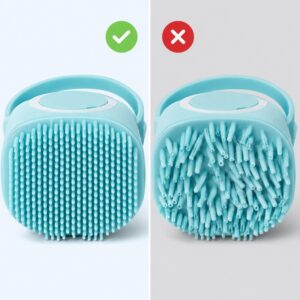
- Bristles bending flat during scrubbing
- Bristles remaining permanently deformed
- Bristle roots tearing
- Bristles feeling too soft to clean effectively
- Bristles feeling too hard or sharp
- Shampoo coming out too quickly
- Shampoo dispensing only from one side
- Outlet holes becoming blocked
- The reservoir leaking during storage
- The cap or plug opening unexpectedly
- The brush slipping from a wet hand
- Hair and shampoo residue remaining between bristles
- Packaging pressing the bristles out of shape
These problems are not caused by silicone hardness alone.
The performance of a custom silicone pet bath brush depends on the relationship between:
- Silicone material
- Shore A hardness
- Bristle length
- Bristle diameter
- Bristle taper
- Bristle spacing
- Bristle-root radius
- Brush-body wall thickness
- Shampoo-reservoir volume
- Outlet-hole dimensions
- Cap or plug design
- Squeezing force
- Grip structure
- Mold filling
- Demolding
- Limpieza
- Embalaje
- Target pet and coat type
For pet product brands, importers, distributors, private-label sellers, and grooming-product developers, the key question is not only:
“Are the silicone bristles soft?”
The more useful question is:
“Can the complete brush provide controlled cleaning and shampoo dispensing while remaining comfortable, durable, easy to clean, and consistent during mass production?”
This guide explains what buyers should review before tooling, sample approval, and bulk production.
Buyers can also review LYA Silicone’s custom silicone pet bath brush manufacturing options for bristle, dispenser, grip, color, logo, packaging and mold development.
Answer Excerpt
Silicone pet bath brush bristles can bend, tear, or lose cleaning performance when they are too long, too thin, too densely arranged, poorly supported at the root, or made from a material that does not match the product structure.
Shampoo may dispense unevenly when the reservoir wall, outlet-hole size, hole position, shampoo viscosity, squeeze area, air-return path, cap seal, or internal flow channel is not properly coordinated.
Increasing silicone hardness does not automatically solve these problems. Harder bristles may improve scrubbing force but feel uncomfortable, while softer bristles may provide a gentler massage but collapse during use.
Reliable performance requires the bristles, brush body, reservoir, outlet holes, grip, cap, silicone material, molding process, packaging, and real-use test conditions to be evaluated as one complete product.
1. Silicone Bristles Are Functional Structures
Bristles are not merely decorative surface details.
They determine how the brush contacts:
- Pet hair
- Skin
- Shampoo
- Water
- Loose fur
- Dirt
- Foam
A useful bristle field should provide enough movement to follow the pet’s body while maintaining sufficient resistance to separate hair and spread shampoo.
The bristles should also:
- Bend without tearing
- Recover after pressure is removed
- Avoid sharp contact points
- Remain stable during repeated scrubbing
- Allow water and shampoo to drain
- Avoid trapping excessive residue
- Be practical to mold and demold
A rendering may show a dense and attractive bristle pattern, but the final product can perform poorly when the bristle diameter, length, spacing, root support, and material hardness are not balanced.
The bristle field should therefore be treated as an engineered working surface.
2. Why Do Silicone Bristles Bend Flat During Use?
Every bristle experiences bending force when the user presses and moves the brush through wet fur.
The amount of bending depends on:
- Bristle length
- Bristle diameter
- Bristle shape
- Silicone hardness
- Root support
- Scrubbing pressure
- Coat thickness
- Bristle spacing
- Direction of movement
Long, thin bristles generally bend more easily than short, thick bristles.
A soft bristle may feel comfortable when touched by hand but collapse completely when pressed into dense or wet fur.
Once many bristles lie flat, the brush may:
- Slide over the coat
- Produce limited massage
- Fail to spread shampoo
- Collect hair without releasing it
- Feel weak to the user
- Create uneven pressure
The correct design should allow controlled flexing without complete collapse.
3. Why Do Bristles Remain Permanently Deformed?
A bristle may bend during use and recover immediately afterward.
Permanent deformation is different.
Possible causes include:
- Excessively slender bristle geometry
- Material that is too soft for the structure
- Long-term compression in packaging
- Storage under elevated temperature
- Bristles being bent sideways in the box
- Aggressive demolding
- Uneven curing
- Product stacking
- Heavy accessories pressing against the bristle field
A brush may leave the mold correctly but become deformed during transportation because the retail box or inner tray holds the bristles in a bent position.
The buyer should therefore inspect the product:
- Immediately after molding
- After normal cooling and recovery
- After retail packaging
- After a defined storage period
- After transport simulation
- After unpacking and recovery
Packaging recovery is part of product performance, not only a packaging issue.
4. Silicone Hardness Is Not the Only Bristle Specification
Shore A hardness helps describe the material’s resistance to indentation, but it does not fully describe how an individual bristle will behave.
Buyers should review how to choose silicone hardness together with bristle dimensions, wall thickness and intended grooming function.
Two brushes using the same nominal hardness may feel different because of:
- Bristle length
- Bristle diameter
- Bristle taper
- Root geometry
- Bristle density
- Brush-body thickness
- Material formulation
- Surface texture
When Bristles Are Too Soft
Possible problems include:
- Complete bristle collapse
- Weak scrubbing action
- Limited shampoo distribution
- Hair wrapping around the bristles
- Slow recovery
- Poor perceived quality
When Bristles Are Too Firm
Possible problems include:
- Uncomfortable skin contact
- Excessive local pressure
- Reduced flexibility on curved body areas
- Difficulty reaching through soft fur
- Harder demolding
- Greater stress at the bristle root
The correct hardness should be confirmed using the complete molded product and representative wet-use conditions.
5. Bristle Length Controls Reach and Stability
Longer bristles may reach deeper into thick fur.
However, increasing length can also make the bristles:
- Easier to bend
- More likely to remain flattened
- More difficult to mold
- More vulnerable during demolding
- More difficult to rinse
- More likely to trap loose hair
Shorter bristles may provide stronger support and easier cleaning, but they may not reach through dense coats.
The design should consider:
- Target pet type
- Short or long coat
- Coat density
- Bathing or dry grooming use
- Massage requirement
- Shampoo-distribution requirement
- Desired scrubbing force
A brush intended for short-haired cats may require a different bristle length from a brush designed for long-haired dogs.
One universal bristle length is unlikely to provide the same user experience across every pet type.
6. Bristle Diameter and Taper Affect Flexibility
A bristle can use:
- Constant diameter
- Thick root with a thin tip
- Conical taper
- Rounded column
- Flat flexible blade
- Multi-level profile
A thicker root can improve support and reduce tearing.
A thinner tip can provide softer contact against the skin.
However, an excessively thin tip may:
- Fold easily
- Feel weak
- Become damaged during demolding
- Trap hair
- Produce inconsistent molding
A completely thick bristle may remain stable but feel too rigid.
A gradual taper often provides a more controlled transition between root support and tip flexibility.
The engineering team should evaluate the complete bristle profile rather than specifying only one diameter.
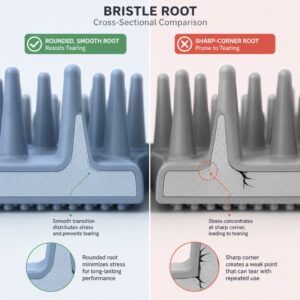
7. Bristle-Root Design Helps Prevent Tearing
The bristle root is the location where the flexible bristle connects to the brush body.
This area carries repeated bending stress.
High-risk root structures include:
- Sharp 90-degree transitions
- Very thin connections
- Abrupt diameter changes
- Parting lines crossing the root
- Deep texture around the root
- Incomplete material filling
- Trimming damage
- Local air traps
Possible failure signs include:
- White stress marks
- Small cracks
- Bristles separating from the base
- Tearing after repeated scrubbing
- One cavity producing weaker roots than another
A smoother transition radius can distribute bending stress over a wider area.
The design should also avoid placing the most critical bristle roots on unstable mold-parting or flash-control areas where possible.
Bristle cavities, root radii, outlet holes and demolding direction should be confirmed during custom silicone mold development before mold machining begins.
8. Bristle Spacing Affects Cleaning and Rinsing
Dense bristles may create a fuller appearance and increase the number of contact points.
However, very tight spacing can make the brush:
- Difficult to rinse
- More likely to retain hair
- More likely to hold shampoo residue
- Slower to dry
- More difficult to mold consistently
- Vulnerable to trapped air
- Difficult to inspect
Very wide spacing may improve rinsing but reduce:
- Massage coverage
- Foam generation
- Shampoo distribution
- Cleaning uniformity
The design should create sufficient open space for:
- Water drainage
- Hair removal
- Visual inspection
- Mold filling
- Cleaning access
The outer bristle field and central shampoo-dispensing area may also require different spacing.
9. Bristle Layout Should Match the Target Coat Type
Pet coats can differ significantly.
A brush may be used on:
- Short smooth coats
- Long coats
- Double coats
- Curly coats
- Fine cat fur
- Dense dog fur
- Sensitive-skin pets
- Puppies or kittens
The bristle layout can be adjusted through:
- Different bristle heights
- Mixed bristle diameters
- Central massage zones
- Outer cleaning zones
- Flexible blade structures
- Wider drainage channels
- Directional patterns
- Dual-texture surfaces
A dense short-bristle layout may feel stable but may not penetrate a thick coat.
A sparse long-bristle layout may reach deeper but bend too easily during vigorous scrubbing.
Buyers should define the intended pet and grooming function before approving the mold.
Similar bristle-layout and cleaning principles also apply to a custom silicone pet paw cleaner cup with a removable inner brush.
10. Bristle-Tip Geometry Affects Skin Contact
The bristle tip is the main contact point against the pet’s skin.
Possible tip designs include:
- Rounded tip
- Domed tip
- Tapered tip
- Flat tip
- Split or multi-point tip
- Soft blade edge
Sharp or poorly formed tips can create uncomfortable contact.
Tip quality may be affected by:
- Mold machining
- Venting
- Incomplete filling
- Flash
- Demolding damage
- Trimming
- Mold wear
The tip should be inspected under suitable lighting and magnification when necessary.
For brushes marketed for sensitive skin, the complete pressure and movement pattern should be evaluated rather than relying only on a visual statement that the tips are rounded.
11. The Shampoo Reservoir Changes the Brush Structure
A shampoo-dispensing brush commonly contains a hollow body or reservoir.
This reservoir changes how the complete product:
- Bends
- Recovers
- Feels in the hand
- Dispenses liquid
- Supports the bristles
- Seals during storage
A large reservoir may hold more shampoo but can make the brush:
- Bulky
- Difficult to squeeze
- Unstable after partial emptying
- More difficult to rinse internally
- More sensitive to wall-thickness variation
A small reservoir may provide better control but require frequent refilling.
The design should consider:
- Intended bath duration
- Shampoo concentration
- Tamaño del producto
- User hand size
- Squeeze location
- Reservoir-cleaning method
- Cap opening
- Packaging orientation
The reservoir volume should be coordinated with the outlet flow rather than selected only for marketing capacity.
12. Outlet-Hole Size Controls Shampoo Flow
Outlet holes may be positioned:
- Between bristles
- In the center of the bristle field
- Around the perimeter
- In several dispensing zones
- Along internal flow channels
If an outlet hole is too large, the brush may:
- Release too much shampoo
- Leak when stored
- Empty too quickly
- Create uneven foam
- Become difficult to control
If the hole is too small, it may:
- Require excessive squeezing
- Block easily
- Release only thin liquid
- Dispense inconsistently
- Become difficult to clean
The correct size depends on:
- Shampoo viscosity
- Number of holes
- Reservoir pressure
- Body stiffness
- Air-return design
- Squeezing force
- Internal channel length
The final product should be tested using the intended shampoo or a representative liquid with a similar flow behavior.
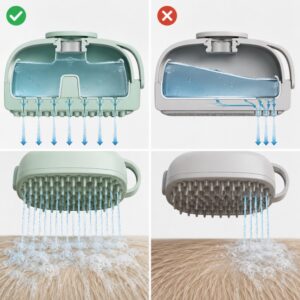
13. The Number and Position of Holes Affect Dispensing Uniformity
More holes do not automatically create better shampoo distribution.
If the internal flow path is not balanced, the holes closest to the main pressure area may release most of the liquid while distant holes release very little.
Possible symptoms include:
- Shampoo dispensing only from the center
- One side releasing more liquid
- Initial burst followed by weak flow
- Air bubbles interrupting dispensing
- Some holes remaining dry
- Liquid leaking after the user stops squeezing
Hole layout should be coordinated with:
- Reservoir geometry
- Internal pressure
- Squeezing direction
- Brush orientation
- Number of outlets
- Hole dimensions
- Bristle layout
- Air-entry path
The dispensing pattern should be evaluated with the brush held in realistic working positions.
14. Why Do Shampoo Outlet Holes Become Blocked?
Possible blockage sources include:
- Thick shampoo
- Dried shampoo residue
- Pigment or filler particles
- Incomplete molded holes
- Silicone flash
- Thin silicone membranes
- Mold-core wear
- Cleaning residue
- Hair entering the opening
- Poor rinsing access
A hole may appear open visually but contain a thin film that limits flow.
For small outlets, inspection may require:
- Pin gauges
- Optical inspection
- Flow testing
- Water testing
- Airflow testing
- Defined squeeze testing
The product instructions should also explain how users can rinse and clear the dispensing area after bathing.
15. The Cap or Plug Must Seal Without Becoming Difficult to Use
A refill opening may use:
- Silicone plug
- Snap cap
- Screw cap
- Press-fit closure
- Hinged cover
- Integrated flap
- Separate plastic cap
The closure should remain secure during:
- Squeezing
- Bathing
- Transportation
- Retail storage
- Repeated opening and closing
A loose closure may cause:
- Shampoo leakage
- Unexpected opening
- Water entering the reservoir
- Packaging contamination
An excessively tight closure may:
- Be difficult to open with wet hands
- Tear around the plug
- Require excessive force
- Deform the reservoir
- Create user frustration
The closure structure should define:
- Engagement depth
- Plug diameter
- Wall thickness
- Pull-tab size
- Opening direction
- Seal contact
- Repeated-use requirement
Cap performance should be tested with wet hands, not only under dry laboratory conditions.
16. Brush-Body Wall Thickness Controls Squeeze Force
The reservoir wall must deform when squeezed and recover after pressure is removed.
If the body wall is too thin, it may:
- Collapse permanently
- Release too much shampoo
- Feel unstable
- Dent during packaging
- Tear around the refill opening
- Provide inconsistent pressure
If the wall is too thick, it may:
- Require excessive hand force
- Dispense shampoo slowly
- Feel rigid
- Reduce reservoir capacity
- Create uneven curing
- Increase product weight
The body does not necessarily need the same thickness in every area.
A controlled squeeze zone may be combined with:
- Stronger edge walls
- A reinforced refill opening
- A stable bristle base
- Flexible pressure panels
- Smooth thickness transitions
Squeeze force should be evaluated across different hand sizes and working angles.
17. Wet Grip Is Part of Functional Performance
A bath brush is normally used with:
- Water
- Shampoo
- Foam
- Wet fur
- Wet hands
A handle that feels secure when dry may become difficult to control during bathing.
Possible grip structures include:
- Palm strap
- Finger loop
- Raised ribs
- Matte texture
- Concave grip
- Integrated handle
- Side tabs
- Adjustable band
The grip should remain secure without requiring excessive hand tension.
A loose palm strap may allow the brush to rotate.
A tight strap may be uncomfortable or unsuitable for larger hands.
Grip evaluation should include:
- Dry hand
- Wet hand
- Shampoo-covered hand
- Different hand sizes
- Left- and right-hand use
- Repeated squeezing
- Scrubbing in different directions
The location of the grip should also align with the intended squeeze zone for shampoo dispensing.
18. Dense Bristles and Small Holes Increase Molding Difficulty
A brush containing many long bristles and small outlet holes creates a demanding mold structure.
Potential molding risks include:
- Incomplete bristle filling
- Trapped air
- Short or missing bristles
- Different bristle heights
- Flash between bristles
- Blocked outlet holes
- Thin membranes
- Cavity-to-cavity variation
- Difficult demolding
- Mold-core damage
The mold design should review:
- Material-flow direction
- Gate location
- Venting
- Bristle cavity depth
- Core-pin dimensions
- Parting line
- Wall-thickness transitions
- Demolding direction
- Mold maintenance
Increasing injection pressure is not a complete solution because excessive pressure may create flash or deform delicate hole-forming structures.
19. Demolding Can Stretch or Tear Bristles
Long flexible bristles must be removed from narrow mold cavities.
During demolding, they may:
- Stretch
- Twist
- Fold
- Rub against the cavity
- Turn inside out
- Tear at the root
- Recover slowly
Demolding performance depends on:
- Bristle length
- Draft
- Surface finish
- Silicone hardness
- Curing condition
- Mold temperature
- Release direction
- Manual or automated removal
A product may look correct after an operator manually straightens the bristles, but this does not prove that the process is stable.
Samples should be inspected after normal demolding and a defined recovery period without cosmetic correction.
20. Surface Texture Affects Hair and Residue Removal
Fine matte silicone can provide a premium appearance and improve wet grip.
Brands should also consider why silicone products attract dust when selecting dark colors, matte textures and retail packaging.
However, deeper texture may make it easier for:
- Hair
- Foam
- Shampoo residue
- Fibers
- Dust
to remain on the surface.
The areas between bristles are particularly important because they are harder to wipe manually.
A practical surface design may use:
- Controlled texture on the grip
- Smoother drainage areas
- Rounded transitions
- Open channels
- Accessible internal corners
- Easy-rinse bristle spacing
Texture should support function rather than being applied uniformly across every surface.
21. Packaging Can Damage Bristles and Reservoirs
The brush may be molded correctly but become deformed before reaching the customer.
Packaging risks include:
- Bristles pressed against the box
- A hanging card bending the brush
- Heavy accessories placed on the bristle field
- A box that is too shallow
- Tight plastic bags
- The cap compressed by an insert
- Product stacking
- Long-term storage under heat
Possible results include:
- Flattened bristles
- Bent tips
- Reservoir dents
- Loose caps
- Distorted handles
- Permanent strap deformation
The packaging should support the brush body without applying continuous pressure to the bristles or refill opening.
Actual molded samples should be used during packaging development.
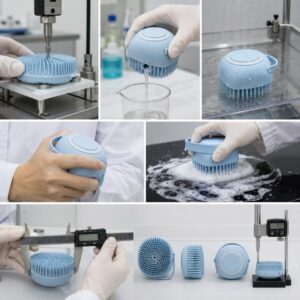
22. Sample Testing Should Reproduce Real Bathing Conditions
A pet bath brush should not be approved only because it looks attractive and releases water once.
A practical test plan may include:
- Dry bristle inspection
- Wet bristle-flexibility test
- Bristle-recovery test
- Repeated scrubbing
- Bristle-root inspection
- Shampoo dispensing test
- Different shampoo-viscosity comparison
- Outlet-hole consistency test
- Reservoir leakage test
- Cap-opening and closing test
- Wet-grip test
- Palm-strap fit
- Rinsing and residue removal
- Hair-removal test
- Drying review
- Packaging recovery
- Appearance inspection
The test conditions should define:
- Representative shampoo
- Fill volume
- Brush orientation
- Squeeze location
- Squeeze force or method
- Number of repetitions
- Target pet coat or test medium
- Acceptance criteria
Descriptions such as “dispenses evenly” or “soft but durable” are too subjective unless the test method is defined.
23. Why Can Samples Pass While Mass Production Fails?
Development samples are usually produced under close engineering supervision.
During sampling:
- Material is prepared carefully
- Mold parameters are adjusted slowly
- Outlet holes are checked individually
- Bristles may be straightened manually
- A single material batch is used
- Production time is short
Mass production introduces:
- Multiple mold cavities
- Longer continuous runs
- Material-batch variation
- Mold-temperature changes
- Vent contamination
- Core-pin wear
- Operator changes
- Faster demolding
- Packaging pressure
- Storage time
A structure with limited manufacturing margin may produce a few acceptable samples but become inconsistent during continuous production.
Pilot production should compare:
- Bristle height
- Bristle symmetry
- Bristle-root condition
- Hardness
- Outlet flow
- Reservoir recovery
- Cap sealing
- Grip dimensions
- Different cavities
- Beginning and end of the run
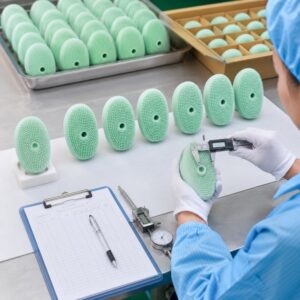
24. A Practical Bristle and Dispenser Failure Analysis
When a pet bath brush has bent bristles, tearing, leakage, or uneven shampoo flow, investigate the problem systematically.
Recommended sequence:
- Identify the exact failure mode.
- Confirm whether the problem occurs before or after use.
- Record the mold-cavity number.
- Compare passing and failing samples.
- Measure bristle length, diameter, spacing, and root geometry.
- Confirm silicone material and hardness.
- Check bristle recovery after a defined period.
- Inspect bristle roots for whitening or cracks.
- Confirm shampoo type and viscosity.
- Check every outlet hole.
- Inspect for flash or thin membranes.
- Test the reservoir without shampoo.
- Test the reservoir with representative shampoo.
- Check cap engagement and leakage.
- Review squeeze location and grip position.
- Review molding and curing records.
- Inspect demolding operations.
- Review packaging compression and storage time.
- Change one controlled variable before repeating the test.
Do not change hardness, bristle length, outlet-hole size, reservoir wall, and packaging simultaneously.
Changing one variable at a time makes the root cause easier to identify.
25. What Should Be Validated Before Mass Production?
Before approving a custom silicone pet bath brush, buyers and manufacturers should confirm:
- Target pet type
- Target coat type
- Intended function
- Brush dimensions
- Product weight
- Silicone material
- Shore A hardness
- Bristle length
- Bristle diameter
- Bristle taper
- Bristle-tip shape
- Bristle spacing
- Bristle-root radius
- Bristle-field layout
- Reservoir capacity
- Reservoir wall thickness
- Squeeze zone
- Outlet-hole size
- Outlet-hole quantity
- Outlet-hole position
- Shampoo viscosity
- Air-return path
- Cap or plug structure
- Closure force
- Leakage standard
- Handle or palm-strap dimensions
- Surface texture
- Mold-parting line
- Demolding method
- Cleaning method
- Packaging structure
- Sample-test conditions
- Pilot-production results
- Reference sample
- Inspection records
The approved standard should cover both the dry brush and the product under wet, shampoo-filled, and packaging-recovery conditions.
How LYA Silicone Supports Custom Pet Bath Brush Projects
LYA Silicone supports OEM and ODM development for custom silicone pet grooming, bathing, feeding, travel, cleaning, baby, outdoor, educational, household, and lifestyle products.
The bath brush can also be planned as part of a complete custom silicone pet product line with paw cleaners, feeding bowls, lick mats, hair removers and travel accessories.
Our custom silicone pet bath brush support can include:
- Product-requirement review
- Drawing and sample evaluation
- Target-pet and coat-type review
- Silicone material and hardness selection
- Bristle geometry development
- Bristle-layout review
- Bristle-root and wall-thickness review
- Shampoo-reservoir development
- Outlet-hole and flow review
- Cap or plug structure
- Grip and palm-strap design
- Desarrollo de moldes personalizados
- Pantone color matching
- Logo and surface-texture development
- Molded sample production
- Functional test support
- Packaging coordination
- Pilot production
- Appearance and dimensional inspection
- OEM/ODM mass production
With 25+ years of silicone manufacturing experience, we help buyers evaluate the complete brush instead of treating softness, bristles, dispensing, and packaging as separate issues.
The objective is to develop a pet bath brush that feels comfortable, maintains controlled bristle support, distributes shampoo reliably, remains secure in wet hands, rinses clean, and can be produced consistently in bulk.
What Information Should Buyers Provide?
To evaluate a custom silicone pet bath brush project, buyers should provide:
- Product reference photo
- 2D drawing
- 3D file, when available
- Physical sample, when available
- Target pet type
- Target coat type
- Bathing, grooming, massage, or deshedding function
- Brush dimensions
- Bristle layout
- Preferred bristle length
- Silicone material requirement
- Hardness preference
- Shampoo-reservoir requirement
- Outlet-hole design
- Representative shampoo information
- Grip or strap structure
- Product color
- Logo file
- Surface finish
- Packaging concept
- Target sales market
- Testing requirements
- Estimated quantity
- Expected launch schedule
When an existing brush has a quality problem, buyers should also provide:
- Close-up photographs
- Bristle measurements
- Videos showing deformation or dispensing
- Material and hardness information
- Shampoo type
- Packaging method
- Condiciones de almacenamiento
- Affected quantity
- Mold-cavity or production-batch information
Frequently Asked Questions
Why do silicone pet bath brush bristles bend flat?
The bristles may be too long, thin, soft, densely arranged, or insufficiently supported at the root. Wet fur, scrubbing pressure, packaging, and storage can also affect deformation.
Does harder silicone make the bristles more durable?
Not automatically. Harder material can improve support but may reduce skin comfort, increase root stress, and make the bristles more difficult to demold.
Why do bristles tear at the base?
Possible causes include a sharp root transition, thin root section, incomplete filling, parting-line flash, demolding stress, material selection, or repeated bending.
Why does shampoo come out from only one side?
The internal flow path, outlet positions, squeeze location, reservoir wall, shampoo viscosity, or trapped air may create uneven pressure across the holes.
Can smaller holes prevent shampoo leakage?
Smaller holes may reduce uncontrolled flow but can also clog or require excessive squeeze force. Hole size must match the number of holes, shampoo viscosity, body stiffness, and air-return design.
How can blocked outlet holes be inspected?
Inspection may use optical checking, pin gauges, water or airflow testing, and a defined shampoo-dispensing test.
Can the shampoo reservoir be made larger?
It may be possible, but a larger reservoir affects wall stiffness, squeeze force, grip, product weight, cleaning, cap structure, packaging, and dispensing control.
Can different bristle heights be used on one brush?
Yes. Multi-level bristles can support different functions, but mold filling, demolding, cleaning, root strength, and production consistency must be evaluated.
Should the brush be tested with real pet shampoo?
The final sample should be tested with the intended shampoo or a representative product with similar viscosity and flow behavior.
What should buyers approve before bulk production?
Buyers should approve the material, hardness, bristle geometry, bristle comfort, shampoo flow, outlet consistency, reservoir recovery, cap sealing, wet grip, cleaning, packaging, inspection standard, and final reference sample.
Conclusión
A successful silicone pet bath brush needs more than soft bristles and an attractive shape.
The bristles must flex without collapsing, recover after pressure, remain secure at the root, reach the intended coat, rinse clean, and remain comfortable against the pet’s skin.
For shampoo-dispensing brushes, the reservoir, squeeze zone, outlet holes, cap, air path, shampoo viscosity, and grip must also work together.
Bristle bending, tearing, leakage, clogging, and uneven dispensing are rarely caused by one material specification alone.
The most reliable approach is to review the complete product before tooling, test actual molded samples under wet-use conditions, validate the final packaging, and confirm production consistency through pilot production.
If you are developing a custom silicone pet bath brush or investigating bristle and shampoo-dispensing problems, contact LYA Silicone and send us your drawing, sample, target pet type, bristle design, silicone hardness, reservoir structure, shampoo information, grip, color, logo, packaging, target market, and estimated quantity. Our team will review the project and provide an appropriate OEM or ODM manufacturing proposal.