 Russian
  English
  French
  German
  Spanish
  Polish
  Chinese
  Japanese
  Korean
 Содержание
Does Silicone Harbor Bacteria? What Buyers Should Know About Food-Grade Silicone Products
Silicone is widely used in baby products, pet products, feeding accessories, kitchen items, bath toys, and daily-use products because it is soft, flexible, durable, and easy to clean.
However, many buyers still ask an important question before developing a new product:
Does silicone harbor bacteria?
The simple answer is: high-quality silicone itself does not provide a good environment for bacteria to grow easily, especially when the product surface is properly designed, produced, cleaned, and dried. But bacteria can still remain on any product surface if there are deep grooves, rough textures, food residue, moisture, poor cleaning habits, or low-quality material.
For baby, pet, and food-contact silicone products, the key is not only the material. Product structure, surface finish, molding quality, cleaning design, and manufacturing control all affect long-term hygiene performance.
Answer Excerpt
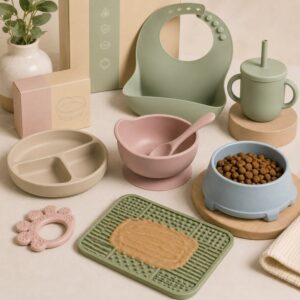
Food-grade silicone is generally non-porous, flexible, and easy to clean, which makes it suitable for baby feeding products, pet lick mats, kitchen tools, and reusable daily products. Silicone itself does not easily harbor bacteria when properly designed and cleaned. However, bacteria may remain on the surface if food residue, moisture, deep grooves, rough texture, or poor cleaning conditions are present. For OEM silicone products, buyers should pay attention to material grade, surface finish, product structure, molding quality, and cleaning design.
Why Is Silicone Used for Baby and Pet Products?
Silicone is commonly used in baby and pet products because it combines softness, durability, and heat resistance. Compared with many hard plastic materials, silicone provides a softer touch and better flexibility, making it suitable for products that contact the mouth, skin, food, or water.
Common applications include:
Baby feeding sets
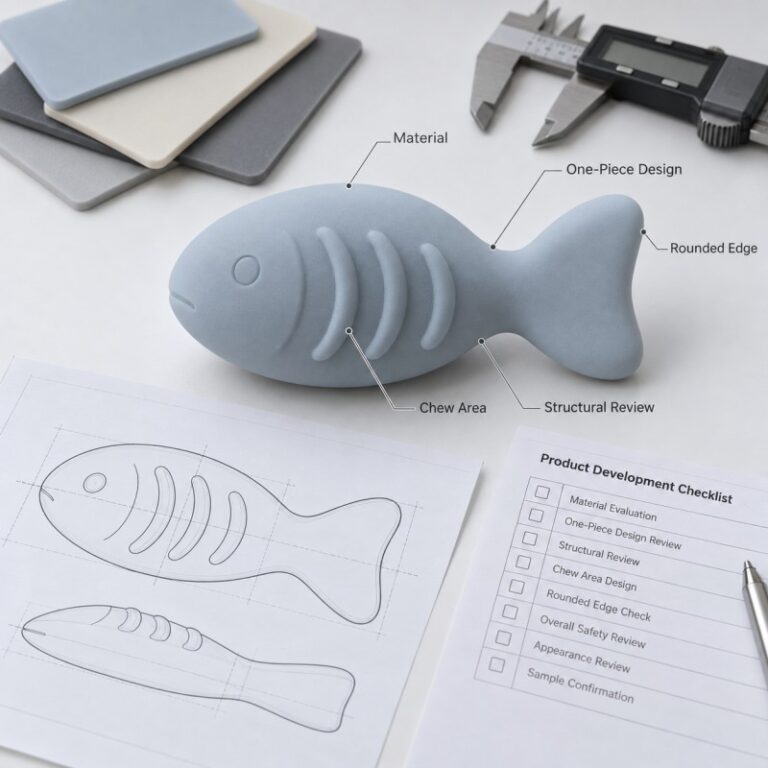
Силиконовые прорезыватели для детей
Silicone bibs
Silicone suction bowls
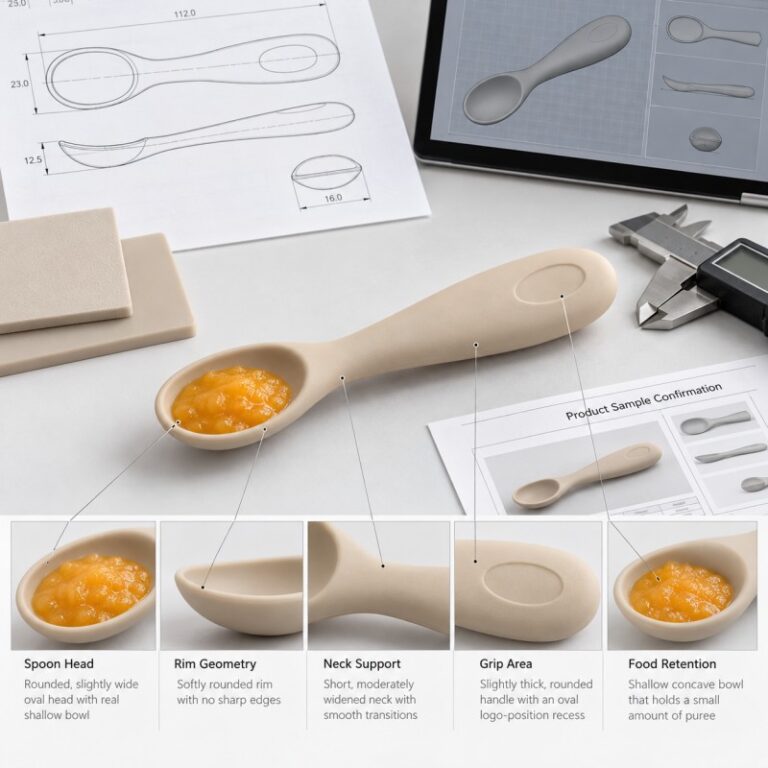
Silicone spoons
Silicone pacifier cases
Silicone pet feeding bowls
Silicone dog treat pouches
Силиконовые игрушки для ванны
Silicone sensory toys
For brands and wholesalers, silicone is also suitable for OEM and private label projects because color, shape, logo, texture, packaging, and mold design can be customized.
Does Silicone Itself Grow Bacteria?
Silicone does not “feed” bacteria like organic food residue does. A smooth, well-molded silicone surface is generally easier to clean than many rough or porous surfaces.
However, this does not mean silicone products can never carry bacteria.
Bacteria may remain on silicone products when:
Food residue is left on the surface
The product is not cleaned after use
The product stays wet for a long time
The surface has deep grooves or hard-to-clean corners
The texture is too rough
The product has poor molding quality
The silicone material is mixed with low-quality fillers
The product structure traps water or food
So the real question is not only “Does silicone harbor bacteria?”
The better question is:
Is the silicone product designed and manufactured in a way that makes cleaning easy?
Food-Grade Silicone Matters
For baby, pet, and feeding products, material selection is very important. Buyers should pay attention to whether the silicone material is suitable for food-contact or baby-related applications.
Food-grade silicone is commonly selected for:
Baby feeding products
Baby teething products
Pet feeding products
Kitchen accessories
Reusable food-contact products
Mouth-contact silicone products
When developing OEM silicone products, buyers should clearly communicate the target market and testing requirements before production. Different markets may require different material standards, test reports, or compliance documents.
For example, baby feeding products and pet feeding products may need different hardness, surface finish, safety testing, and packaging requirements depending on the product use and sales region.
Product Design Affects Hygiene
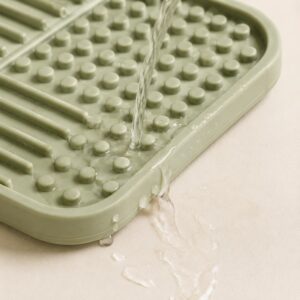
Even if the material is high-quality silicone, poor product design can still make cleaning difficult.
For example, a silicone pet lick mat may need raised textures to slow down feeding and increase pet interaction. But if the texture is too deep, too narrow, or too sharp, food residue may remain inside the grooves.
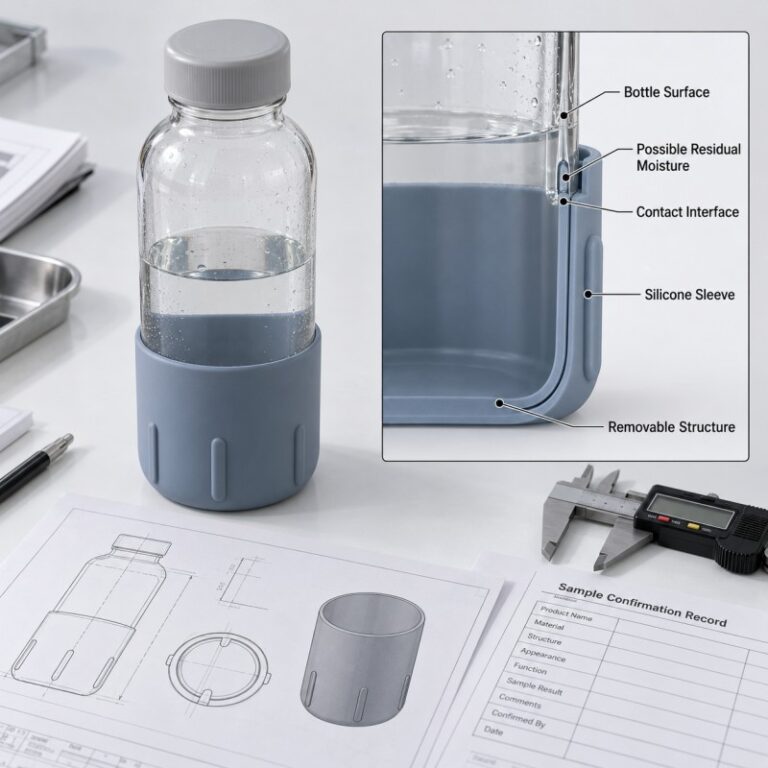
A silicone baby feeding set may need suction performance, soft edges, and comfortable use. But if the bottom structure traps water, it may become harder to dry completely after washing.
When designing silicone products, buyers should consider:
Surface smoothness
Texture depth
Corner radius
Cleaning accessibility
Drainage design
Food residue release
Suction base structure
Wall thickness
Molding parting line
Logo placement
A good silicone product should not only look attractive. It should also be easy to wash, easy to dry, and practical for daily use.
Surface Finish and Molding Quality
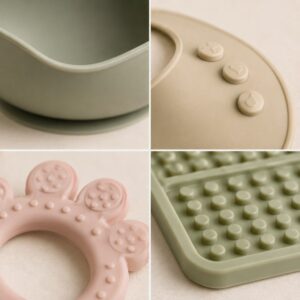
The surface finish of a silicone product has a direct impact on cleaning performance. A smooth and well-molded surface is easier to clean, while a rough or poorly finished surface may trap dirt, dust, or food particles.
Molding quality also matters.
Common quality problems include:
Flash around the edge
Rough parting lines
Uneven surface texture
Poor logo embossing
Material flow marks
Deformation
Air marks or pits
Unstable hardness
Color inconsistency
For baby and pet silicone products, these details are not only appearance issues. They can also affect cleaning, safety perception, brand image, and user experience.
Silicone Baby Products: What Buyers Should Check
For silicone baby products, buyers should be especially careful with material, softness, structure, and cleaning design.
Important points include:
Food-grade silicone material
Soft and safe edge design
Smooth surface finish
No sharp corners
Easy-to-clean structure
Suitable hardness
Stable color
No strong odor
Reliable molding quality
Custom packaging support
For products such as baby teethers, suction bowls, spoons, bibs, and pacifier cases, the product should be designed for frequent cleaning and daily repeated use.
If the product has deep patterns or complex shapes, the cleaning method should be considered during the design stage.
Silicone Pet Products: What Buyers Should Check
Silicone pet products also need practical design. Pets may bite, lick, scratch, and drag products during use, so durability and easy cleaning are both important.
For silicone pet lick mats, feeding bowls, dog treat pouches, and pet grooming products, buyers should check:
Food-contact silicone material
Safe texture design
Suitable softness and toughness
Easy food release
Easy washing
Stable suction performance
Durable structure
Custom color options
Logo customization
Retail packaging design
A silicone pet lick mat, for example, should balance feeding function and cleaning convenience. If the pattern is too shallow, the slow-feeding effect may be weak. If the pattern is too deep, cleaning may become difficult.
How Cleaning Design Helps Reduce Bacteria Risk
Cleaning design is one of the most important factors for silicone feeding products.
A good design should make it easier for users to remove residue, rinse the surface, and dry the product after use.
Useful design considerations include:
Avoid unnecessary deep holes
Use rounded corners instead of sharp corners
Keep texture depth reasonable
Avoid hidden water-trapping areas
Choose suitable surface finish
Design suction cups for easy cleaning
Avoid overly complex decorative patterns
Keep logos clean and simple
For OEM projects, cleaning convenience should be discussed before mold development. Once the mold is completed, changing texture, thickness, or structure can increase cost and delay production.
Can Silicone Be Sterilized or Washed?
Many silicone products can be washed with warm water and mild detergent. Some food-grade silicone products may also tolerate higher temperatures, depending on the material grade and product structure.
However, the cleaning method should always match the final product design and customer market requirements.
For example:
Baby feeding products may require frequent washing
Pet lick mats may need food residue cleaning after every use
Kitchen silicone products may need oil and sauce removal
Bath toys need drainage and drying design
Reusable travel products need compact but cleanable structures
For brands, clear care instructions are also important. A good silicone product should not only be manufactured well; it should also be easy for consumers to use and maintain correctly.
How LYA Silicone Supports Custom Food-Grade Silicone Products
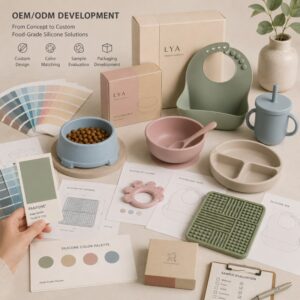
LYA Silicone provides OEM/ODM manufacturing services for custom silicone baby products, pet products, feeding products, kitchen accessories, outdoor silicone products, and daily-use silicone items.
We support custom projects from product concept, sample review, mold development, material selection, color matching, logo customization, surface texture design, packaging support, and mass production.
For food-grade silicone products, we can help buyers evaluate:
Product structure
Material selection
Hardness range
Surface finish
Texture design
Cleaning convenience
Mold feasibility
Logo process
Packaging requirements
Mass production consistency
Whether you are developing silicone baby feeding products, silicone pet lick mats, silicone toys, or private label silicone product collections, early product design review can help reduce risks before mold production.
Заключение
Silicone itself does not easily harbor bacteria when it is made from suitable material, molded with a smooth surface, and cleaned properly. But bacteria may remain on any product if food residue, moisture, rough texture, or hard-to-clean structures are present.
For baby, pet, and food-contact silicone products, buyers should not only ask whether silicone is safe. They should also check material grade, product structure, surface finish, molding quality, and cleaning design.
If you are developing a custom food-grade silicone product, please send your product idea, drawing, sample photo, size, color, logo, packaging requirements, and estimated quantity. LYA Silicone can help review your project and provide OEM/ODM silicone product manufacturing suggestions.
Looking for a reliable silicone manufacturer? Explore hygienic silicone manufacturing from LYA Silicone.