 Japanese
  English
  French
  German
  Spanish
  Polish
  Chinese
  Korean
  Russian
 内容
はじめに
Color is one of the most visible elements of a custom silicone product.
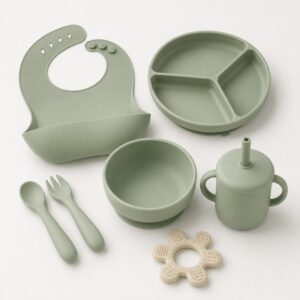
For baby, pet, outdoor, educational, household, and lifestyle brands, color affects product positioning, packaging design, online photography, retail presentation, and the consistency of an entire product collection.
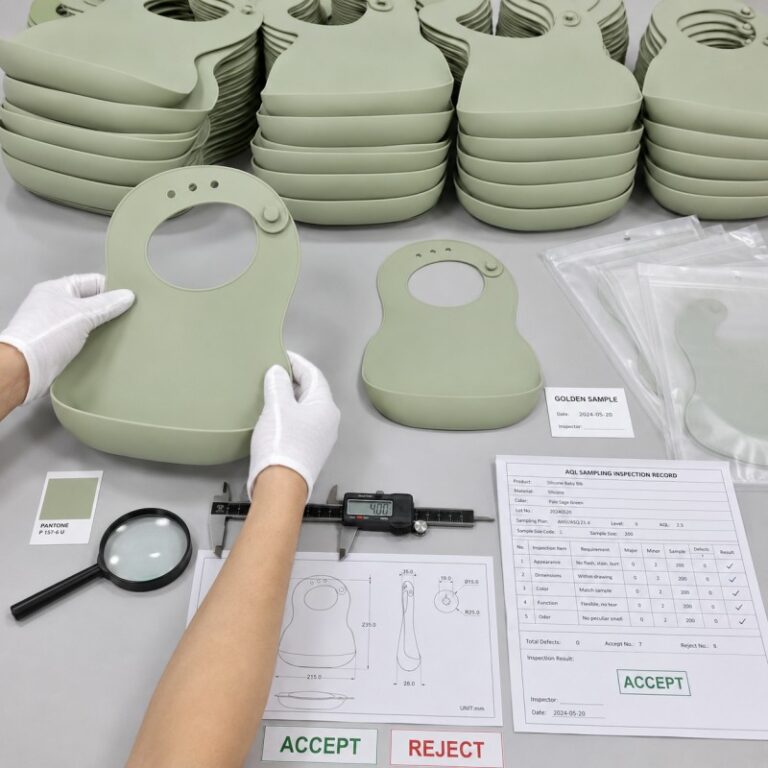
Many buyers provide a Pantone number and expect every silicone item to look exactly the same. This challenge is especially common when brands develop coordinated custom silicone baby products with bowls, bibs, cups, teethers, pacifiers and accessories.However, the same color formula may appear different on a thin silicone bib, a thick feeding bowl, a matte pet lick mat, a glossy pacifier case, or a translucent baby teether.
Color differences do not always mean that the wrong pigment was used. The final appearance can also be affected by silicone material, product thickness, transparency, mold texture, curing conditions, lighting, product geometry, color mixing, production batch, and inspection method.
For B2B buyers, the goal should not be to judge color only by a photograph or computer screen. The goal is to establish a practical color-approval and mass-production control system before bulk production.
This guide explains why custom silicone products show color differences and how brands and manufacturers can improve Pantone matching and batch consistency.
Answer Excerpt
Custom silicone products may show color differences because the final appearance is influenced by more than the pigment formula.
Silicone grade, base-material color, pigment concentration, wall thickness, product transparency, mold texture, surface gloss, curing temperature, production batch, lighting, background, and inspection conditions can all affect how a color appears.
The same Pantone target may therefore look slightly different on products with different thicknesses, shapes, textures, and molds.
For reliable OEM production, buyers should approve actual molded samples, define the viewing conditions, confirm acceptable color variation, retain reference samples, and evaluate all products in a set together before mass production.
1. Why a Pantone Number Is Only a Starting Point
A Pantone reference gives the buyer and manufacturer a common color target.
However, it does not automatically guarantee that a finished silicone product will look identical to a printed Pantone card.
A Pantone card is usually:
- Printed on paper
- Viewed on a flat surface
- Produced with printing ink
- Evaluated under specific lighting
- Opaque and relatively uniform
A silicone product may be:
- Curved
- Textured
- Glossy or matte
- Thin or thick
- Opaque, translucent, or transparent
- Viewed over different backgrounds
- Produced using a molded pigment system
These differences affect how light reaches the surface and returns to the viewer.
For this reason, the Pantone number should be treated as the initial target. The final approval should be based on an actual molded silicone sample made with the intended material, thickness, texture, and production process.
2. The Base Silicone Material Affects the Final Color
Before pigment is added, silicone already has its own visual characteristics.
Depending on the formulation, the base material may appear:
- Clear
- Translucent
- Milky
- Slightly blue
- Slightly yellow
- Opaque
- Highly transparent
- Softly diffused
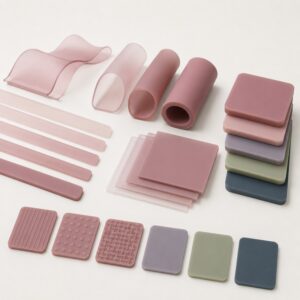
When the same color masterbatch is added to two different silicone grades, the finished colors may not look identical.
The material can also differ in:
- Transparency
- Filler content
- Cure system
- Hardness
- Tear-strength formulation
- Heat resistance
- Food-contact requirements
- Surface behavior
For example, a translucent silicone material may produce a softer and lighter-looking color than an opaque formulation.
The material grade should therefore be confirmed before final color matching begins.
If the silicone grade changes after color approval, a new molded color sample may be necessary.
3. Pigment Concentration Must Be Controlled Carefully
Custom silicone colors are commonly produced by mixing color masterbatch into the silicone material.
A small change in pigment concentration may create a visible color difference, particularly in:
- Light pastel colors
- White and cream colors
- Gray and beige tones
- Dark blue and black
- Transparent colors
- Multi-product gift sets
Too little pigment may make the product look lighter or more translucent.
Too much pigment may make it appear darker, more opaque, or less consistent with the approved sample.
Pigment control should include:
- Defined mixing ratio
- Accurate weighing
- Consistent raw material
- Controlled mixing time
- Clean mixing equipment
- Batch identification
- Sample retention
- Production records
The factory should not adjust color only through visual estimation during every production batch.
A documented formula provides a more stable basis for repeat orders.
4. Poor Pigment Dispersion Can Cause Streaks and Uneven Color
Even when the correct pigment amount is used, incomplete mixing can create uneven appearance.
Possible defects include:
- Dark streaks
- Light streaks
- Spots
- Cloudy areas
- Swirl patterns
- Local transparency differences
- Color concentration around edges
- Variation between different areas of one product
Pigment must be distributed evenly throughout the silicone material before molding.
Dispersion may be affected by:
- Mixing equipment
- Mixing time
- Material temperature
- Pigment form
- Silicone viscosity
- Batch size
- Operator procedure
- Contamination from a previous color
Light colors can be especially sensitive to contamination. A small amount of dark pigment remaining in the equipment may create visible spots or color deviation.
Color-change procedures and equipment cleaning should therefore be included in production control.
5. Product Thickness Changes the Way Color Appears
Wall thickness is one of the most common reasons why two products using the same color formula appear different.
A thin silicone section allows more light to pass through. It may look:
- Lighter
- More translucent
- Less saturated
- More affected by the background
A thick silicone section may look:
- Darker
- More opaque
- More saturated
- Visually heavier
This effect is particularly visible in products such as:
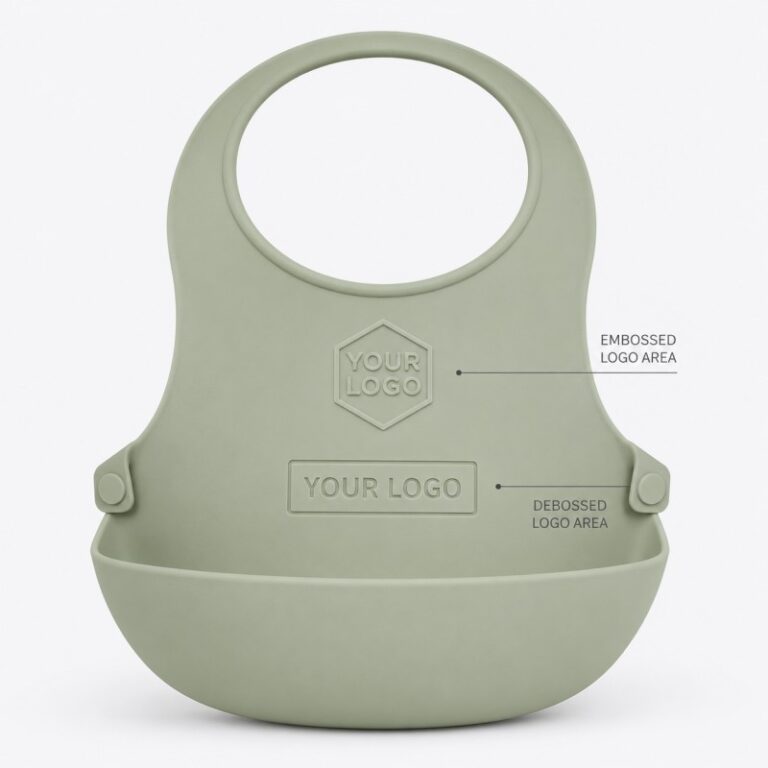
- Silicone bibs
- Baby feeding bowls
- Pacifiers
- Teethers
- Pet lick mats
- Collapsible cups
- Straws
- Toy pieces
- Thin lids
- Thick handles
Even one product can show apparent color variation between thin and thick sections.
This does not always mean the pigment is uneven. It may be an optical result caused by the product structure.
During sample approval, buyers should review the complete product rather than evaluating only one small area.
6. Hardness and Material Formulation May Change the Appearance
Silicone hardness should be selected primarily according to product function, but it can also affect visual appearance.
Different hardness grades may use different material formulations. As a result, two products with the same nominal color formula but different hardness levels may not look completely identical.
For example:
- A soft silicone bib may appear slightly different from a firmer bowl.
- A flexible straw may differ from a thicker cup body.
- A soft pet lick mat may differ from a solid chew toy.
- A flexible toy component may differ from a supporting base.
If several products must form one coordinated retail set, the manufacturer should evaluate the complete collection after molding.
The buyer should not assume that one approved pigment ratio will automatically create an identical appearance across every hardness, thickness, and product structure.
7. Matte and Glossy Surfaces Reflect Color Differently
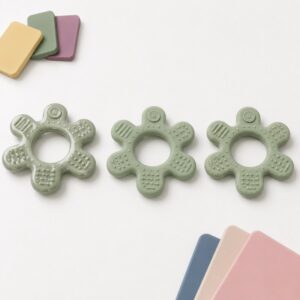
Mold surface finish has a direct influence on perceived color.Buyers should compare matte, glossy, and textured surface finishes before confirming the final product appearance.
A glossy surface reflects more direct light and may appear:
- Brighter
- Deeper
- More saturated
- More reflective
A matte surface scatters light and may appear:
- Softer
- Lighter
- Less saturated
- More muted
A fine texture, coarse texture, polished surface, or soft-touch finish may therefore make the same silicone color look different.
This is particularly important when a product line contains:
- A matte feeding bowl
- A glossy lid
- A textured pet mat
- A polished straw
- A fine-grain teether
- A smooth storage case
Buyers should confirm the color and surface finish together.
Approving a glossy color sample and later changing the mold to a matte texture may change the product’s final appearance.
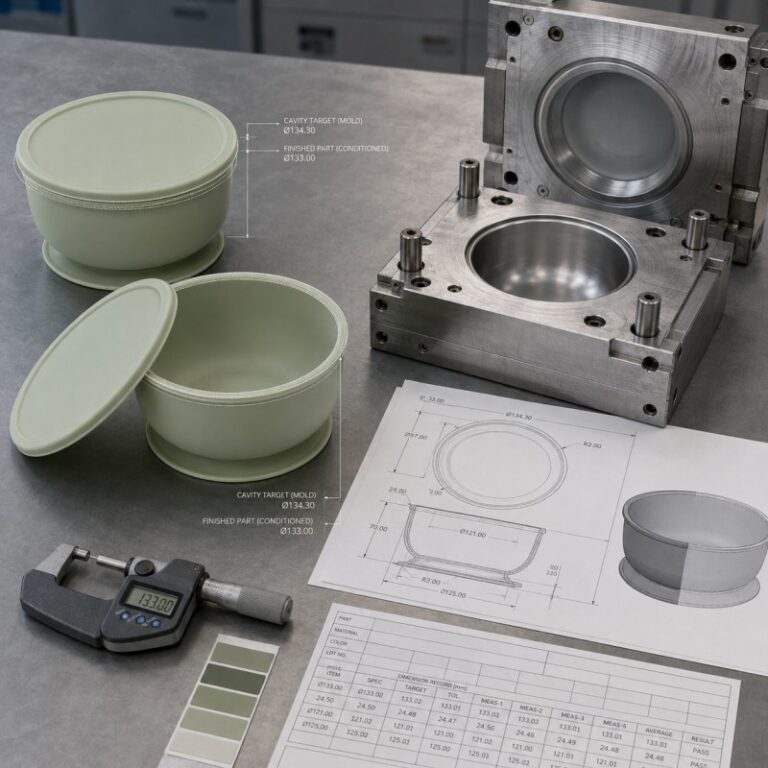
8. Mold Cavities and Mold Maintenance Can Affect Color Consistency
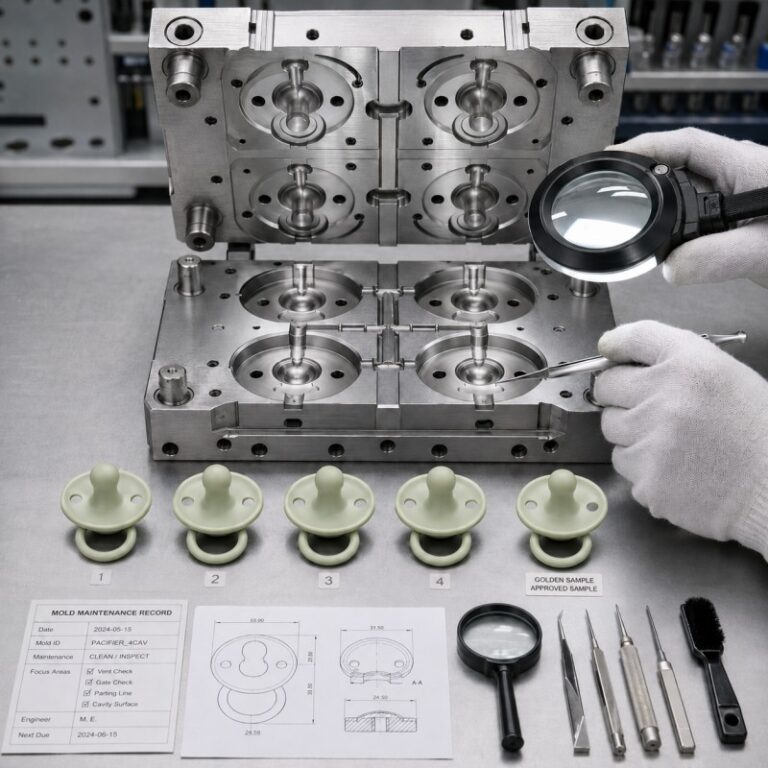
For higher-volume products, one mold may contain several cavities.
Ideally, every cavity should produce the same appearance. However, differences can occur because of:
- Mold temperature variation
- Different venting conditions
- Uneven material flow
- Cavity surface differences
- Local pressure variation
- Texture wear
- Mold repair
- Polish differences
- Contamination
If one cavity has been polished or repaired differently from the others, its products may appear glossier or darker.
During pilot production, samples should be compared across all cavities.
The manufacturer should identify which product came from which cavity so that repeated color or surface differences can be traced.
9. Curing Conditions Can Change the Final Appearance
Silicone curing must be controlled according to the material and product structure.
Color appearance may be affected by:
- Mold temperature
- Curing time
- Product thickness
- Heating uniformity
- Material formulation
- Post-curing conditions
- Production-cycle stability
Unstable curing may create:
- Slight yellowing
- Uneven gloss
- Local color changes
- Different transparency
- Surface variation
- Batch inconsistency
Thick and thin products may require different molding conditions.
If a complete set uses several molds and production cycles, each product must be reviewed after the final production process rather than assuming that identical raw material will produce an identical result.
10. Light Colors Are Often More Difficult to Control
White, cream, beige, dusty pink, sage green, light blue, and other pastel colors are popular in modern baby and lifestyle products.
However, light colors may make certain defects more visible.
Possible issues include:
- Black spots
- Dark pigment contamination
- Yellowing
- Uneven mixing
- Surface dust
- Material stains
- Packaging transfer
- Color difference between batches
Dark colors can hide some contamination but may show other problems, such as dust, scratches, gloss differences, or stretching marks.
The quality-control plan should therefore match the selected color rather than applying exactly the same visual standard to every product.
11. Lighting and Background Can Change Color Evaluation
The same silicone product can look different under:
- Natural daylight
- Warm indoor light
- Cool LED light
- Factory fluorescent light
- Photography lighting
- Retail shelf lighting
Background color also matters.
A translucent silicone item may look lighter on a white background and darker on a black background.
Camera settings and computer screens can create additional differences. A customer may see one color on a laptop, another on a phone, and another in the physical sample.
For formal color approval, buyers and manufacturers should agree on:
- Physical sample
- Lighting condition
- Background
- Viewing distance
- Viewing angle
- Product orientation
- Surface cleanliness
- Comparison method
Photographs are useful for communication, but they should not replace physical sample approval for color-sensitive projects.
12. Different Products in One Set May Not Look Identical
A custom silicone pet products collection may contain:
- Bowl
- Plate
- Spoon
- Bib
- Cup
- Straw
- 蓋
A pet product set may contain:
- Feeding bowl
- Lick mat
- Treat pouch
- Chew toy
- Grooming brush
- Brands developing several coordinated products should plan the complete silicone pet product line before approving colors and packaging.
These products can differ in:
- Silicone grade
- Hardness
- Thickness
- テクスチャー
- Mold surface
- Curing cycle
- 形状
- Transparency
- Production date
Even when they use the same Pantone target, minor visual differences may remain.
The goal should be a coordinated and commercially acceptable color system, not an unrealistic expectation that every product will appear optically identical under every condition.
Brands should place all items together during sample approval and evaluate whether the complete set looks consistent in its intended retail presentation.
13. Packaging Can Affect How the Color Looks
Packaging materials may influence product appearance during storage and transportation.
Possible risks include:
- Dust transferred from paper inserts
- Ink transfer
- Oil or residue from packaging
- Product compression
- Surface rubbing
- Color cast from transparent packaging
- Strong packaging odor
- Long-term exposure to heat or sunlight
A matte silicone surface may collect visible dust more easily than a highly polished surface.
A light-colored silicone product may show packaging contamination more clearly.
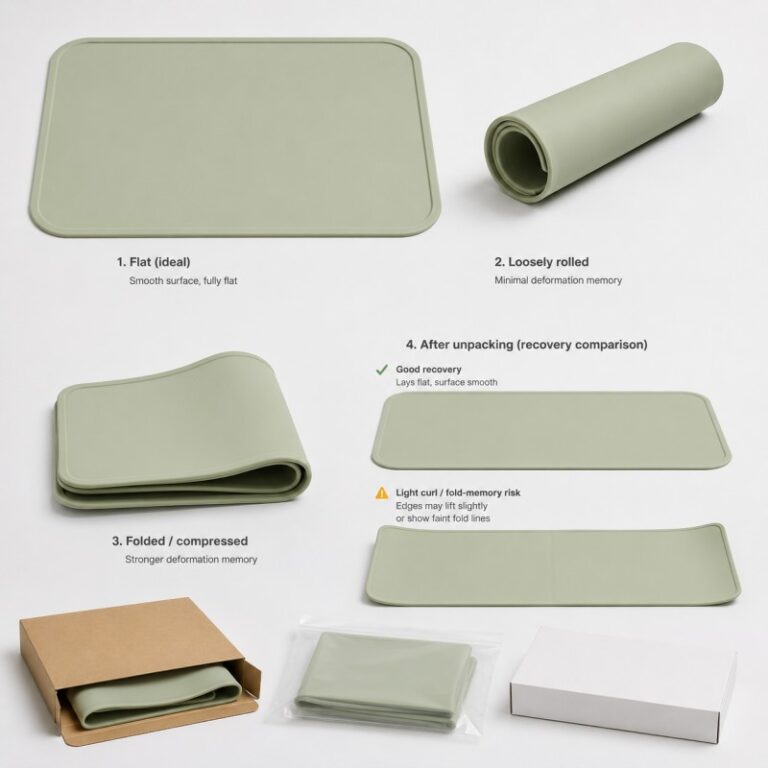
Packaging trials should therefore use actual production samples and final packaging materials.
The buyer should evaluate the product both before and after a simulated storage or transport period.
14. Why a Sample and Mass-Production Batch May Look Different
A development sample is usually produced in a small quantity with close engineering attention.
Mass production introduces more variables:
- Larger material batches
- Multiple operators
- Longer production time
- Multiple mold cavities
- Material-lot changes
- Color-masterbatch changes
- Equipment variation
- Mold-temperature variation
- Packaging and storage
A color that matches during initial sampling may shift slightly if the formula, material, process, or inspection method changes.
To reduce this risk, the approved sample should become a controlled production reference.
The manufacturer should retain:
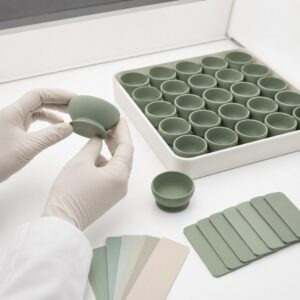
- Approved physical sample
- 素材グレード
- Pigment formula
- Batch information
- Mold number
- Cavity information
- Production parameters
- Inspection records
Repeat orders should be compared with the approved reference and, when relevant, the previous production batch.This reference-sample and production-record system is particularly important for brands planning long-term OEM cooperation.
15. Define an Acceptable Color Standard Before Production
Descriptions such as “the color must be exactly the same” are difficult to apply during manufacturing.
A more practical standard should define:
- Approved physical sample
- Target Pantone reference
- 素材グレード
- Surface texture
- Product thickness
- Inspection lighting
- Background
- Viewing distance
- Acceptable visual variation
- Measurement method, when required
- Comparison between product components
- Batch approval process
For highly color-sensitive brands, numerical color measurement may be used when the product shape and measurement area allow it.
However, instrument readings should still be combined with visual evaluation because texture, gloss, translucency, and geometry affect how the finished product is perceived.
16. Approve Color on the Actual Molded Product
A flat silicone color chip is useful for the first matching round, but it cannot fully represent the final product.
The final approval should use a molded sample because the product includes:
- Actual thickness
- Actual mold texture
- Actual geometry
- Actual material
- Actual curing conditions
- Actual logo and surface details
For a multi-product set, each major component should be sampled.
A buyer may approve the bowl color but later find that the same formula looks too light on the thin bib or too dark on the thick toy.
Approving the full product collection before bulk production reduces this risk.
17. How to Investigate a Silicone Color Difference
When a color problem occurs, do not immediately change the pigment formula.
Use a structured investigation:
- Compare the affected product with the approved sample.
- Confirm whether the material grade is the same.
- Check the pigment formula and weighing records.
- Compare the production batches.
- Check product thickness and geometry.
- Compare mold cavities.
- Review mold texture and repair records.
- Confirm curing temperature and cycle time.
- Inspect for contamination or uneven pigment dispersion.
- Evaluate the product under agreed lighting.
- Compare the packaging and storage conditions.
- Determine whether the difference is visual, measurable, or both.
Several variables should not be changed simultaneously.
The root cause should be confirmed before changing the material, pigment, mold, or process.
18. What Information Should Buyers Provide?
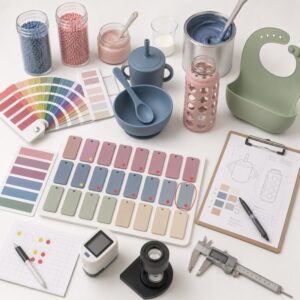
To develop a custom silicone color accurately, buyers should provide:
- Pantone reference
- Physical color sample, when available
- Product drawing
- Product dimensions
- Wall thickness
- Silicone material requirement
- Hardness
- Transparent, translucent, or opaque requirement
- Matte, glossy, or textured finish
- Product-set combination
- Logo color
- Packaging design
- Target market
- Inspection expectation
- Estimated quantity
- Repeat-order plan
Buyers should also explain whether the product must match:
- An existing silicone product
- Printed packaging
- A plastic component
- A fabric accessory
- A metal component
- A complete brand color system
Matching silicone to paper, plastic, fabric, and metal requires visual coordination rather than assuming all materials will display the same color identically.
How LYA Silicone Supports Custom Color Matching
LYA Silicone supports OEM and ODM development for custom silicone baby, pet, outdoor, educational, household, and lifestyle products.
Our color-related project support can include:
- Pantone color matching
- Physical sample comparison
- Silicone material selection
- Hardness review
- Transparent or opaque color development
- Mold surface and texture review
- Molded sample production
- Multi-product color coordination
- Logo and packaging coordination
- Pilot-production review
- Batch inspection
- Reference-sample retention
- Repeat-order color control
With more than 25 years of silicone manufacturing experience, we help buyers evaluate color together with material, thickness, structure, mold texture, curing process, packaging, and mass-production consistency.
For product sets, the complete collection should be reviewed together so that the bowl, bib, cup, toy, mat, brush, or accessory presents a coordinated brand appearance.
Frequently Asked Questions
Can silicone be matched to any Pantone color?
Many Pantone colors can be used as matching targets, but the final result depends on silicone material, opacity, thickness, texture, curing, and product shape. A molded sample should be approved before production.
Why does the same color look darker on a thick silicone product?
Thicker silicone may absorb or block more light, making the color appear darker or more saturated than on a thin section.
Why do matte and glossy silicone products look different?
Matte and glossy surfaces reflect light differently. The same color formula may therefore appear softer and lighter on a matte surface and deeper or brighter on a glossy surface.
Can a photograph be used for final color approval?
Photographs are useful for preliminary communication, but cameras, lighting, screens, and backgrounds can change color appearance. Physical molded samples are more reliable for final approval.
Can several products use the same color formula?
They can use the same target formula, but differences in material, hardness, thickness, texture, and mold process may still create visual variation. Every major product should be reviewed.
How should repeat-order colors be controlled?
The manufacturer should retain the approved sample, material information, pigment formula, production records, and previous batch reference. New production should be compared under the agreed inspection conditions.
結論
Silicone color matching is not only a matter of adding pigment according to a Pantone number.
The finished color is affected by base material, pigment concentration, dispersion, wall thickness, hardness, transparency, mold texture, curing, lighting, packaging, and batch control.
The same color target may therefore appear slightly different across a thin bib, thick feeding bowl, textured lick mat, glossy pacifier case, or translucent teether.
The most reliable approach is to approve actual molded samples, evaluate complete product sets, define inspection conditions, retain reference samples, and control the material and production formula during mass production.
If you are developing a custom-colored silicone product or coordinated product collection, contact LYA Silicone and send us your Pantone reference, physical sample, drawing, material requirement, surface finish, product combination, packaging requirements, target market, and estimated quantity. Our team will review the project and provide an appropriate OEM or ODM manufacturing proposal.