 German
  English
  French
  Spanish
  Polish
  Chinese
  Japanese
  Korean
  Russian
 Inhalt
Answer Excerpt
AQL inspection for individuelle Silikonprodukte should combine an agreed sampling plan with clearly defined critical, major and minor defects. Buyers should not select an AQL number without first defining appearance limits, critical dimensions, functional tests and packaging requirements. The current ISO 2859-1:2026 provides AQL-indexed sampling schemes for lot-by-lot inspection, while the actual defect classification still needs to be defined for each silicone product and application.
A silicone product may look simple, but final inspection can involve many different requirements.
For example:
- Farbe
- Flash
- Black spots
- Dimensions
- Product weight
- Logo
- Texture
- Tear damage
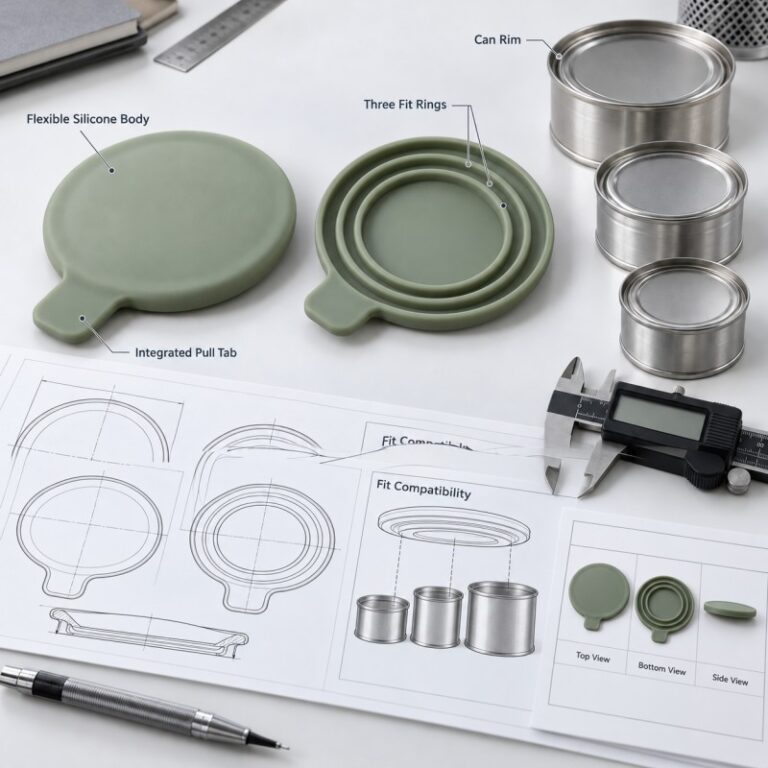
- Closure function
- Shape recovery
- Verpackung
- Quantity
Checking every single characteristic on every single product may not always be practical for a large shipment.
This is where sampling inspection can be used.
However, AQL is frequently misunderstood.
A buyer may simply write:
AQL 2.5
in a purchase order.
That is not enough to create a complete silicone quality standard.
The buyer and manufacturer still need to agree on what constitutes a defect and how each defect is classified.
What Does AQL Mean?
AQL stands for Acceptance Quality Limit.
ISO 2859-1:2026 provides sampling schemes indexed by AQL for lot-by-lot inspection by attributes. The standard includes single, double and multiple sampling schemes and rules for normal, tightened and reduced inspection.
In practical sourcing terms, the inspection process normally involves:
- Define the production lot
- Select the applicable inspection approach
- Determine the sampling plan
- Randomly select samples
- Inspect the agreed characteristics
- Count defects by classification
- Compare the result with the applicable acceptance and rejection criteria
One important point:
AQL should not be interpreted as a guarantee that exactly that percentage of defective products exists in the shipment.
It is part of a statistical acceptance-sampling system.
Why Should Defects Be Defined Before Selecting AQL?
AQL numbers are useful only when inspectors know exactly what they are counting.
For silicone products, buyers should first create cosmetic defect standards and functional requirements.
Typical appearance issues may include:
- Black spots
- Flash
- Flow marks
- Scratches
- Color difference
- Parting-line marks
- Logo defects
- Deformation
Your existing appearance-standard guide already distinguishes functional or safety-related defects, major appearance defects and minor appearance defects, and recommends approved limit samples for subjective cosmetic characteristics.
Without this step, two inspectors may see the same silicone product and classify it differently.
What Are Critical, Major and Minor Defects?
There is no universal defect list that should be copied blindly across every silicone product.
The classification should depend on product function, target market and customer specification.
Critical Defects
A critical defect is generally associated with an unacceptable safety, regulatory or fundamental-use risk.
Product-specific examples might include:
- A dangerous sharp trimming defect
- A foreign object creating a safety concern
- A serious structural tear in a critical use area
- Incorrect product that creates an identified safety problem
- Missing safety-related feature specified by the buyer
Whether a particular condition is classified as critical must be agreed for the actual product.
A minor appearance mark should not automatically become a critical defect simply because the product is a baby product.
Major Defects
A major defect may make the product unacceptable for its intended use or significantly reduce its commercial value.
Possible silicone-product examples include:
- Critical dimension outside specification
- Closure does not work
- Large deformation
- Pocket does not remain functional
- Severe flash
- Strong color mismatch
- Missing molded feature
- Incorrect logo
- Significant surface damage
- Poor functional fit
Minor Defects
A minor defect normally does not significantly affect product function but may reduce appearance quality.
Examples may include:
- Small cosmetic mark on a secondary surface
- Slight gloss variation
- Minor parting-line visibility
- Very small approved surface imperfection
The exact acceptable size, location and quantity should be defined through drawings, photos or limit samples.
Should Buyers Use the Same AQL for Every Defect Category?
Not necessarily.
Different defect classes often receive different acceptance requirements because the consequences are different.
A buyer may require much stricter treatment of safety-related or major functional defects than small cosmetic imperfections.
However, you should not copy a generic Critical / Major / Minor AQL combination from the internet and automatically apply it to every product.
The appropriate plan depends on:
- Customer quality agreement
- Product risk
- Target market
- Retail requirements
- Historical supplier performance
- Inspection cost
- Lot size
- Contractual requirements
ISO 2859-1 provides the sampling framework; it does not replace product-specific engineering judgment.
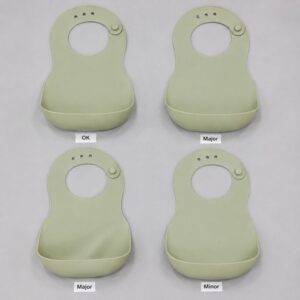
Example: AQL Inspection for a Custom Silicone Baby Bib
Consider a one-piece Silikon-Lätzchen with:
- Adjustable neck closure
- Multiple button holes
- Food-catching pocket
- Rounded outer edges
- Molded logo
- Matte surface
- Custom Pantone color
The inspector should not simply look at the product and decide whether it appears “good.”
The inspection specification could cover several separate categories.
Appearance
Check:
- Black spots
- Flow marks
- Scratches
- Flash
- Farbe
- Logo
- Surface contamination
Dimensions
Check:
- Neck opening
- Button diameter
- Button-hole size
- Overall length
- Pocket width
Flexible silicone requires clearly defined dimensional tolerances and measurement conditions because caliper pressure, product positioning and deformation can influence the result.
Funktion
Check:
- Button insertion
- Button retention
- Pocket opening
- Flexibility
- Shape recovery
Workmanship
Check:
- Edge trimming
- Parting lines
- Tears
- Hole condition
- Molded details
Verpackung
Check:
- Correct quantity
- Correct color/SKU
- Correct packaging
- Barcode or label where required
- Carton condition
The result is a much stronger inspection standard than simply writing:
AQL 2.5.
What Is the Difference Between 100% Inspection and AQL Sampling?
They solve different problems.
100% Inspection
Every production unit is checked for a defined characteristic.
This may be appropriate for certain:
- Critical features
- Automatic vision inspection
- Simple visual checks
- High-risk characteristics
However, 100% inspection can increase:
- Labor
- Time
- Cost
- Operator fatigue
It also does not automatically guarantee zero defects.
AQL Sampling Inspection
Only a statistically determined sample from the lot is inspected according to the selected sampling plan.
This can make final shipment inspection more efficient.
In many real projects, manufacturers may combine:
Process inspection + selected 100% controls + final AQL sampling
rather than relying on only one method.
Your current OEM Service page also describes incoming material, process and shipment controls as separate parts of its quality-management flow.
How Should Samples Be Selected?
AQL inspection should not be based on the easiest products to reach at the top of one carton.
Samples should represent the production lot.
Depending on the shipment, sampling may need to cover:
- Multiple cartons
- Different pallet positions
- Different production times
- Different mold cavities
- Different colors
- Different SKUs
For multi-cavity silicone molding, cavity traceability can also help investigate repeated defects.
If all rejected samples come from one mold cavity, that information is more useful than simply knowing the total number of defects.
Why Should Functional Tests Be Separate From Cosmetic Inspection?
A silicone product can look perfect and still fail its function.
For example:
- A bib button may release too easily
- A bowl lid may not fit
- A suction base may not hold
- A collapsible cup may not recover
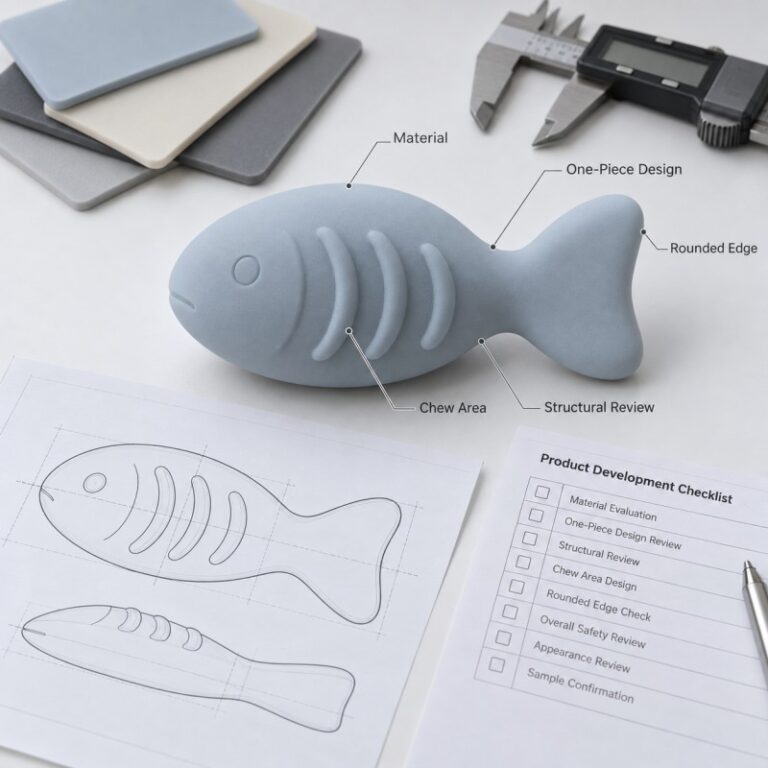
- A teether opening may be dimensionally incorrect
For this reason, the inspection checklist should distinguish:
Appearance inspection
from
Functional inspection
Some functional checks may use a smaller special inspection sample, depending on test complexity and the agreed inspection plan.
The buyer should define which tests are:
- Non-destructive
- Destructive
- Time-consuming
- Required on every batch
Why Are Golden Samples and Limit Samples Still Important?
AQL tells the inspector how to sample and make acceptance decisions.
It does not automatically define what an acceptable silicone surface looks like.
A golden sample can establish the desired target.
A limit sample can show the maximum acceptable condition for subjective defects such as:
- Flash
- Flow marks
- Color variation
- Surface marks
- Parting lines
- Packaging impressions
This is especially useful for matte silicone products where small differences in texture or surface appearance can be difficult to describe numerically.
The current LYA cosmetic-defect article likewise recommends limit samples for defects that are difficult to define using numbers alone.
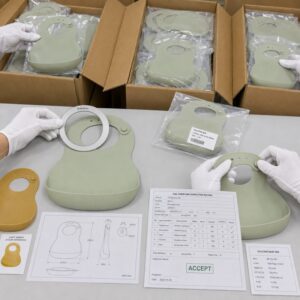
What Should Be Included in a Pre-Shipment Inspection Specification?
Before mass production, buyers should define:
- Name des Produkts
- SKU
- Drawing revision
- Approved sample
- Lot definition
- Inspection standard
- Inspection level
- Defect classifications
- AQL values
- Critical dimensions
- Functional tests
- Cosmetic zones
- Limit samples
- Packaging requirements
- Quantity check
- Required inspection report
The inspector should use the same approved revision as the factory and buyer.
Old drawings and outdated golden samples should be removed from active inspection files.
Common AQL Inspection Mistakes
Writing Only “AQL 2.5”
This does not define defect categories or inspection criteria.
Using the Same Defect Classification for Every Product
A silicone baby bib and a silicone travel bottle may have different functional risks.
Inspecting Only Appearance
Function, dimensions and packaging may still fail.
Selecting Samples From Only One Carton
The sample may not represent the shipment.
Ignoring Mold-Cavity Traceability
Repeated cavity-specific defects become harder to investigate.
Changing the Standard After Production Is Finished
Quality requirements should be agreed before production, not after shipment inspection begins.
AQL Inspection Planning Checklist
| Artikel | What Should Be Confirmed |
|---|---|
| Product specification | Final drawing and approved revision |
| Lot | Which production quantity is being inspected |
| Sampling standard | Agreed sampling scheme |
| Defect categories | Critical, major and minor clearly defined |
| AQL | Agreed for each applicable category |
| Appearance | Defect limits and inspection conditions |
| Dimensions | Critical dimensions and measurement method |
| Funktion | Product-specific tests |
| Golden sample | Target product reference |
| Limit samples | Maximum acceptable subjective defects |
| Verpackung | SKU, label, quantity and carton requirements |
| Traceability | Batch and cavity information where relevant |
| Inspection report | Results retained before shipment approval |
How LYA Silicone Supports Quality Inspection
LYA Silicone provides OEM and ODM development for silicone baby, pet, outdoor and educational products. The site’s current one-stop workflow includes product development, mold making, production and quality inspection, while its OEM page describes incoming material, process and shipment quality controls.
Project quality planning may include:
- Drawing review
- Golden-sample confirmation
- Cosmetic defect standards
- Critical-dimension definition
- Functional testing
- Mold-cavity inspection
- In-process inspection
- Packaging inspection
- Pre-shipment inspection
- Inspection records
The objective is not simply to “pass AQL.”
The objective is to make sure the buyer and manufacturer are evaluating the same product against the same approved standard.
Frequently Asked Questions
Is AQL the Same as a Guaranteed Defect Percentage?
No.
AQL is used within a statistical acceptance-sampling system. It should not be interpreted as a guarantee that a shipment contains exactly that defect percentage.
What Is the Current ISO Standard for AQL Sampling?
As of 2026, the current edition is ISO 2859-1:2026, published in January 2026. It replaced ISO 2859-1:1999 and its amendments.
Is AQL 2.5 Suitable for Every Silicone Product?
No.
The inspection plan and defect classifications should be selected according to the product, risk and buyer requirements.
Can Critical Defects Use a Different Requirement?
Yes.
Critical, major and minor defects do not necessarily use the same acceptance requirements.
Do We Still Need Golden Samples if We Use AQL?
Yes.
Golden and limit samples help define subjective appearance requirements that an AQL number alone cannot describe.
Should Dimensions Be Checked During AQL Inspection?
Critical dimensions can be included, but the measurement method, sample quantity and acceptance criteria should be clearly defined.
Define the Quality Standard Before Mass Production
AQL is a sampling tool—not a complete quality specification.
A reliable silicone pre-shipment inspection combines:
- Sampling
- Defect classification
- Cosmetic standards
- Dimensions
- Functional tests
- Golden samples
- Packaging requirements
- Traceability
Before placing a mass-production order, buyers and manufacturers should agree on these requirements in writing.
To develop an inspection plan for your custom silicone product, send LYA-Silikon your drawing, approved sample, target market, critical dimensions, defect requirements, packaging specification and estimated order quantity.