 Polish
 English
 French
 German
 Spanish
 Chinese
 Japanese
 Korean
 Russian
Zawartość
Why Does a Silicone Breast Pump Lose Suction During Use? An OEM Flange-Seal Design Guide
Answer Excerpt
A manual silicone breast pump may lose suction when its flange edge cannot maintain continuous contact, the flange-to-body transition deforms unevenly, or the collection body changes shape under compression. For OEM development, flange geometry, edge thickness, wall thickness, silicone hardness, body profile and the intended contact interface should be evaluated together. Buyers should confirm performance through repeatable sample testing rather than assuming that softer silicone or a tighter flange automatically creates a better seal.
Wprowadzenie
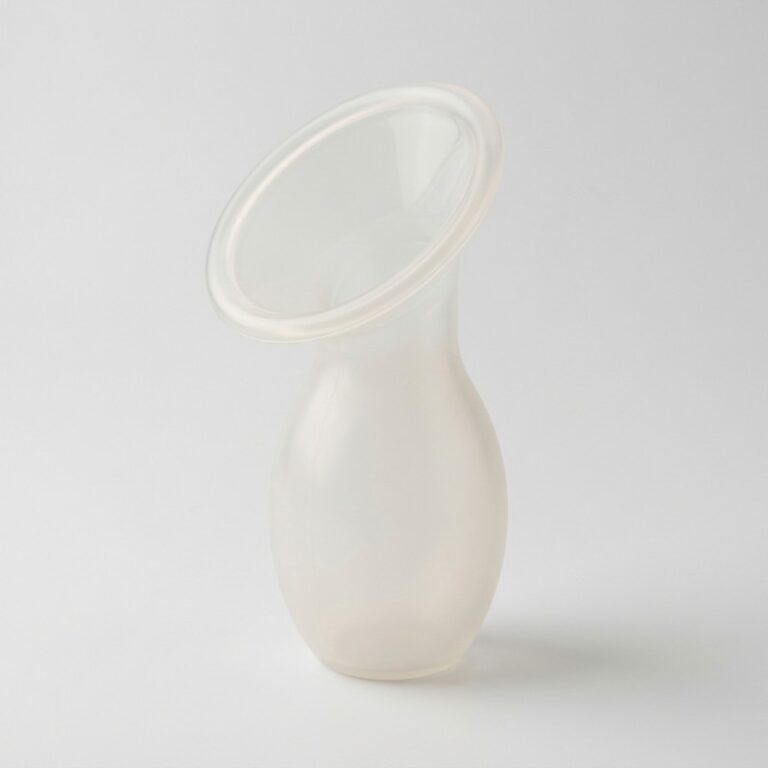
A silicone breast pump may look like a simple one-piece product, but its suction performance depends on the interaction between several structural features.
For maternity and baby product brands, common sample feedback may include:
- Suction becomes weaker during use.
- The flange edge does not maintain consistent contact.
- One side appears to lift more easily than the other.
- The pump body changes shape when squeezed.
- Different samples produce different suction results.
These observations do not necessarily have the same cause. A flange that does not maintain continuous contact requires a different design review from a collection body that deforms unevenly.
LYA Silicone’s custom silicone breast pump product category includes manual silicone breast pump products. This guide focuses on the engineering factors that OEM buyers should review when developing or improving the flange-seal structure.
Scope note: This is a product-design and manufacturing guide. It is not clinical guidance, a recommendation for individual flange sizing, or a claim about milk-expression outcomes.
1. Identify Which Interface Is Losing Suction
Before changing the mold, identify the exact interface where suction is being lost.
A manual silicone breast pump may contain more than one functional contact area.
Breast-shield flange interface
The flange edge is the contact area between the breast shield and the user’s body. If the edge cannot maintain continuous contact under the intended use conditions, air may enter the interface and the suction may weaken.
Potential design variables include:
- Flange opening geometry
- Edge profile and thickness
- Flange curvature
- Roundness and dimensional consistency
- Silicone flexibility
- Transition between the flange and collection body
Suction-base interface
Some product designs also include a suction base intended to attach to a tabletop or another smooth surface.
This is a separate interface. A base that releases from a table does not automatically indicate a problem with the breast-shield flange.
The two functions should have separate evaluation criteria:
| Interface | Main design concern | What to evaluate |
|---|---|---|
| Breast-shield flange | Continuous contact at the intended body interface | Edge profile, geometry, flexibility and contact consistency |
| Suction base | Attachment to the intended supporting surface | Base geometry, surface contact and release behavior |
| Accessory connection, if present | Fit between separate components | Dimensional fit, retention and repeated assembly |
A useful OEM investigation begins by recording the exact location and conditions of the reported failure.
2. How Flange Edge Geometry Affects Seal Continuity
The flange edge is not simply a decorative rim. Its geometry affects how the product makes contact with the intended surface.
Edge profile
An edge that is excessively thick or stiff may not conform as expected to the reference contact surface. An edge that is too flexible may fold or deform during positioning.
The design objective is not to make the edge as thin or as thick as possible. It is to create a controlled profile that can maintain the intended contact path.
Continuous contact around the circumference
A flange should be reviewed as a complete circular structure.
If the edge is uneven, locally distorted or out of round, contact may not be consistent around the entire circumference.
During sample inspection, check:
- Overall circularity
- Edge-height consistency
- Local deformation
- Surface finish
- Flash or trimming marks
- Symmetry around the flange opening
A visually acceptable top view does not always confirm that the contact edge is uniform.
Transition from flange to body
The transition between the flange and the collection body also matters.
An abrupt change in thickness or curvature may create a local area that bends differently from the surrounding structure. The transition should be reviewed in the 3D design and then checked on the molded sample.
3. Why Silicone Hardness Alone Does Not Fix Suction Loss
When a sample loses suction, increasing or decreasing silicone hardness may seem like the fastest solution. However, hardness should not be changed without reviewing the complete geometry.
A softer material may allow the flange to deform more easily, but excessive flexibility can also make the edge less stable.
A firmer material may help the structure retain its shape, but it may reduce the ability of the flange to conform to the intended contact surface.
The final behavior depends on several interacting variables:
| Design variable | Possible effect | OEM review point |
|---|---|---|
| Silicone hardness | Changes the flexibility of the flange and body | Evaluate with the final geometry |
| Edge thickness | Influences local bending behavior | Check contact consistency |
| Flange curvature | Influences how the edge meets the reference surface | Review the full contact profile |
| Root transition | Influences local deformation near the flange body | Avoid abrupt geometry changes |
| Body wall thickness | Influences how the collection body deforms | Check under the agreed operating conditions |
There is no universal hardness value that guarantees stable suction for every breast pump design.
The buyer and manufacturer should agree on the intended material specification and evaluate it using actual molded samples.
4. How Collection-Body Geometry Can Affect the Flange
The collection body and flange should not be designed as unrelated components.
When the body is squeezed or repositioned, the resulting deformation may affect the flange orientation and contact condition.
For a one-piece silicone body, the flange, transition and collection body form an integrated structure. A change in one area may influence the behavior of another.
Important design considerations include:
Body profile
A tapered or curved body may deform differently from a straight-sided body. The geometry should be reviewed under the conditions in which the product is intended to be handled.
Wall-thickness distribution
Uneven wall thickness may produce uneven deformation. The design team should pay attention to transitions between the flange, upper body and lower collection area.
Flange-to-body alignment
The flange should remain in its intended position when the body is handled. If the transition is too flexible or geometrically unbalanced, the flange may change orientation.
One-piece and multi-component structures
A one-piece body avoids an assembly joint between the main flange and collection body. If a project uses separate components, each connection should be evaluated for fit, retention and possible air leakage.
The selected structure should be based on the actual product design and manufacturing requirements.
5. Common Suction-Loss Symptoms and What Buyers Should Check
A clear failure description helps the engineering team avoid changing the wrong feature.
| Sample observation | Possible design or manufacturing factor | Recommended review |
|---|---|---|
| Suction weakens soon after positioning | Inconsistent flange contact | Check edge profile, roundness and contact continuity |
| One side lifts more easily | Asymmetric geometry or local deformation | Compare flange dimensions and molded shape |
| Suction changes when the body is squeezed | Flange-to-body transition or body flexibility | Review wall thickness and body deformation |
| Samples behave differently | Mold or process variation | Compare samples by cavity and production batch |
| Visible flash appears near the edge | Trimming or mold-parting-line issue | Inspect the functional contact area |
| Tabletop base releases | Base-to-surface interface | Test the base separately from the flange |
These are diagnostic possibilities, not proof of a particular defect. The actual cause should be confirmed by inspection and controlled testing.
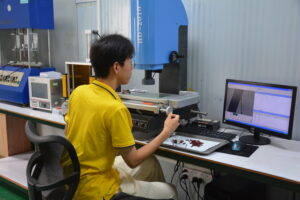
6. How to Validate Flange-Seal Performance During Sample Approval
A sample should not be approved based only on appearance or a brief manual demonstration.
For OEM projects, the buyer and manufacturer should define a repeatable evaluation method before final tooling approval.
Step 1: Inspect the molded geometry
Check the flange opening, edge profile, circularity, transition and visible surface condition.
Record any flash, trimming damage, local distortion or inconsistent edge thickness.
Step 2: Use a controlled reference fixture
A suitable compliant fixture can help compare how different samples contact a defined reference surface.
The fixture should be selected for the evaluation purpose and should not be treated as a substitute for appropriate user evaluation or market-specific product testing.
Step 3: Define a repeatable suction-retention method
Where suitable equipment is available, the project may use a controlled pressure-retention or pressure-decay method to compare samples.
The test definition should specify:
- Fixture configuration
- Contact-surface condition
- Product positioning
- Application procedure
- Test duration
- Measurement method
- Acceptance criteria
No universal pressure value or hold time should be assumed. The buyer and manufacturer need to agree on criteria appropriate to the final product.
Step 4: Compare multiple samples
One successful sample does not establish production consistency.
Where relevant, compare samples from different mold cavities and production runs. Record the sample identity and inspection results.
Step 5: Review repeated-use conditions
If the product is intended for repeated use, define how repeated positioning, removal, cleaning and storage will be evaluated.
The inspection conditions should reflect the buyer’s actual product requirements.
Step 6: Confirm the final evaluation scope
Fixture-based testing helps identify design differences. It does not independently establish clinical performance, individual user fit or regulatory compliance.
Any required user evaluation, safety assessment or target-market testing should be defined separately by the responsible brand and its qualified compliance partners.

7. What Should OEM Buyers Confirm Before Tooling?
Before mold development, buyers should prepare a product specification that connects the intended use with the physical structure.
| Project item | Information to confirm |
|---|---|
| Product type | Manual silicone breast pump |
| Flange design | Opening geometry, edge profile and overall shape |
| Contact requirements | Intended contact interface and evaluation method |
| Collection body | Shape, capacity requirement and overall profile |
| Wall structure | Target wall-thickness distribution |
| Silicone material | Required material grade and documentation |
| Hardness | Project-specific requirement to be validated with the geometry |
| Product construction | One-piece body or multi-component structure |
| Akcesoria | Dust lid, stopper or other required components |
| Mold review | Parting line, filling, demolding and critical dimensions |
| Sample approval | Appearance, dimensions and functional evaluation |
| Production inspection | Cavity consistency, surface condition and dimensional checks |
| Opakowanie | Protection against compression or deformation during storage and transport |
| Target market | Applicable product, labeling and testing requirements |
The custom silicone breast pump manufacturing guide provides broader information about product structure, customization and OEM development.
If the collection body includes volume markings, the silicone measuring-mark and capacity accuracy guide explains why those markings should be verified on the finished molded product.
8. How Can Manufacturing Variation Affect Suction Consistency?
A design that performs well in one approved sample may still produce inconsistent results if critical dimensions vary during production.
For a silicone breast pump, inspection should pay particular attention to:
- Flange opening dimensions
- Edge profile and roundness
- Wall-thickness consistency
- Flange-to-body transition
- Flash and trimming condition
- Surface finish
- Visible deformation
- Sample-to-sample variation
Mold filling, curing, demolding and post-processing can all affect the finished part. The actual critical process controls should be defined according to the approved product and manufacturing process.
For multi-cavity tooling, samples should remain traceable to their respective cavities during qualification. A single acceptable sample should not be used as evidence that every cavity produces the same result.
Packaging also deserves attention. If the flange is stored under prolonged compression, the buyer should evaluate whether the approved packaging and storage conditions affect the product’s shape before use.
9. Frequently Asked Questions
Does softer silicone always improve breast pump suction?
No. Softer silicone may increase flexibility, but it does not automatically create a more stable contact edge. Flange geometry, wall thickness, transition design and the complete product structure should be evaluated together.
Is a thicker flange edge always better?
No. Excessive thickness may change how the edge bends and conforms to the intended contact surface. The correct profile should be established through design review and sample testing.
Can a tabletop suction-base test prove flange-seal performance?
No. The tabletop base and breast-shield flange are different interfaces. They should have separate test methods and acceptance criteria.
Can one approved sample guarantee mass-production consistency?
No. Production consistency should be checked across relevant mold cavities and production samples using the approved drawing, reference sample and inspection criteria.
Can the flange shape and silicone hardness be customized?
LYA Silicone’s breast pump product information lists customization options for the breast shield, body structure, silicone hardness, capacity and accessories. The final design and tooling feasibility should be confirmed against the buyer’s drawings or reference samples.
What should buyers send when requesting an OEM quotation?
Prepare the product drawing or reference sample, target flange geometry, collection-body requirements, material and hardness preferences, accessories, target market, packaging requirements and estimated order quantity. If an existing sample has a suction problem, provide photographs or videos showing the exact failure condition.
Conclusion: Validate the Complete Structure Before Mass Production
Reliable silicone breast pump suction depends on more than choosing a soft silicone material.
The key design relationship is:
Flange Geometry → Edge Contact → Flange-to-Body Transition → Body Deformation → Sample Validation → Production Consistency
For maternity product brands, importers, distributors and private-label buyers, the most useful approach is to identify the exact interface involved, review the complete molded structure and agree on repeatable sample-approval criteria before mass production.
LYA Silicone supports custom silicone product development for baby and maternity product projects. Buyers can also explore the wider Silicone Baby Products collection and learn more about the OEM/ODM silicone manufacturing service.
If you are developing a manual silicone breast pump or reviewing a flange-seal issue, send your product drawing, reference sample, target structure, material requirements, packaging details and estimated order quantity to contact LYA Silicone for project review.