 English
  French
  German
  Spanish
  Polish
  Chinese
  Japanese
  Korean
  Russian
 Contents
If you’re developing or manufacturing medical devices, disposable consumables, or wearable health equipment, have you ever stayed up worrying about silicone parts failing biocompatibility tests, degrading after sterilization, or causing costly FDA audit delays?
Thousands of medical OEMs and device engineers face these nightmares: a catheter seal leaks after 50 cycles of sterilization, a silicone component leaches harmful residues, or a supplier can’t provide the full documentation required for regulatory submissions. These aren’t just production issues—they put patient safety, your brand reputation, and your product launch timeline at risk.
At LYA Silicone (www.lyasilicone.com), we specialize exclusively in ISO 13485-certified medical-grade silicone components—from LSR injection molded catheter parts to high-purity solid silicone seals and wearable health device accessories. We don’t just make silicone parts—we engineer compliance, safety, and reliability into every component. Isn’t it time to partner with a manufacturer that understands medical device regulations as well as you do?
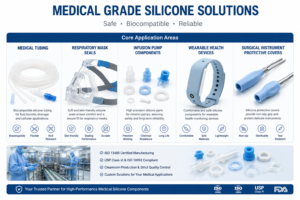
Can Your Current Supplier Meet ISO 13485, FDA & Biocompatibility Requirements?
Do you really believe a factory that only offers food-grade silicone can satisfy the strict regulatory demands of medical devices?
Medical-grade silicone isn’t just “safer silicone”—it requires:
- ISO 13485-certified quality management systems (mandatory for medical device supply chains)
- FDA 21 CFR 177.2600 compliant materials for food and drug contact
- Full ISO 10993 biocompatibility testing (cytotoxicity, skin irritation, sensitization)
- Batch-level traceability and complete documentation for regulatory submissions
- Compliance with sterilization standards (autoclave, EO, gamma irradiation)
Will a non-specialized silicone factory provide the full test reports, material certificates, and batch records you need for FDA 510(k) submissions?
Can they guarantee zero harmful additives, residual peroxides, or extractables that could leach into bodily fluids?
Are they familiar with the strict documentation requirements for medical device audits?
Why gamble with regulatory approval and patient safety when LYA Silicone checks every box?

Are You Wasting Time on Mold Failures & Defects That Delay Your Medical Device Launch?
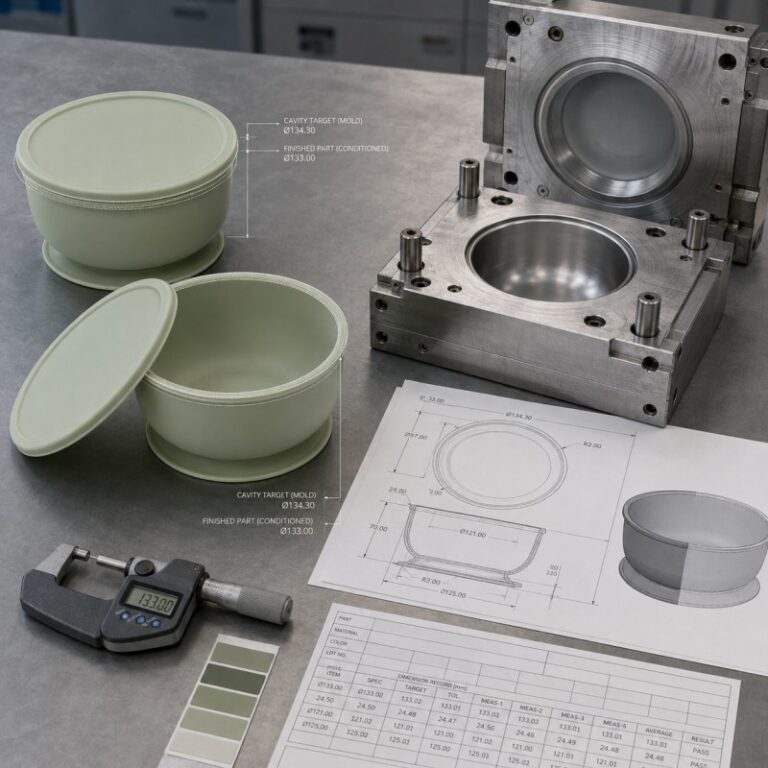
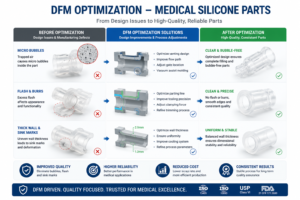
How many times have you spent weeks on mold development for a medical silicone part, only to discover it has micro-bubbles, flash, or dimensional defects that make it unfit for sterile medical use?
Medical silicone components demand precision and purity—even tiny defects can compromise sterility, cause leaks, or fail functional testing. Most medical device manufacturers skip DFM (Design for Manufacturability) analysis for silicone parts, leading to:
- Mold rework costs of $5,000–$15,000 per tool
- 2–4 week delays to your product launch timeline
- High scrap rates from parts that fail visual or functional inspection
- Risk of contamination from post-mold trimming processes
Is this really an acceptable cost of bringing your life-saving device to market?
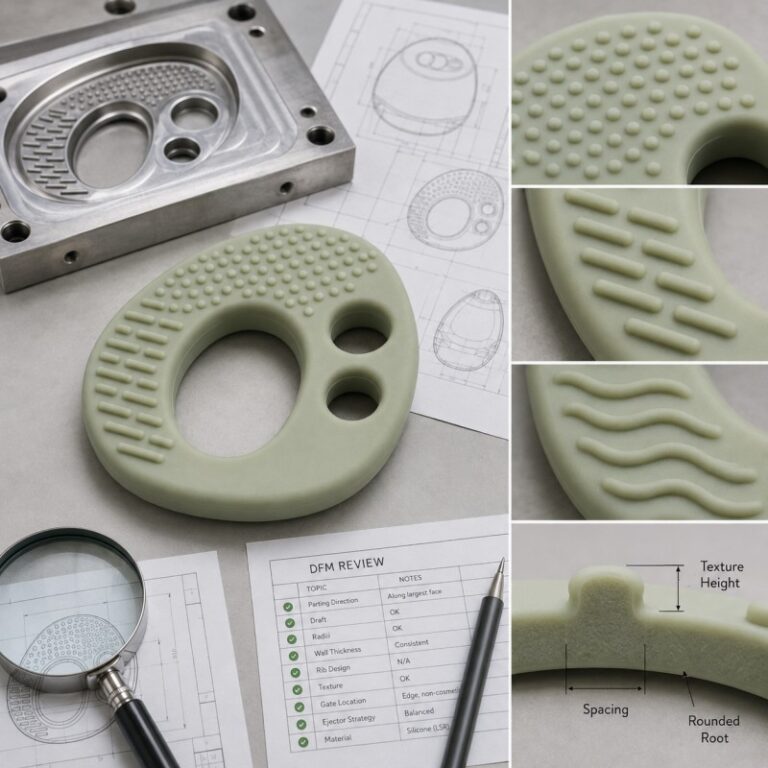
At LYA Silicone, our medical engineering team provides FREE DFM analysis for every medical silicone project before mold cutting. We optimize your design for:
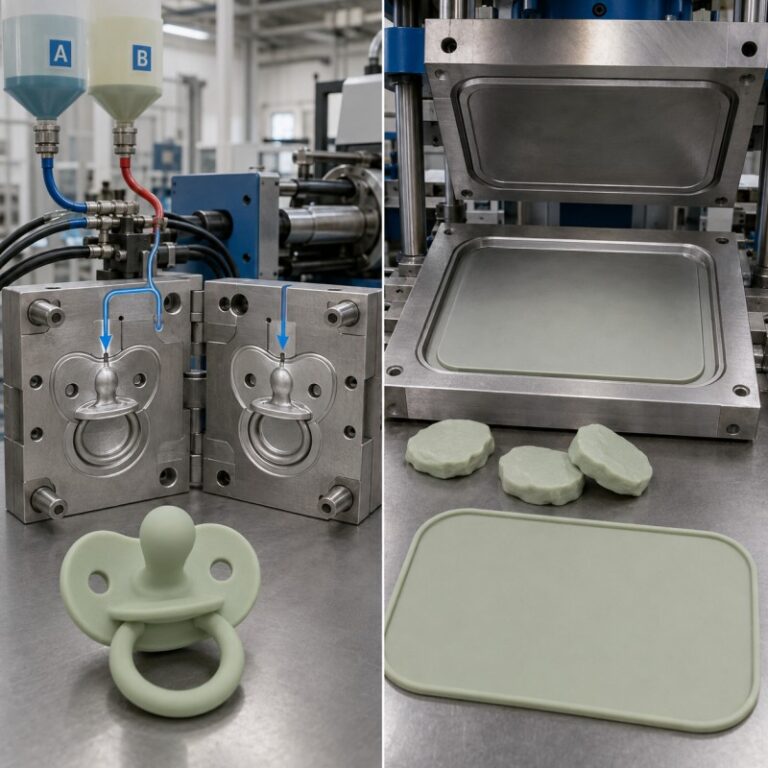
- LSR (Liquid Silicone Rubber) injection molding (platinum-cured, zero residual peroxides)
- Ultra-precision tolerances (±0.02mm) for critical sealing and fit
- Cleanroom-compatible production with minimal post-processing
- Sterilization stability and long-term biocompatibility
Why let design flaws and mold failures derail your medical device timeline when our experts can prevent them upfront?
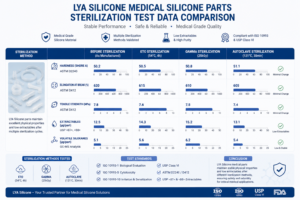
Does Your Silicone Withstand Repeated Sterilization Without Degrading?
Have you ever had a medical silicone component turn yellow, harden, or crack after just a few cycles of autoclave or gamma sterilization?
For reusable medical devices and long-term accessories, silicone must maintain its physical and chemical properties through hundreds of sterilization cycles. Ordinary silicone breaks down quickly under high heat, radiation, or chemical exposure, leading to:
- Reduced elasticity and sealing performance
- Increased leaching of additives and residuals
- Risk of particle shedding into the device or patient environment
- Early product failure and costly recalls
Will your current supplier guarantee their silicone material meets ASTM F2012 standards for sterilization stability?
Do they test their materials for extractables and leachables after repeated sterilization cycles?
Can they provide material data sheets (MDS) tailored to your sterilization method (autoclave, EO, gamma)?
Don’t let poor sterilization stability compromise your device’s performance. LYA Silicone offers medical-grade LSR and solid silicone materials formulated specifically for repeated sterilization, with zero degradation and zero harmful leachables.
Is Your Supplier Producing Medical Parts in a Non-Compliant Environment?
Are you still working with silicone factories that produce medical and consumer parts in the same non-sterile workshop?
Medical-grade silicone components require production in controlled environments to prevent contamination from dust, bacteria, or cross-contamination with non-medical materials. Most generic silicone factories lack:
- Class 100,000 cleanrooms for medical part production
- Separate material handling systems for medical-grade silicone
- Environmental controls for temperature, humidity, and particulate levels
- Full process validation and batch traceability
This means every batch of parts is at risk of microbial contamination, foreign particle inclusion, or cross-contamination—disqualifying them for medical use.
LYA Silicone operates dedicated cleanroom production lines for medical-grade silicone parts, with:
- 100,000-class cleanrooms compliant with ISO 14644-1
- Separate storage and processing areas for medical-grade materials
- Full environmental monitoring and documentation
- Batch-level traceability from raw material to finished part
- No cross-contamination with non-medical silicone products
Why risk product contamination and failed quality audits when you can partner with a factory built exclusively for medical silicone production?

Why Settle for a Generic Silicone Factory When You Can Partner With a Medical-Grade Specialist?
Have you been searching for a silicone partner that understands the unique challenges of medical device manufacturing? Here’s why global medical OEMs and device engineers choose LYA Silicone:
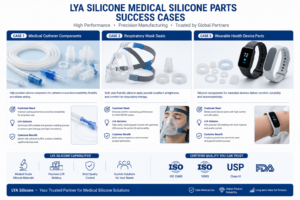
- Medical-Focused Expertise: 300+ successful medical silicone projects, including catheter seals, respiratory device components, and wearable health device parts
- Full Regulatory Support: ISO 13485-certified processes, complete documentation for FDA/CE submissions, and support for third-party testing
- LSR & Solid Silicone Capability: Both platinum-cured LSR and high-purity solid silicone for every medical application, from disposable consumables to long-term reusable devices
- Cleanroom Production: Dedicated medical production lines in 100,000-class cleanrooms, with zero cross-contamination risks
- Flexible MOQs & Fast Turnaround: Prototyping in 5–7 days, mass production in 15–20 days, with MOQs as low as 100 units for new device development
- End-to-End Traceability: Full batch records, material certificates, and process validation reports for every order
Frequently Asked Questions (FAQs)
Q1: What medical silicone components does LYA Silicone specialize in?
A1: We focus on catheter seals, respiratory device silicone parts, infusion pump components, wearable health device silicone accessories, surgical instrument protective covers, and sterile packaging seals—all manufactured to ISO 13485 standards for medical use.
Q2: Can you provide documentation for regulatory submissions (FDA, CE, 510(k))?
A2: Absolutely. We provide full documentation packages including ISO 13485 process records, FDA-compliant material certificates, ISO 10993 biocompatibility test reports, sterilization stability data, and batch traceability records—everything you need for regulatory submissions and audits.
Q3: What sterilization methods are your medical silicone parts compatible with?
A3: Our medical-grade silicone materials are compatible with autoclave (steam), ethylene oxide (EO), and gamma irradiation sterilization. We can also provide compatibility testing for your specific sterilization method.
Q4: What is the MOQ for medical silicone parts?
A4: We offer flexible MOQs tailored to medical device development needs. Prototyping and small-batch orders start at 100 units, with mass production MOQs of 500 units. We support everything from early-stage R&D to full commercial production.
Q5: Can you help with material selection for my medical device?
A5: Yes! Our medical engineering team provides free material selection consultations, helping you choose the right silicone grade, hardness, and formulation based on your device’s application, sterilization method, and regulatory requirements.
Conclusion: Are You Ready to Stop Risking Your Medical Device’s Success?
Bringing a medical device to market is hard enough—your silicone supplier shouldn’t add to the risk.
If you’re tired of working with generic silicone factories that don’t understand medical regulations, can’t provide the documentation you need, or cut corners on quality, it’s time to partner with LYA Silicone (www.lyasilicone.com). We’re not just a silicone manufacturer—we’re your dedicated medical silicone partner, with ISO 13485 certification, cleanroom production, full regulatory support, and the expertise to keep your project on track and compliant.
Isn’t it time to work with a manufacturer that prioritizes patient safety, regulatory compliance, and your product’s success as much as you do?