 English
  French
  German
  Spanish
  Polish
  Chinese
  Japanese
  Korean
  Russian
 Contents
Sticky, tacky silicone surfaces are a common complaint in the market—especially for silicone baby products, silicone pet products . For B2B buyers sourcing silicone parts, this issue is more than a cosmetic defect: it directly impacts product safety, user experience, compliance, and brand reputation.
At LYA Silicone, we often help global brands redesign or replace silicone parts that failed prematurely due to surface stickiness. Understanding why this happens is the first step toward choosing the right silicone manufacturing partner.
1. The Chemistry Behind Silicone Stickiness
High-quality silicone rubber is based on a crosslinked polysiloxane network. When properly formulated and cured, this network is:
- Chemically stable
- Non-tacky to the touch
- Resistant to heat, oxidation, and hydrolysis
- Safe for long-term skin contact
Low-quality silicone, however, often fails at the molecular level.
Key Scientific Causes:
(1) Incomplete Crosslinking (Under-Curing)
Silicone requires precise temperature, time, and catalyst control during curing. In low-end manufacturing:
- Curing temperatures are insufficient
- Cycle times are shortened to reduce costs
- Catalyst ratios are poorly controlled
(2) Excessive Use of Fillers and Plasticizers
To reduce material cost, inferior silicone compounds often contain:
- Excessive inorganic fillers
- Non-silicone plasticizers
- Low-grade processing oils
These additives are not chemically bonded to the silicone backbone. With heat, UV exposure, or repeated handling, they slowly bleed out—resulting in:
- Sticky surfaces
- Dust attraction
- Unpleasant odors
- Reduced mechanical strength
(3) Poor Raw Material Quality
Not all silicone is created equal.
Low-cost suppliers may use:
- Recycled silicone
- Industrial-grade silicone for consumer applications
- Materials without FDA, LFGB, or medical-grade certifications
2. Environmental Factors That Accelerate Stickiness
Even marginal silicone products may appear acceptable at first—but environmental stress exposes their weaknesses.
Common Accelerators:
- 🌡️ High temperatures
- ☀️ UV exposure
- 💧 Humidity and moisture
- 🧴 Skin oils, cosmetics, detergents
3. Why High-Quality LSR Silicone Does NOT Become Sticky
Liquid Silicone Rubber (LSR), when properly processed, behaves very differently.
Scientifically Proven Advantages of LSR:
- Platinum-catalyzed curing (no byproducts)
- Extremely high crosslink density
- Minimal volatile components
- Excellent resistance to heat aging and UV


4. Manufacturing Process Matters More Than You Think
Many buyers focus only on material type—but process control is equally critical.
At LYA Silicone, our manufacturing advantages include:
- In-house mold design and fabrication
- Automated LSR injection molding systems
- Strict curing parameter control
- Post-curing processes to eliminate volatiles
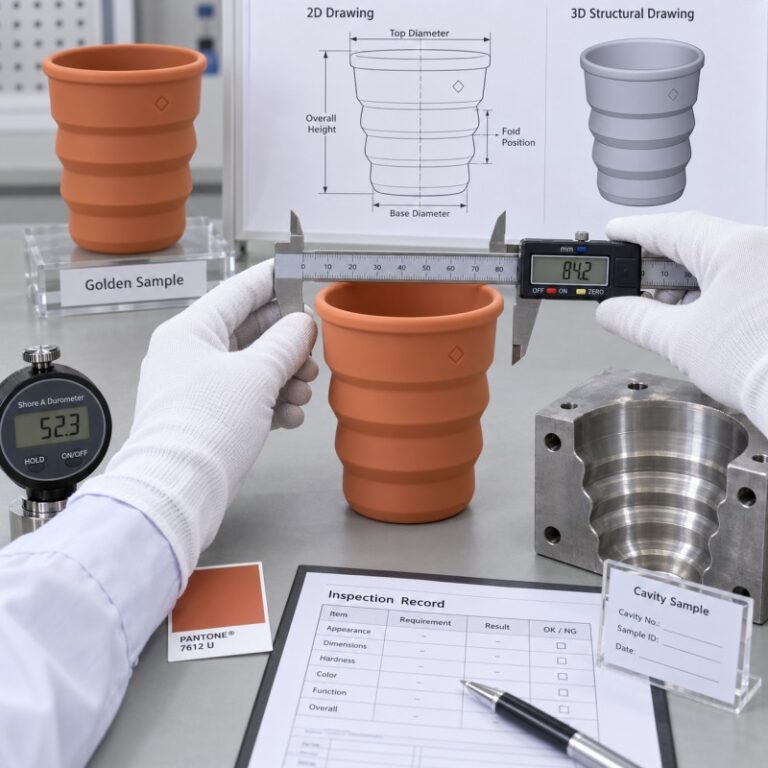
- 100% appearance and tactile inspection
5. How to Avoid Sticky Silicone in Your Products
For B2B buyers, here are key sourcing guidelines:
✔ Choose LSR over traditional compression silicone when possible ✔ Verify curing and post-curing processes ✔ Demand material certifications (FDA, LFGB, ISO 10993) ✔ Work with manufacturers that control tooling and production in-house.
FAQ – Sticky Silicone Explained
Q1: Is sticky silicone a sign of aging?
Not necessarily. High-quality silicone does not become sticky with age. Stickiness usually indicates poor formulation or incomplete curing.
Q2: Can sticky silicone be fixed?
In most cases, no. Surface cleaning may provide temporary relief, but internal material migration will continue.
Q3: Is sticky silicone unsafe?
For baby, medical, or skin-contact products, yes. It may indicate non-compliant materials or harmful additives.
Q4: How long should high-quality silicone last?
Properly manufactured LSR components can remain stable for 5–10 years or longer, depending on the application.
Q5: How can I ensure my supplier uses real LSR?
Ask about curing systems (platinum vs peroxide), automation level, material traceability, and post-curing processes.
Contact Information
LYA Silicone – Your Trusted Silicone OEM Partner,
-
 Email: sale11@lyasilicone.com
 -
 Phone: +86-13420974883
 -
 Website: www.lyasilicone.com