 English
 French
 German
 Spanish
 Polish
 Chinese
 Japanese
 Korean
 Russian
Contents
Answer Excerpt
A silicone luggage tag card can slip out when the pocket opening is too wide, retaining lips provide insufficient overlap, the card stock is thinner than the design reference, or the silicone pocket deforms during handling. For OEM buyers, reliable card retention depends on matching the card specification, pocket geometry, silicone flexibility and insertion path. The complete tag should be tested with representative identification cards before sample approval and mass production.
Why Does the Card Pocket Need Its Own Design Review?
A silicone luggage tag may look like a simple accessory, but its identification pocket performs two functions that can conflict with each other:
-
It must retain the card during normal luggage handling.
-
It must allow users to insert, remove and replace the card without damaging it.
If the pocket is too loose, the card may move or slip out. If it is too tight, users may struggle to replace the card, and repeated insertion may damage the retaining edges.
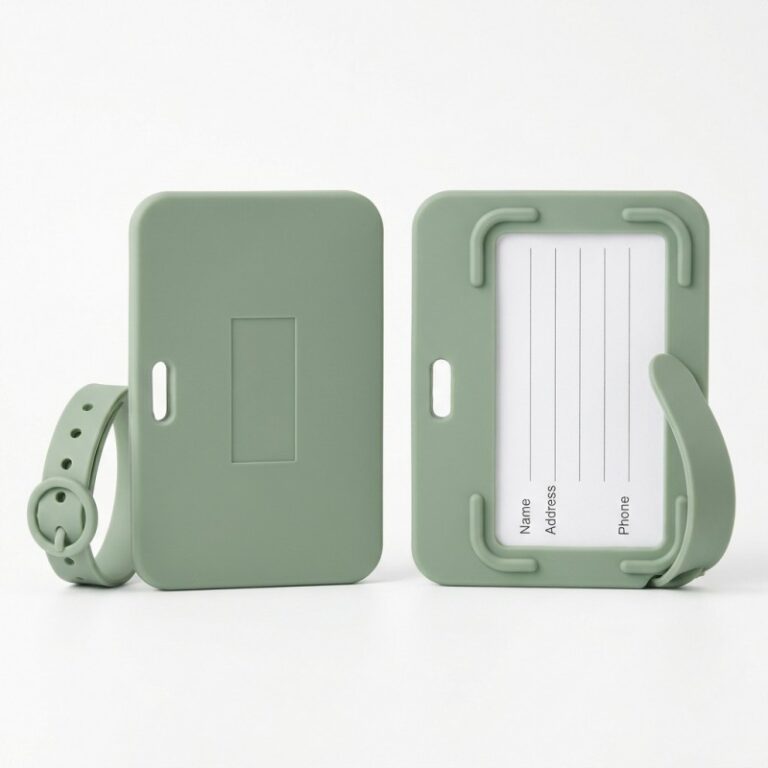
LYA’s reference design uses a rounded rectangular silicone tag body, a detachable silicone strap and a recessed rear pocket for a replaceable paper identification card. The pocket uses three rounded retaining edges with an accessible opening on the remaining side.
You can review the custom silicone luggage tag manufacturer page to see the reference structure.
For travel accessory brands, the important question is not simply whether the card fits into the pocket. It is whether the card remains correctly positioned while the tag is attached to a suitcase, backpack or travel bag.
1. Confirm the Identification Card Specification First
Pocket dimensions should be developed around the actual identification card rather than estimated from a product photograph.
Before tooling, buyers should confirm:
-
Card length and width
-
Card thickness
-
Paper type or card stock
-
Whether the card is coated, laminated or uncoated
-
Corner shape
-
Printing area and information layout
-
Whether users need to replace the card frequently
Card thickness is particularly important.
A pocket developed around one paper sample may behave differently when the buyer changes to a thicker printed card or a thinner replacement insert. Even when the outside dimensions are similar, the insertion feel and retention behavior may change.
For OEM projects, the buyer should provide the actual card sample or an approved card specification.
The manufacturer can then evaluate the pocket opening, retaining edges and internal clearance against the intended card.
If the product will be sold in a wider travel accessory collection, buyers can also explore LYA’s custom silicone outdoor products for related product development.
2. Design Retaining Lips to Balance Card Security and Accessibility
The retaining lips are the main structures that help keep the identification card inside the silicone pocket.
In the reference design, three rounded edges hold the card while the remaining side provides an insertion and removal opening.
Several factors should be reviewed.
Retaining edge overlap
The retaining edge needs enough overlap with the card perimeter to help prevent the card from moving out during normal handling.
If the overlap is too small, the card edge may lift and gradually move toward the opening.
However, excessive overlap can make insertion difficult and increase the force needed to remove the card.
Retaining lip thickness
A very thin retaining edge may deform too easily during use. An excessively thick edge may reduce the available insertion space.
The correct geometry depends on the card thickness, silicone hardness, pocket depth and intended replacement frequency.
Rounded transitions
Sharp internal corners can create local stress concentrations and may catch the edge of a paper card.
Rounded transitions can help guide the card into position and reduce abrupt changes in the silicone structure.
The final geometry should be checked using molded samples rather than judged only from a 2D drawing.
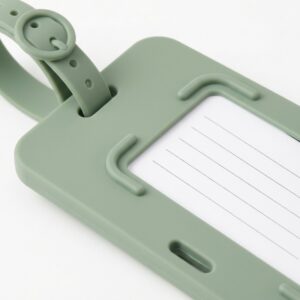
3. Match the Pocket Opening to the Card Insertion Path
The open side of the pocket is necessary for card replacement, but it is also the area where the card can escape if the design is poorly balanced.
A suitable opening should provide enough access for the card to enter without excessive bending.
Buyers should evaluate:
-
Opening width
-
Opening position
-
Entry-edge radius
-
Card insertion direction
-
Clearance around the card corners
-
Accessibility for removing the card
If the opening is too narrow, the card may catch against the silicone edge during insertion.
If it is too wide, the pocket may provide insufficient retention near the opening.
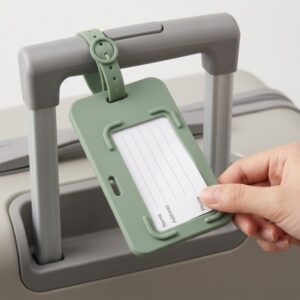
The opening should also be reviewed in relation to the way the luggage tag is attached. The tag may rotate or contact other luggage items during travel, so the card pocket should be evaluated in its actual installed orientation.
A design that works when placed flat on a workbench may behave differently when attached to a moving suitcase handle.
4. Coordinate Silicone Flexibility With Pocket Geometry
Silicone flexibility is important because the retaining edges may need to deflect slightly when a card is inserted or removed.
However, material hardness should not be selected independently from the pocket geometry.
The development team should review:
-
Silicone hardness
-
Pocket wall thickness
-
Retaining lip thickness
-
Pocket depth
-
Local flexibility around the opening
-
Recovery after repeated card insertion
-
Overall tag-body stability
A pocket that is too flexible may allow the retaining edges to move away from the card.
A pocket that is too rigid may make replacement difficult or create excessive stress around the opening.
The goal is to balance insertion flexibility with card retention.
For new designs, the custom silicone mold development checklist can help buyers organize structural details before tooling.
The silicone product dimensional tolerance guide is also relevant when defining the pocket opening, card clearance and retaining-edge dimensions.
5. Make Card Replacement Practical Without Assuming Waterproof Performance
A replaceable card pocket should be designed around realistic user maintenance.
The card should be easy to insert, visible after installation and removable without damaging the silicone tag.
For a paper identification card, buyers should also consider the intended travel environment.
A recessed pocket does not automatically make the card waterproof. The reference design has an accessible opening, and the complete assembly should not be advertised as waterproof unless it has passed suitable product-level testing.
If the target market requires additional moisture protection, buyers should define that requirement before tooling.
Possible development considerations include:
-
Pocket coverage
-
Opening orientation
-
Card material
-
Retaining-edge structure
-
Cleaning and maintenance instructions
-
Moisture exposure during intended use
The design should preserve the card’s replaceability rather than making the pocket unnecessarily difficult to access.
6. Validate the Complete Luggage Tag With Real Cards
A loose silicone pocket sample is not enough to confirm finished-product performance.
The complete luggage tag should be tested with the actual card, strap and tag body.
A practical sample-validation sequence includes:
Step 1 — Prepare representative cards
Use the intended paper stock, dimensions, thickness and surface finish. If the brand plans to offer several card options, include representative samples of each.
Step 2 — Check insertion and removal
Insert and remove the card using the intended opening.
Check whether the card catches, bends, tears or requires excessive force.
Step 3 — Evaluate card retention
Install the card and handle the tag in different orientations.
Check whether the card moves, lifts at the edge or approaches the opening during the agreed handling test.
Step 4 — Test the assembled tag
Attach the tag to representative suitcase or travel-bag handles.
Evaluate the card pocket while the complete tag is being handled, moved and repositioned.
Step 5 — Repeat card replacement
Repeat the insertion and removal process according to the buyer’s agreed sample-test plan.
Inspect whether the retaining lips show tearing, permanent deformation or visible damage.
Step 6 — Record the results
Record:
-
Card material and dimensions
-
Pocket dimensions
-
Insertion and removal behavior
-
Card movement during handling
-
Retaining-edge condition
-
Visible deformation
-
Sample acceptance criteria
There is no universal insertion force, retention force or service-life figure that can be assigned to every silicone luggage tag. These requirements should be defined for the actual product and target market.
7. Control Pocket Quality During Mass Production
Once the sample is approved, the pocket structure must remain consistent during production.
A practical inspection plan should include:
| Inspection item | What to check |
|---|---|
| Pocket dimensions | Length, width and depth |
| Opening | Width, position and edge condition |
| Retaining lips | Height, overlap and symmetry |
| Silicone body | Thickness and visible deformation |
| Pocket surface | Flash, contamination and molding defects |
| Card fit | Insertion, removal and retention |
| Appearance | Color, surface finish and logo position |
| Strap assembly | Attachment and fastening condition |
| Packaging | Protection of the finished tag and card |
The approved sample should become the reference for production inspection.
For larger orders, the buyer and manufacturer should agree on functional inspection requirements in addition to visual inspection. The AQL inspection guide for custom silicone products provides a broader reference for setting shipment inspection criteria.
8. What Should Buyers Include in an OEM RFQ?
A clear RFQ helps the manufacturer evaluate the card pocket before mold development.
| RFQ information | What the buyer should provide |
|---|---|
| Product concept | Reference image, drawing or physical sample |
| Tag body | Length, width, thickness and shape |
| Identification card | Dimensions, thickness and paper specification |
| Pocket structure | Pocket depth, retaining edges and opening position |
| Card replacement | Required insertion and removal method |
| Retention requirement | Expected handling and card-retention conditions |
| Strap | Attachment method and target luggage-handle type |
| Material | Silicone material and hardness requirements |
| Branding | Color, molded logo and surface finish |
| Packaging | Individual pack, retail box or travel accessory set |
| Commercial details | Target market and estimated order quantity |
If the buyer does not have a complete technical drawing, a reference product, actual card sample and target luggage handle can help begin the design review.
Frequently Asked Questions
Why does a silicone luggage tag card slip out?
Possible causes include insufficient retaining-edge overlap, an oversized pocket opening, incorrect card thickness or excessive deformation of the silicone pocket.
The actual cause should be identified through sample inspection.
Should a luggage tag card pocket be completely closed?
Not necessarily. A replaceable card needs an accessible insertion and removal opening. The design should balance card retention with convenient replacement.
Can one silicone pocket fit different card thicknesses?
It may be possible, but the pocket should be evaluated against the intended card range. A design developed around one card thickness should not automatically be assumed to fit every replacement card.
Does a deeper pocket always provide better card retention?
No. Pocket depth is only one design variable. Retaining-edge overlap, opening geometry, card thickness and silicone flexibility also affect performance.
Can a silicone luggage tag card pocket be waterproof?
Waterproof performance should not be assumed from the use of silicone alone. The complete tag and card assembly must be tested under defined conditions before making such a claim.
What information is needed for a custom luggage tag quotation?
Buyers should provide the tag drawing or reference sample, card dimensions and material, pocket design, strap requirements, color, logo, packaging, target market and estimated order quantity.
OEM/ODM Development for Travel Accessory Brands
A silicone luggage tag is a small product, but its performance depends on several connected structures: the tag body, card pocket, retaining edges, insertion opening and attachment strap.
For travel accessory brands, wholesalers, promotional gift suppliers and private-label buyers, these details should be confirmed before tooling and mass production.
LYA Silicone supports custom silicone product development, including design review, mold development, sample production, customization, inspection and packaging coordination.
For a new luggage tag project, buyers can review the OEM/ODM silicone manufacturing service and contact LYA Silicone with their reference design, actual card sample, target dimensions and estimated order quantity.