 English
  French
  German
  Spanish
  Polish
  Chinese
  Japanese
  Korean
  Russian
 Contents
A Material Science Perspective for Global Pet Brands & Buyers
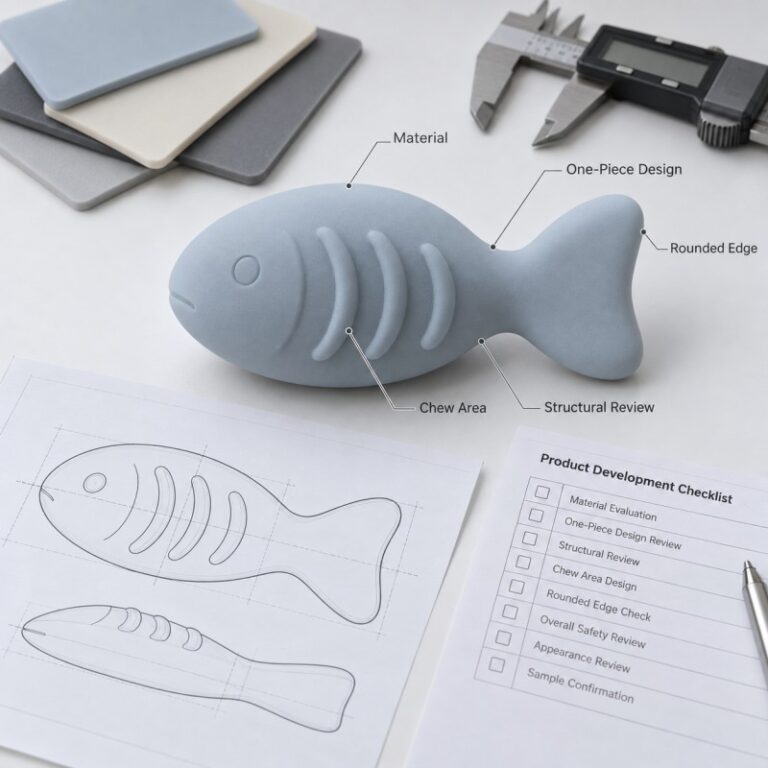
Silicone pet products—such as silicone pet bowls, slow feeders, pet mats, chew toys, and grooming tools—are widely used in global markets due to their safety, durability, flexibility, and ease of cleaning.
However, many pet brands and importers encounter a recurring question during quality inspections or after-sales feedback:
“Why do silicone pet products feel sticky after a period of use? Is this a quality defect?”
In reality, surface stickiness in silicone products is often misunderstood.
In most cases, it does not indicate poor material quality or product failure.
To properly evaluate this issue, it is essential to understand the material science and manufacturing processes behind silicone.
1. What Does “Sticky Silicone” Actually Mean?
From a technical standpoint, “stickiness” usually refers to:
-
A surface that no longer feels dry or smooth
-
Slight resistance when touched
-
Increased attraction of dust, pet hair, or debris
⚠️ This phenomenon does NOT mean the silicone is decomposing, melting, or releasing harmful substances.
2. The 5 Most Common Causes of Sticky Silicone Pet Products
1️⃣ Oil Absorption from Pet Food & Environment (Most Common Cause)
Silicone is composed of Si–O (siloxane) bonds, which give it excellent flexibility and thermal stability—but also a natural affinity for oils.
In real-world pet use scenarios, silicone surfaces frequently contact:
-
Oils from dry or wet pet food
-
Pet saliva
-
Skin oils from human handling
-
Airborne organic compounds
2️⃣ Improper Cleaning Methods
Many end users unknowingly accelerate stickiness by using:
-
Strong alkaline detergents
-
Scented or chemical-heavy cleaners
-
Repeated high-temperature boiling combined with detergents
These practices can:
-
Alter surface energy
-
Leave detergent residues
-
Increase secondary oil adsorption
3️⃣ Curing & Post-Curing Differences Between Manufacturers
From a factory perspective, silicone stickiness is closely related to production control, especially:
-
Degree of vulcanization
-
Whether post-curing (secondary curing) is performed
-
Mold surface treatment quality
-
Removal of low-molecular-weight volatiles
4️⃣ Environmental Temperature & Humidity
Silicone used in:
-
High-temperature regions
-
High-humidity environments
-
Outdoor or semi-outdoor storage
may show increased surface adsorption of organic compounds.
5️⃣ Not All “Silicone” Is the Same Grade
The market includes:
-
Industrial-grade silicone
-
Standard food-grade silicone
-
High-purity food-grade silicone
-
Medical-grade silicone
3. Why the Silicone Factory Matters More Than You Think
At LYA Silicone, we focus on long-term performance, not just initial appearance.
Our silicone pet product manufacturing process includes:
-
✔ High-purity food-grade silicone raw materials
-
✔ Precisely controlled curing parameters
-
✔ Standardized post-curing processes
-
✔ Volatile & odor testing
-
✔ Pet-contact safety compliance
These controls directly influence:
-
Product stability in overseas markets
-
Reduced customer complaints
-
Lower return and replacement rates
-
Brand reputation consistency


4. Silicone Pet Products That Require Extra Surface Stability
Based on OEM and ODM experience, the following products require enhanced anti-stick performance:
-
🐶 Silicone pet bowls & slow feeders
-
🐱 Silicone feeding mats & anti-slip mats
-
🚿 Silicone pet grooming brushes


5. FAQ – Sticky Silicone Pet Products
Q1: Does sticky silicone mean it is unsafe?
No.
Certified food-grade or medical-grade silicone remains chemically stable and non-toxic, even if surface stickiness appears.
Q2: Can sticky silicone be restored?
Yes.
Proper cleaning with mild detergent and complete drying often significantly reduces surface stickiness.
Q3: Why do silicone products from different factories feel different?
Because of differences in:
-
Raw material purity
-
Curing and post-curing processes
-
Surface finishing standards
Q4: How can brands prevent sticky silicone issues from the source?
Choose a manufacturer with:
-
Mature silicone formulation expertise
-
Post-curing and surface treatment capabilities
-
Quality systems designed for international markets
Q5: Does LYA Silicone support custom silicone pet products?
Yes.
We provide OEM & ODM silicone pet product solutions, covering design, tooling, material selection, and mass production.
Conclusion
Sticky silicone pet products are often the result of usage conditions and process details—not poor silicone quality.
For pet brands targeting international markets, working with a silicone manufacturer that understands material behavior over the product lifecycle is essential for long-term success.
👉 Learn more about our silicone pet product manufacturing capabilities at
Email: sale11@lyasilicone.com
Phone: +86-13420974883
Website: www.lyasilicone.com