 English
  French
  German
  Spanish
  Polish
  Chinese
  Japanese
  Korean
  Russian
 Contents
As the global pet products market continues to grow, silicone pet products are gradually replacing traditional plastic and rubber alternatives due to their safety, durability, and design flexibility. However, for many overseas B2B buyers, brand owners, and product managers, a key question remains:
How long does it take for a silicone pet product to go from initial concept to stable mass production? And what level of professional manufacturing expertise is required?
The answer is not a simple number—it depends on the systematic integration of material science, mold engineering, process control, and supply chain coordination.
Stage 1: Product Concept & Engineering Design (Approx. 1–3 Weeks)
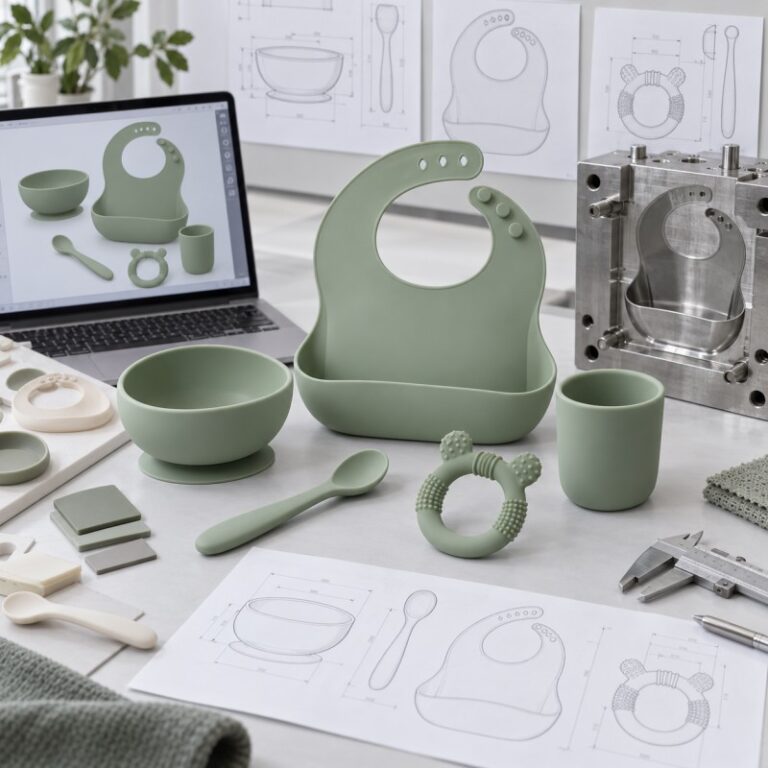
All silicone pet product production begins with Design for Manufacturability (DFM).
At this stage, professional manufacturers evaluate:
-
Whether the product is suitable for LSR (Liquid Silicone Rubber) or solid silicone molding
-
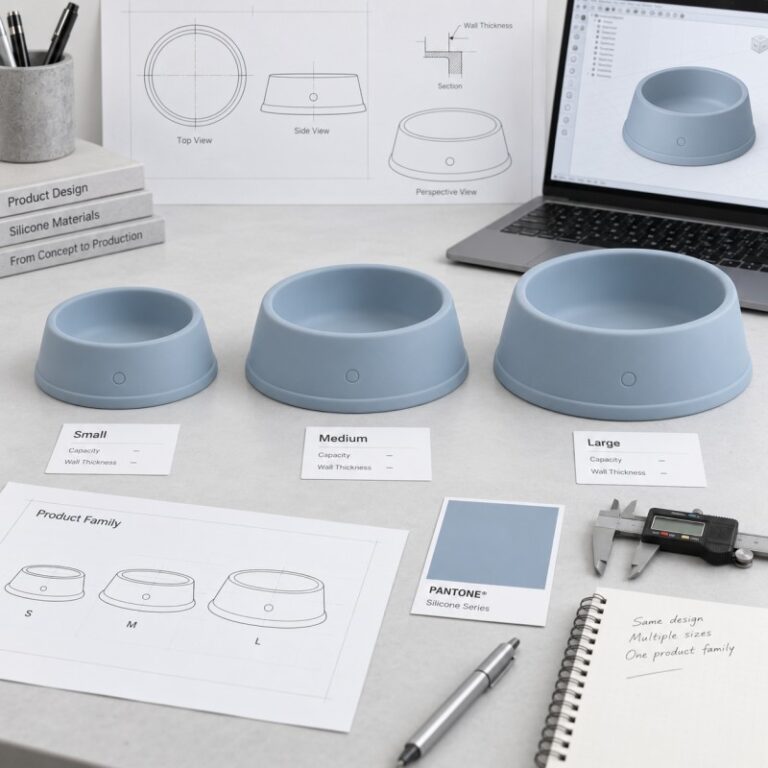
Wall thickness distribution for proper flow and demolding
-
Whether silicone overmolding, multi-material integration, or insert structures are required
-
Usage scenarios, such as chewing, pulling, high-cycle fatigue, temperature resistance, or food-grade safety requirements
👉 At LYA Silicone, the engineering team usually participates in the early design stage, helping clients achieve the optimal balance between aesthetics and manufacturability, avoiding costly mold revisions later.
Stage 2: Material Selection & Compliance Evaluation (Approx. 1–2 Weeks)
For pet products, material safety is a critical barrier for overseas markets.
Common evaluation standards include:
-
FDA / LFGB food contact compliance (for chew toys, feeding products)
-
BPA-free, phthalate-free, and no heavy metal migration
-
Resistance to saliva, oils, and cleaning agents
-
Long-term physical stability after aging
Scientifically, silicone is widely used for pet products because its cross-linked polymer network formed during high-temperature curing maintains shape recovery under repeated stress without releasing harmful substances.
During this stage, professional manufacturers select:
-
Platinum-cured silicone
-
Different Shore A hardness formulations (typically 30A–70A)
-
Injection molding vs. compression molding suitability
Stage 3: Mold Development & Trial Molding (Approx. 3–6 Weeks)
The mold is the core asset that determines whether silicone products can be produced stably.
High-quality silicone molds not only affect appearance but also directly impact:
-
Dimensional tolerance stability
-
Surface detail reproduction
-
Production efficiency and yield
-
Automation feasibility
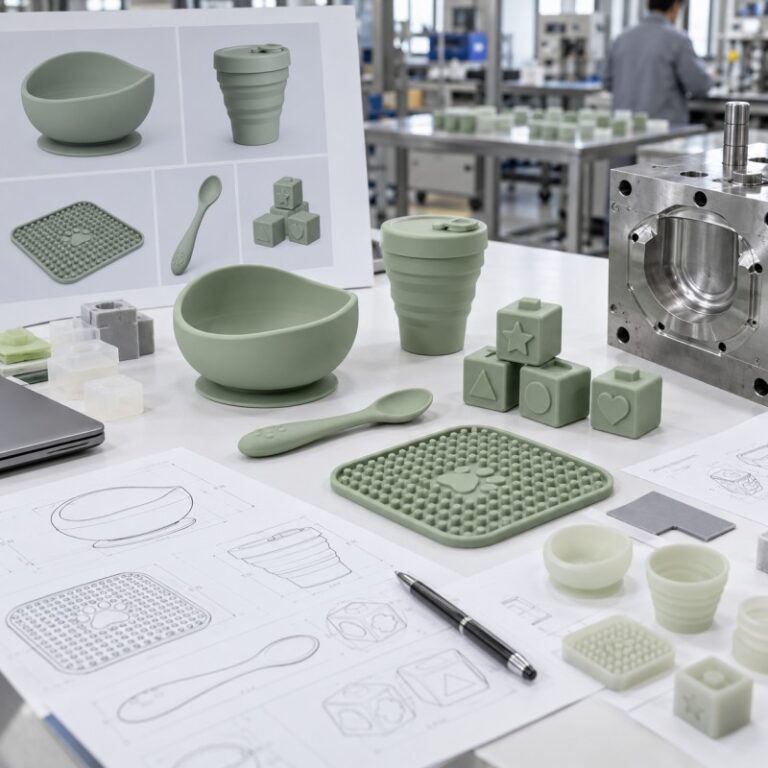
Complex pet products—such as chew toys, slow feeders, silicone pet bowls, or grooming brushes—often involve:
-
Multi-cavity molds
-
Textured or etched surfaces
-
Silicone over plastic or metal structures
Stage 4: Prototyping & Pilot Production (Approx. 2–3 Weeks)
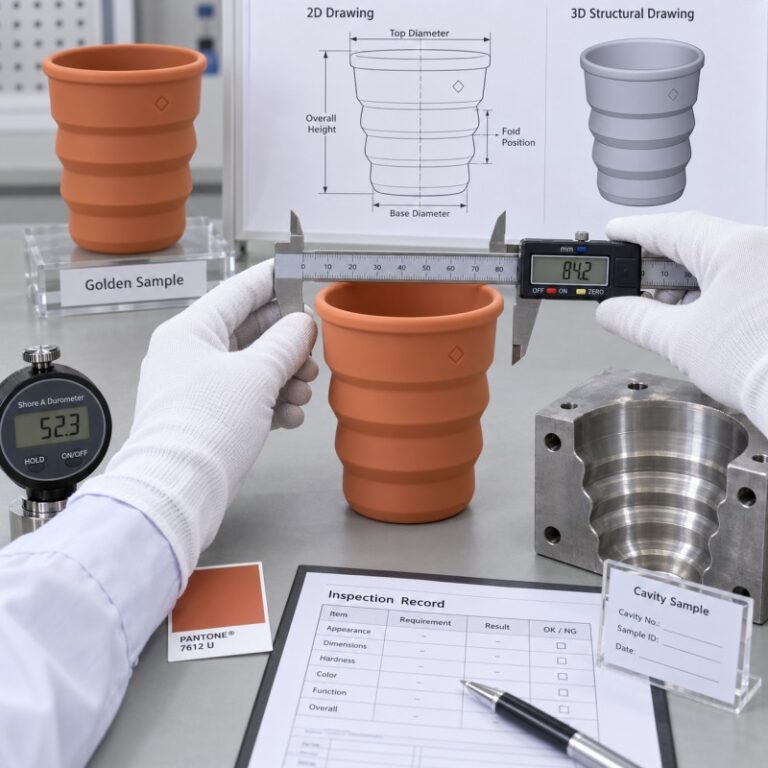
Before full-scale production, a small-batch validation is required.
Evaluation includes:
-
Dimensional consistency (CPK)
-
Tensile, tear, and rebound performance tests
-
Repeated chewing and fatigue simulation
-
Color consistency across batches
-
Cycle time and production efficiency
Stage 5: Stable Mass Production & Long-Term Delivery (Ongoing)
Once validated, the product enters stable mass production.
A mature silicone factory usually has:
-
Automated LSR injection equipment
-
Strict incoming material and process quality control (IQC / IPQC / OQC)
-
Batch traceability systems
-
Long-term mold maintenance and process parameter databases
Total Lead Time
With a professional silicone manufacturing system:
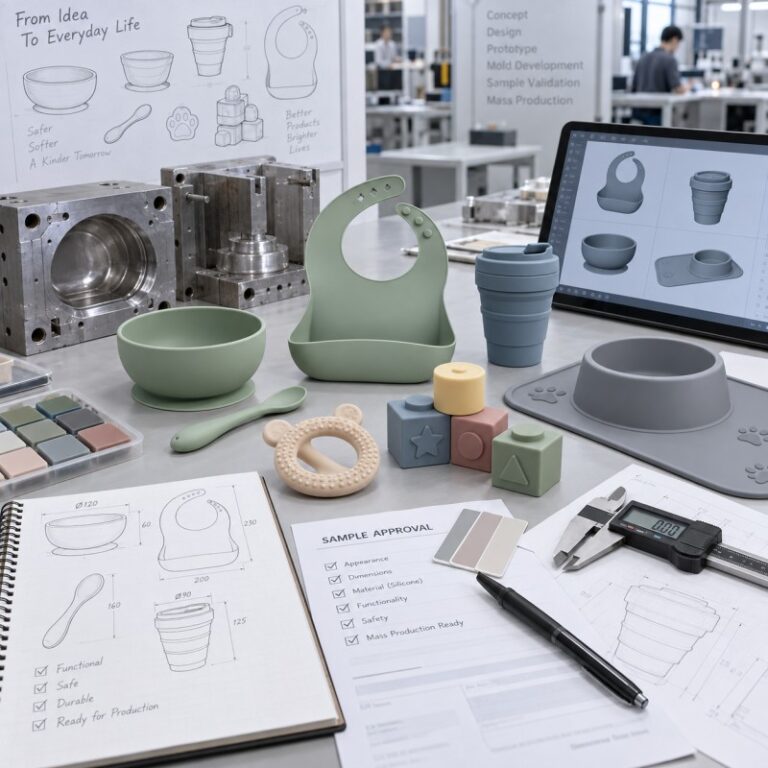
A silicone pet product typically takes 8–14 weeks from concept to stable mass production.
The time variance reflects the engineering capability, mold quality, and process experience of different manufacturers.
Why More Brands Choose LYA Silicone
-
Focused on custom silicone pet products and functional silicone components
-
Supports LSR injection molding / solid silicone molding / silicone overmolding
-
Engineering team deeply involved in early design optimization
-
OEM/ODM only—no stock products, protecting clients’ IP and product uniqueness
-
Serving global B2B clients with full understanding of US and EU compliance


Recommended Custom Products on Our Website
For B2B buyers looking for a reliable silicone pet product manufacturer, the following categories are highlighted:
-
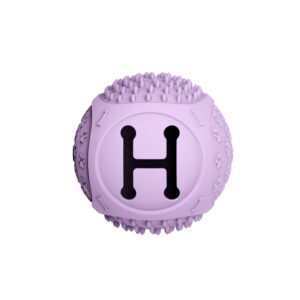
Custom Silicone Pet Toys (chew toys, interactive toys, slow feeders)
-
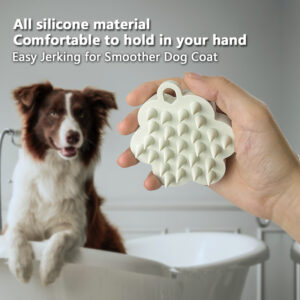
Silicone Pet Grooming & Cleaning Products (brushes, bath tools)
-
Food-Grade Silicone Pet Feeding Products (bowls, slow feeders, lick mats)
FAQ – Common Questions from Overseas Buyers
Q1: Do you have ready-made silicone pet products in stock?
A: No. We specialize in OEM/ODM custom manufacturing. All products are made based on client designs or specifications.
Q2: What is your minimum order quantity (MOQ)?
A: MOQ depends on product structure, size, and molding process. A reasonable MOQ is provided after mold confirmation.
Q3: Do you support food-grade or pet-safe silicone materials?
A: Yes. We can provide FDA and LFGB compliant silicone materials for pet products.
Q4: How long does it take to receive the first sample?
A: Typically 4–6 weeks, depending on mold complexity.
Q5: Can you help optimize designs to reduce costs?
A: Yes. Our engineering team can provide professional advice on materials, structure, and molding process optimization.
Contact Information
LYA Silicone – Your Trusted Silicone OEM Partner,
-
 Email: sale11@lyasilicone.com
 -
 Phone: +86-13420974883
 -
 Website: www.lyasilicone.com