 English
  French
  German
  Spanish
  Polish
  Chinese
  Japanese
  Korean
  Russian
 Contents
— A Technical and Sustainable Perspective from LYA Silicone
In today’s manufacturing landscape, environmental responsibility and material sustainability are no longer optional—they’re essential. At LYA Silicone, one of the leading manufacturers of custom silicone and LSR (Liquid Silicone Rubber) products, we are frequently asked:
“Are silicone materials truly eco-friendly and recyclable?”
This article offers a science-based explanation, exploring the environmental characteristics, recyclability pathways, and sustainability practices behind silicone materials—including medical-grade silicone, baby silicone products, and more.
1️⃣ Understanding Why Silicone Is More Eco-Friendly than Plastics
Silicone differs fundamentally from petroleum-based plastics. Its polymer chain is built from silicon (derived from silica sand) and oxygen, rather than carbon. This unique structure gives silicone two environmental advantages:
✅ Long Life Cycle and Durability
Silicone withstands extreme temperatures, UV exposure, and chemical stress without degrading. A longer product lifespan translates into less waste and fewer replacements, reducing the total environmental footprint over time.
✅ No Typical Microplastic Pollution
Unlike many plastics that break down into microplastics, silicone’s molecular structure prevents fragmentation into the same type of micro-sized pollutants. While minor particles can form under mechanical abrasion, silicone does not release toxic monomers or additives into the environment.
2️⃣ Is Silicone Recyclable? — The Real Answer
Silicone can be recycled, though it requires specialized methods and infrastructure different from conventional plastics. Current recycling technologies can be categorized as:
♻️ 1. Mechanical Recycling
This process grinds post-industrial silicone scrap into granules or powder, which can then be mixed into new formulations for non-critical applications such as gaskets, insulation, and pet products.
👉 This form of recycling helps reduce manufacturing waste, though transparency and elasticity may slightly decrease in reprocessed materials.
♻️ 2. Chemical Recycling (Depolymerization)
An emerging technique, chemical recycling breaks down silicone polymers into low-molecular-weight siloxanes, which can then be re-purified into raw material for new silicone production.
While this process is still evolving, it offers a true closed-loop potential with minimal quality loss—paving the way for a circular silicone economy.
♻️ 3. Industrial Reuse and Closed-Loop Systems
Many responsible manufacturers, including LYA Silicone, are implementing in-house recycling programs that collect silicone offcuts and defective parts from production lines. These are reprocessed or reused in suitable product categories, minimizing landfill and incineration.
3️⃣ Scientific Evidence and Environmental Balance
-
Longer Product Lifespan = Lower Resource Consumption:
Life-cycle analyses (LCA) show that silicone’s longevity offsets its higher production energy costs. For reusable products like silicone baby feeding accessories this is a net environmental advantage. -
Not Biodegradable, But Non-Toxic:
Silicone does not biodegrade under natural conditions, but it is chemically inert and non-leaching, meaning it poses no toxicity to soil or water. -
Recycling Technologies Are Progressing Rapidly:
Research on mechanical and chemical recycling continues to advance, with pilot-scale plants now operating in Europe and Asia, moving closer to scalable circular systems.
4️⃣ LYA Silicone’s Commitment to Sustainability
At LYA Silicone, sustainability is engineered into our products and processes from the start:
-
🌱 Use of medical- and food-grade silicone materials, certified safe and free from harmful additives.
-
🔁 Waste minimization programs, including edge scrap recovery and internal reuse for secondary-grade silicone products.
-
🧩 Design-for-recycling principles in silicone overmolding — optimizing bonding between silicone and metal parts for easy separation and end-of-life recycling.
-
🤝 Partnerships with recycling and material recovery firms, enabling closed-loop systems for our industrial clients.
5️⃣ How Clients Can Make Silicone Products More Sustainable
-
Choose durable, repairable silicone designs to extend product lifespan.
-
Avoid complex material combinations that hinder recyclability (e.g., unnecessary adhesives).
-
Collaborate on return programs for post-consumer or post-industrial silicone products to enable centralized recycling.
-
Design with disassembly in mind, especially for metal-silicone hybrid components like silicone overmolding on metal or silicone SIM trays.
5️⃣ Why Choose LYA Silicone
When it comes to eco-friendly and high-precision silicone manufacturing, LYA Silicone stands out as a trusted partner for global brands. Here’s why leading companies choose us:
🌍 Expertise in Advanced Silicone Technologies
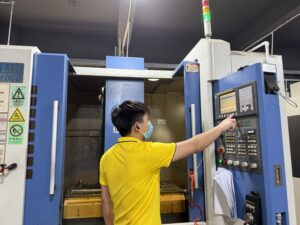
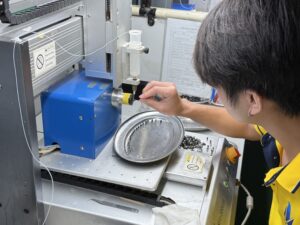
With years of experience in LSR injection molding, compression molding, and silicone overmolding on metal, LYA Silicone provides full-process technical support—from material formulation to mold design and mass production.
🧪 Strict Quality and Compliance
We adhere to international certifications including ISO 9001, FDA, LFGB, and RoHS, ensuring every product meets both performance and safety standards.
🔄 Eco-Conscious Manufacturing
Our production process emphasizes low waste, energy efficiency, and recyclability. We continuously optimize manufacturing flow to reduce carbon footprint while maintaining top-tier precision and consistency.
🤝 One-Stop Customization Service
From prototyping to mass production, we provide full customization for industries such as medical devices, consumer electronics, mother & baby, and automotive components.
🌱 Sustainability as a Core Value
We believe true innovation integrates performance with responsibility. Every LYA product embodies the principle of “long-lasting, safe, and sustainable.”
💬 Frequently Asked Questions (FAQ)
Q1: Does silicone release harmful substances during use or disposal?
A: No. Silicone is non-toxic, chemically stable, and free from BPA, phthalates, and latex. It doesn’t release harmful chemicals during use or at moderate heat levels.
Q2: Can used medical or baby-grade silicone products be recycled?
A: Technically yes—mechanical recycling can repurpose them for industrial applications, though not for direct medical reuse due to regulatory standards.
Q3: Will recycled silicone perform as well as virgin silicone?
A: Mechanical recycling slightly reduces elasticity and transparency, so it’s suitable for non-critical parts. Chemical recycling can fully restore properties but remains in early industrial adoption.
Q4: Is silicone more sustainable than plastic?
A: Over the full product lifecycle, yes. Silicone lasts longer, emits no microplastics, and maintains safety even after years of use—making it a more sustainable long-term choice when paired with recycling programs.
🌎 Conclusion: A Smarter, Cleaner Future with Silicone
The shift toward eco-friendly, recyclable materials is transforming how manufacturers design and produce. Silicone’s exceptional durability, stability, and inert nature make it one of the most sustainable materials available for long-term use in medical, industrial, and consumer applications.
At LYA Silicone, we combine advanced silicone molding technologies—including LSR injection molding, silicone overmolding on metal, and custom silicone engineering—with responsible manufacturing practices to help global brands build products that last longer, perform better, and impact less.
👉 Discover more about our sustainable silicone solutions
Together, let’s engineer a greener, longer-lasting future.
-
📧 Email: sale11@lyasilicone.com
-
📞 Phone: +86-13420974883
-
🌐 Website: www.lyasilicone.com