 English
  French
  German
  Spanish
  Polish
  Chinese
  Japanese
  Korean
  Russian
 Contents
A Material Upgrade Driven by Safety, Sustainability, and Science
In today’s global baby products market, “eco-friendly” is no longer just a branding concept — it has become a material-level decision.
Across North America and Europe, more baby brands are actively replacing traditional plastics with food-grade and medical-grade silicone. This shift is not driven by trends alone, but by scientific evidence, regulatory pressure, and long-term brand strategy.
1. The Hidden Limitations of Plastic in Baby Products
Plastic materials such as PP, PVC, and TPE have long been used in baby products due to their low cost and ease of processing. However, for products designed for infants and toddlers, their limitations are becoming increasingly clear.
❌ Potential Chemical Migration Risks
-
Some plastics may release BPA, BPS, or phthalates when exposed to heat, saliva, or repeated sterilization
-
Infants are especially vulnerable during early developmental stages
❌ Durability and Aging Issues
-
Plastics can warp, crack, or discolor after repeated boiling or steam sterilization
-
Micro-cracks may form on the surface, increasing hygiene risks
❌ Sustainability Concerns
-
Most plastics are non-biodegradable
-
Recycling systems are inconsistent across regions
-
Increasingly incompatible with ESG and sustainability commitments
2. Why Silicone Is the Preferred Material for Baby Products
✅ Scientifically Proven Safety & Biocompatibility
High-quality food-grade and medical-grade silicone offers:
-
BPA-free, PVC-free, phthalate-free, latex-free composition
-
No chemical reaction with food or saliva
-
Long-standing use in medical implants, feeding tubes, baby pacifiers, and nipples
Material science insight:
Silicone is built on a silicon–oxygen (Si–O–Si) backbone, which is significantly more stable than carbon-based plastic chains. This molecular structure gives silicone exceptional chemical inertness and biocompatibility.
✅ Superior Heat Resistance & Long-Term Stability
-
Temperature resistance typically ranges from -40°C to 200°C
-
Safe for boiling, steam sterilization, dishwashers, and microwaves
-
Resistant to yellowing, hardening, and brittleness over time
For baby brands, this means:
longer product lifespan, fewer complaints, and stronger consumer trust.
✅ Sustainability Through Durability
Although silicone is not biodegradable, it is widely recognized as an environmentally responsible material due to its longevity:
-
Extremely long service life reduces disposable waste
-
Can be recycled in industrial applications
-
No toxic byproducts during normal use
Many eco-conscious brands now define silicone as:
“A sustainable material through durability, not disposability.”
3. Why Baby Brands Choose Custom Silicone Manufacturers?
As the baby market becomes more competitive, brands are moving away from generic products and focusing on:
-
Unique product design & brand identity
-
Ergonomic and functional innovation
-
Private molds and IP protection
-
Consistent quality and compliance control
4. How LYA Silicone Supports Eco-Friendly Baby Brands?
LYA Silicone is a manufacturer specializing in custom silicone baby and pet products, offering full OEM and ODM support for global brands.
🔹 Material & Process Capabilities
-
Food-grade & medical-grade silicone materials
-
Liquid Silicone Rubber (LSR) injection molding
-
Silicone overmolding on plastic or metal
-
High-precision, low-flash, consistent production
🔹 Custom Manufacturing Services
-
In-house mold design and tooling
-
Rapid prototyping and pilot runs
-
Scalable mass production
-
OEM / ODM / private label support


🔹 Typical Silicone Baby Products
-
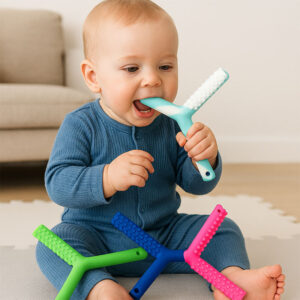
Silicone teethers & soothing toys
-
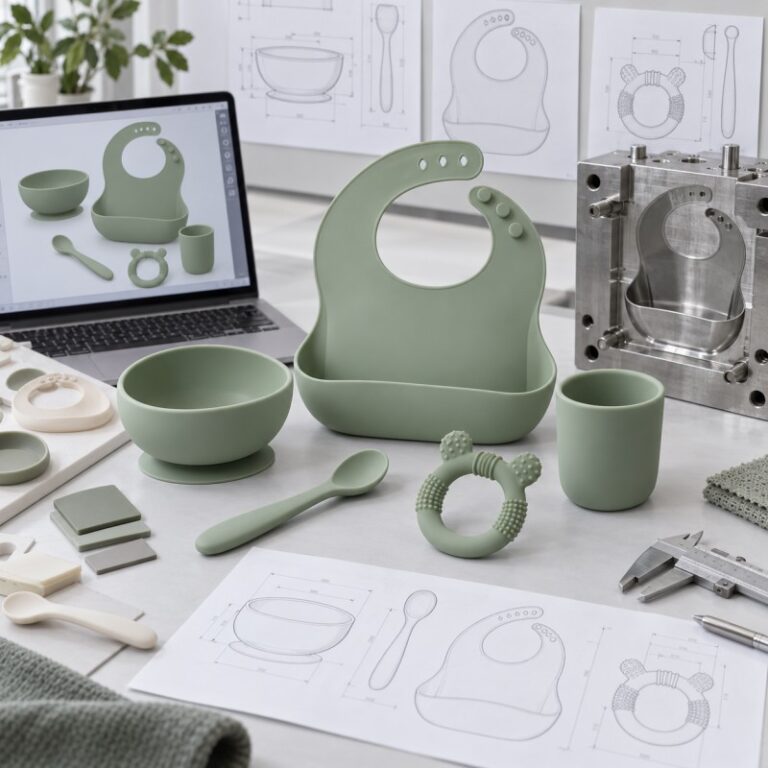
Silicone Baby feeding products (spoons, bowls, bibs)
-
Soft-touch, anti-slip silicone components

5. Value for Global B2B Buyers
Choosing silicone is not just a material change — it is a long-term brand investment:
-
Safer materials = lower compliance risk
-
Higher durability = reduced returns and complaints
-
Eco-friendly positioning = stronger market differentiation
FAQ – Frequently Asked Questions (For B2B Buyers)
Q1: Silicone costs more than plastic. Is it worth it?
Yes. While silicone has a higher unit price, its durability, safety, and reduced after-sales issues often lower the total cost of ownership (TCO).
Q2: Are silicone baby products compliant with EU and US regulations?
Food-grade and medical-grade silicone can comply with FDA, LFGB, EN71, and RoHS, when produced with proper materials and process control.
Q3: Can silicone products be customized?
Yes. Silicone allows customization in color, hardness (Shore A), texture, structure, and complex geometries, making it ideal for branded baby products.
Q4: Does LYA Silicone support low MOQs?
Yes. We support prototyping, small-batch testing, and scalable mass production, suitable for startups and established brands.
Q5: What is the difference between solid silicone and LSR?
LSR (Liquid Silicone Rubber) provides higher precision, cleaner molding, and better consistency, making it ideal for premium baby products.
Contact Information
LYA Silicone – Your Trusted Silicone OEM Partner,
-
 Email: sale11@lyasilicone.com
 -
 Phone: +86-13420974883
 -
 Website: www.lyasilicone.com