 English
  French
  German
  Spanish
  Polish
  Chinese
  Japanese
  Korean
  Russian
 Contents
The Real Reasons Behind Silicone Smell — And How to Choose a Truly Odorless Silicone Manufacturer
When sourcing silicone products, many B2B buyers—especially inbaby care, food-contact—ask the same critical question:
“Why do some silicone products have an unpleasant odor?”
Silicone is often promoted as odorless, non-toxic, and safe, yet in reality, poorly manufactured silicone products may emit noticeable smells that raise serious concerns about material safety, compliance, and manufacturing quality.
In this article, LYA Silicone reveals the real scientific and manufacturing reasons behind silicone odor—and explains how professional silicone factories eliminate this problem at the source.
1. Is Silicone Supposed to Have a Smell?
High-quality silicone should be virtually odorless.
Pure silicone elastomers—especially medical-grade and food-grade silicone—are chemically stable polymers made from silicon, oxygen, carbon, and hydrogen. Once fully cured and properly processed, they do not release volatile odors.
👉 If a silicone product smells, it is not a silicone problem, but a manufacturing and material control problem.
2. The Real Causes of Odor in Silicone Products (Exposed)
2.1 Low-Quality Raw Materials
Some factories use:
-
Recycled silicone
-
Low-purity silicone compounds
-
Industrial-grade silicone in food or baby products
These materials may contain volatile organic compounds (VOCs) that release odor over time.
✅ LYA Silicone Solution:
We only source certified food-grade, medical-grade, and platinum-cured silicone from audited suppliers, with full material traceability and COA documentation.
2.2 Incomplete Curing (The Most Common Cause)
If curing temperature, time, or pressure is insufficient, residual curing agents remain inside the silicone.
This results in:
-
Chemical smell
-
Sticky surface
-
Reduced mechanical performance
✅ LYA Silicone Solution:
We use precisely controlled LSR injection molding and compression molding processes, ensuring complete crosslinking and stable molecular structure.
2.3 Use of Peroxide-Cured Silicone Instead of Platinum-Cured Silicone
Peroxide curing is cheaper—but it can leave by-products that:
-
Cause odor
-
Affect long-term safety
-
Are unsuitable for medical or baby products
✅ LYA Silicone Solution:
For sensitive applications, we strictly recommend platinum-cured LSR, which:
-
Produces no odor
-
Meets FDA, LFGB, and medical standards
-
Offers superior purity and stability
2.4 Insufficient Post-Curing (Secondary Vulcanization)
Post-curing is a critical step often skipped to reduce cost.
Without proper post-curing:
-
Volatile residues remain trapped
-
Odor develops during storage or use
✅ LYA Silicone Solution:
We apply high-temperature post-curing ovens for odor removal and performance stabilization—especially for:
-
Baby products
-
Medical components
-
Food-contact silicone parts
2.5 Contaminated Production Environment
Silicone easily absorbs surrounding odors from:
-
Oils
-
Cleaning agents
-
Plasticizers
-
Improper packaging areas
✅ LYA Silicone Solution:
Our factory operates under controlled production environments, with strict separation between silicone, plastic, and metal processing zones.
3. Why Odor-Free Silicone Matters for B2B Buyers
For international brands and OEM customers, odor issues can cause:
-
❌ Product recalls
-
❌ Failed FDA / LFGB / REACH testing
-
❌ Customer complaints & brand damage
-
❌ Import rejection in EU & US markets
4. How LYA Silicone Guarantees Odor-Free Silicone Products
At LYA Silicone, odor control is embedded into our quality system, not treated as an afterthought.
Our Key Advantages:
-
✔ Medical-grade & food-grade silicone materials
-
✔ Platinum-cured LSR technology
-
✔ Advanced injection molding & compression molding
-
✔ Mandatory post-curing for sensitive products
-
✔ In-house odor inspection & material testing
-
✔ ISO 9001 / ISO 13485 quality management


5. Recommended Odor-Sensitive Baby & Maternity Silicone Products by LYA Silicone
For baby and maternity products, odor control is not just a quality detail—it is a critical safety requirement. Any residual smell may raise concerns about material purity, chemical residues, and compliance with international regulations.
At LYA Silicone, we focus on odor-free silicone manufacturing specifically for baby and maternity applications, where products come into direct contact with infants’ mouths, skin, and food.
Our Core Odor-Sensitive Silicone Baby & Maternity Products Include:
👶 Silicone Baby Feeding Products
-
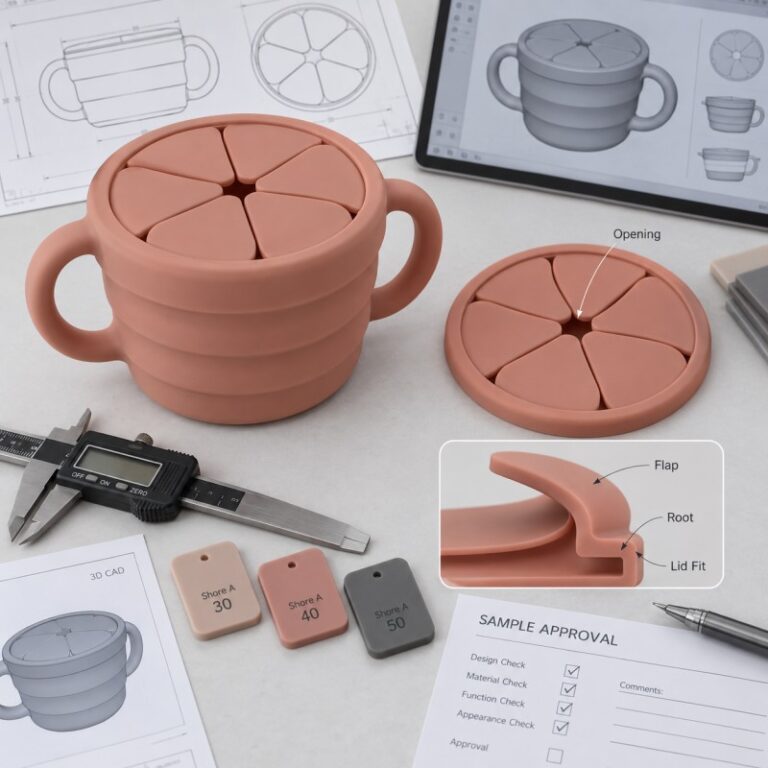
Silicone baby cups & training cups
-
Silicone baby bottle accessories
-
Silicone spoons, bowls, and feeding sets

FAQ – Frequently Asked Questions About Silicone Odor
Q1: Is silicone odor harmful?
Low-level odor is usually not toxic, but it indicates poor processing and may fail compliance tests for food or medical use.
Q2: Can odor be completely eliminated?
Yes. With high-purity materials, proper curing, and post-curing, silicone can be virtually odorless.
Q3: Does boiling silicone remove odor?
Boiling may reduce surface odor but does not fix internal curing defects. Proper manufacturing is the only real solution.
Q4: Is platinum-cured silicone always odor-free?
When correctly processed—yes. Platinum-cured silicone is the industry standard for odor-sensitive applications.
Q5: Can LYA Silicone develop custom odor-free silicone products?
Absolutely. We offer OEM & ODM silicone solutions, from material selection to mass production
Final Thoughts: Odor Is a Signal—Not a Detail
Silicone odor is a clear signal of material and process quality. For brands and distributors serving regulated markets, choosing the right manufacturer protects not only product performance—but also your reputation.
LYA Silicone is committed to delivering odor-free, compliant, and high-performance silicone solutions for global B2B customers.
- Email: sale11@lyasilicone.com
- Phone: +86-13420974883
- Website: www.lyasilicone.com