 English
  French
  German
  Spanish
  Polish
  Chinese
  Japanese
  Korean
  Russian
 Contents
Silicone has become one of the most trusted materials in modern manufacturing — from baby feeding products to medical devices and household items. However, not all silicone is created equal. The terms food-grade silicone and medical-grade silicone often appear in product descriptions, but what do they really mean? Understanding their differences is key to choosing the right material for your needs.
1. What Is Food-Grade Silicone?
Food-grade silicone is a non-toxic, odorless, and environmentally friendly elastomer material that meets FDA (Food and Drug Administration) and LFGB safety standards. It is specially formulated to be safe for direct contact with food, ensuring no harmful chemicals leach into your meals.
At LYA Silicone, we use premium liquid silicone rubber (LSR) that is BPA-free, lead-free, and phthalate-free, ensuring full compliance with global food safety regulations. Food-grade silicone maintains stability under high and low temperatures — from -40°C to +230°C, making it ideal for cooking, baking, and baby feeding products.
Food-grade silicone products on LYA Silicone include:
-
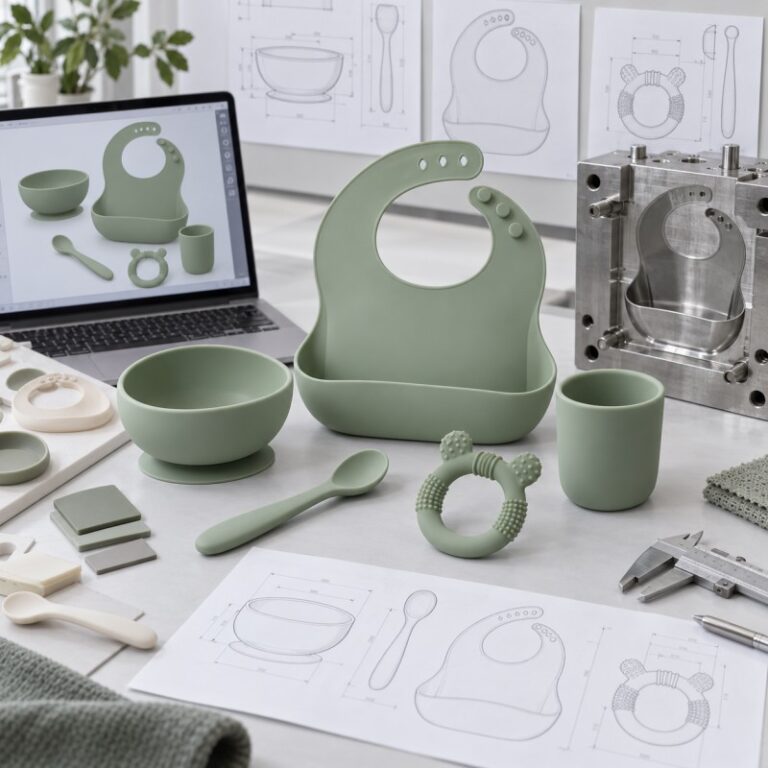
🍼 Silicone Baby Teether – Soft, chewable, and safe for teething infants.
-
🍽️ Silicone Feeding Set – Includes bowls, plates, and spoons designed to be non-slip and easy to clean.
-
🧊 Silicone Ice Cube Tray – Flexible, non-stick, and resistant to cracking under freezing temperatures.
-
🥕 Silicone Food Storage Bag – Reusable, leak-proof, and eco-friendly alternative to plastic bags.
2. What Is Medical-Grade Silicone?
Medical-grade silicone is the highest purity level of silicone, designed for use in healthcare, surgery, and medical devices. It meets strict standards such as ISO 10993 and USP Class VI, ensuring biocompatibility and safety for long-term contact with human tissue and fluids.
This silicone is produced in cleanroom environments, ensuring it is free from contaminants and pathogens. It can withstand sterilization methods such as autoclaving, gamma irradiation, and ethylene oxide, making it suitable for applications like:
-
Medical gaskets and seals
-
Respiratory masks
-
Catheters and tubing
-
Wearable health devices
3. Key Differences Between Food-Grade and Medical-Grade Silicone
| Property | Food-Grade Silicone | Medical-Grade Silicone |
|---|---|---|
| Purity | High | Ultra-high |
| Certification | FDA, LFGB | ISO 10993, USP Class VI |
| Applications | Food contact, kitchenware, baby products | Medical devices, implants, healthcare tools |
| Temperature Range | -40°C to +230°C | -60°C to +250°C |
| Biocompatibility | Safe for ingestion contact | Safe for tissue and blood contact |
| Production Environment | Standard production | Cleanroom (Class 1000 or higher) |
4. Why Choose LYA Silicone as Your Trusted Manufacturer?
With over a decade of experience in liquid silicone molding (LSR) and compression molding, LYA Silicone provides custom OEM and ODM silicone solutions for global brands. Whether you need FDA-approved silicone kitchenware or medical silicone components, we ensure:
-
100% non-toxic and BPA-free materials
-
Cleanroom manufacturing for medical-grade products
-
Full compliance with RoHS, REACH, FDA, and ISO standards
-
Advanced liquid injection molding (LIM) technology
-
Sustainable and eco-friendly silicone materials



FAQ: Food-Grade vs. Medical-Grade Silicone
Q1: Is food-grade silicone safe for babies?
Yes. All our baby feeding products, such as the Silicone Baby Teether and Silicone Feeding Bowl Set, are made from 100% food-grade silicone, certified by FDA and LFGB.
Q2: Can I use food-grade silicone for medical applications?
Not recommended. Medical applications require materials that meet ISO 10993 biocompatibility standards, which food-grade silicone does not always meet.
Q3: How can I tell if a silicone product is food-grade?
Check for FDA, LFGB, or SGS certifications. High-quality food-grade silicone will be odorless, flexible, and resistant to temperature extremes.
Q4: What are the temperature limits for food-grade silicone?
Typically between -40°C to +230°C, allowing safe use in freezers, ovens, and dishwashers.
Q5: Can LYA Silicone provide customized silicone molding?
Absolutely. We offer custom molding services for food-grade, medical-grade, and industrial-grade silicone parts, supporting both small batch and large-scale OEM orders.
🔗 Explore More at LYA Silicone
-
📧 Email: sale11@lyasilicone.com
-
📞 Phone: +86-13420974883
-
🌐 Website: www.lyasilicone.com