 English
  French
  German
  Spanish
  Polish
  Chinese
  Japanese
  Korean
  Russian
 Contents
When buyers search for a factory to produce silicone chew toys, they’re not just buying a shape — they’re buying safety, repeatable quality, and supply-chain confidence. At LYA Silicone we combine 20+ years of silicone manufacturing experience with food-grade materials, advanced LSR (liquid silicone rubber) processes, and full documentation packages to deliver chew toys that pass the toughest B2B requirements.
1. Material first: why food-grade LSR beats cheap rubbers
The core of any safe chew toy is the material. Liquid Silicone Rubber (LSR) and platinum-cured food-grade silicones are preferred because they are:
-
Non-toxic and inert — do not leach harmful plasticizers (no BPA, no phthalates), reducing toxicology risk for mouthing/chewing use.
-
Low compression set & high elasticity — returns to shape after repeated bites and bending, extending lifecycle.
-
Wide temperature stability — maintains properties across a wide range, important for sterilization and shipping.
-
Non-porous and easy to clean — resists bacterial growth compared with porous thermoplastics.
For B2B buyers, specifying platinum-cured, FDA/LFGB/USP-grade silicone is a quick way to filter suppliers capable of safe baby-and-pet product manufacturing. LYA offers full material traceability and can provide material certificates on request. LYA Silicone+1
2. Design for durability: geometry, wall thickness, and bite force data
A chew toy’s lifespan is determined by engineering, not luck. We apply engineering rules based on elastomer mechanics:
-
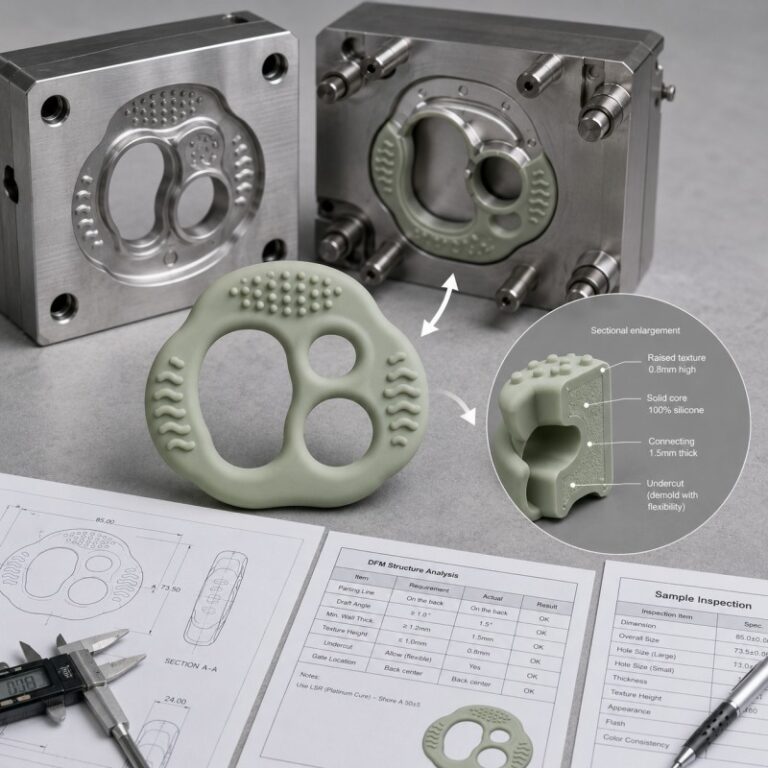
Optimized wall thickness & ribbing to dissipate bite stresses (prevents stress concentration that causes tears).
-
Tuned Shore hardness — for chewables, 20–50 Shore A is common for babies/sensory chews; 50–70 Shore A or blended formulations for heavy chewers (pet toys). LYA engineers help set the exact durometer for your target user segment.
-
Finite element insights — in premium designs we run simple FEA cycles to simulate repetitive compression and identify weak points before tooling. (This reduces costly retooling after failed field tests.)
3. Hygienic production: cleanroom, traceability, and batch testing
Buyers looking for a factory will shortlist partners who can show process control:
-
Cleanroom or controlled environments for baby/medical-grade parts reduces contamination risk.
-
Batch lot traceability & MSDS for raw LSR compounds so end-users can show compliance to their regulatory teams.
-
Third-party testing capability or cooperation — for example, materials and finished parts can be tested per ASTM, EN71, or relevant toy safety standards. The US CPSC guidance and ASTM F963 remain the reference for toy safety testing protocols.
4. Certifications & paperwork that win buyers’ RFQs
Global B2B purchasers often ask, “what documents will you provide?” Typical high-value documents:
-
Material certificates (FDA, LFGB, USP if requested).
-
ROHS / REACH declarations for chemical compliance.
-
EN71-3 and ASTM F963 test reports for migration of heavy metals and other toy safety checks (available via third-party labs).
-
MSDS / SDS for raw compounds and finished goods.
-
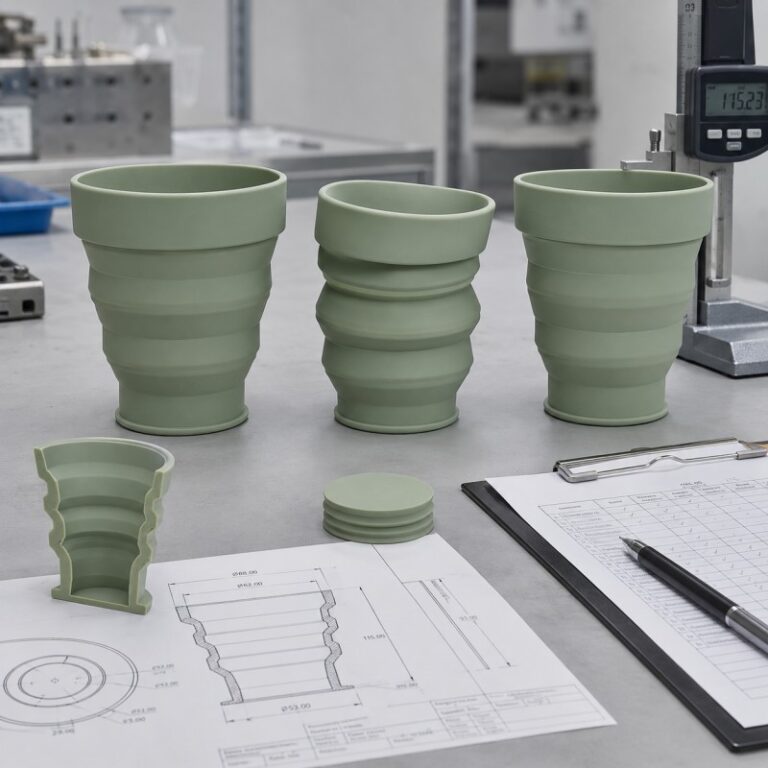
Production audit records (PPAP / First Article Inspection photos, dimensional reports).
LYA’s factory capabilities include generating these certificates and assisting customers with filing product compliance packages for different markets. LYA Silicone+1
5. Manufacturing advantages: LSR injection, overmolding, and color stability
A premium chew toy factory must have modern tooling and process know-how:
-
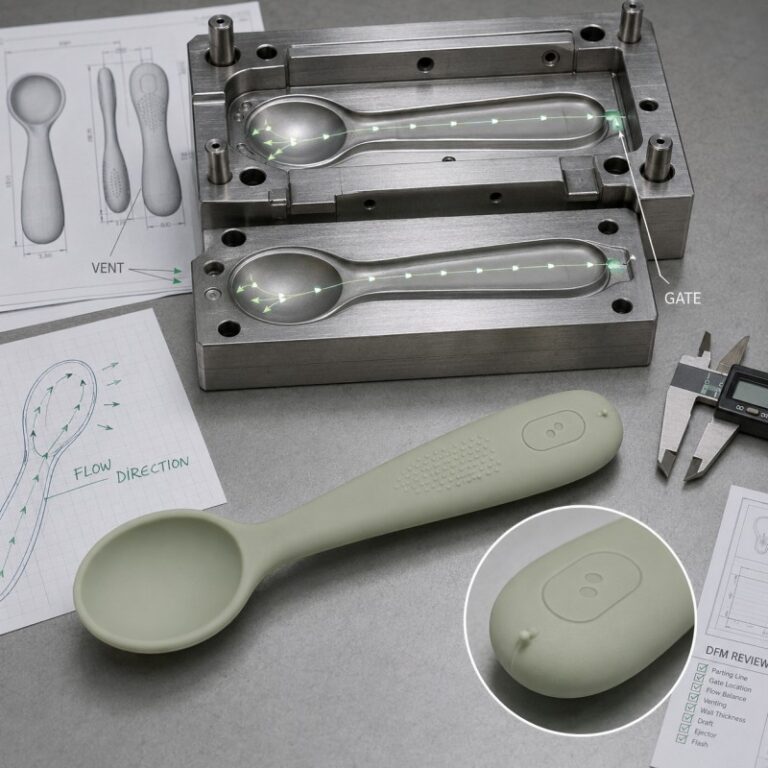
LSR injection molding produces clean, repeatable parts with tight tolerances and smooth surfaces (great for hygiene and aesthetics).
-
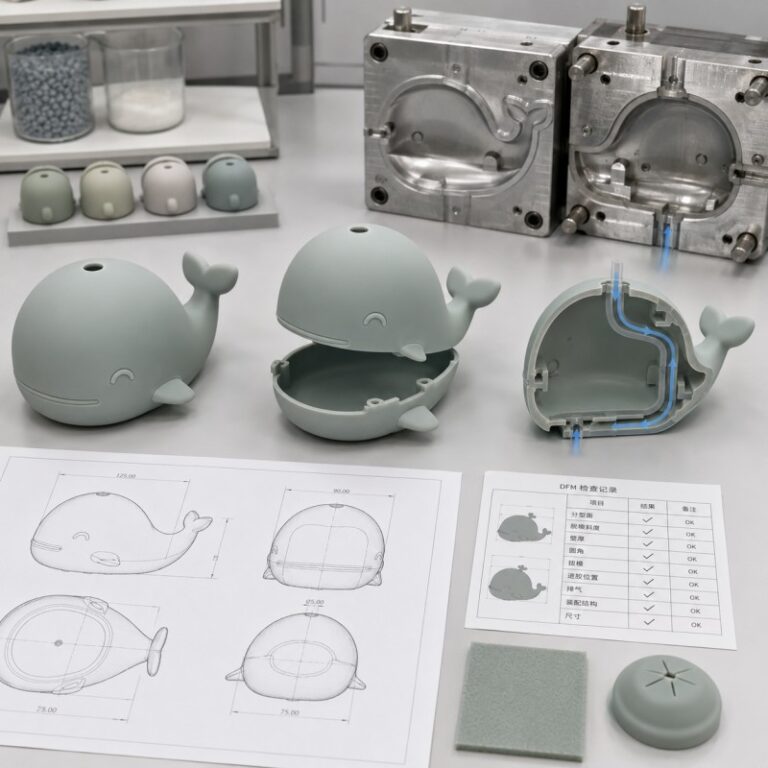
Overmolding or multi-shot molding allows combining different durometers or integrating rigid inserts (e.g., teether+handle).
-
Color stability & food-grade pigments — LYA uses certified pigments that resist migration and meet food contact regulations.
6. Science & safety — evidence buyers cite
B2B procurement teams respond to evidence. Useful scientific points to include in specification and marketing collateral:
-
Non-porous silicone surfaces reduce microbial adhesion compared with soft plastics — easier to sanitize and less prone to biofilm formation.
-
Platinum cure chemistry eliminates residual curing agents common in peroxide-cured systems, reducing extractables and improving biocompatibility. (This is why “platinum-cured” is a strong screening term.)
-
Compression set and tensile strength testing—specify required test values (e.g., <25% compression set after 70 hours at 70°C) as pass/fail criteria for contract acceptance; LYA can run these tests and share reports.
9. Cost vs. value: why higher unit price can win at scale
Low price is tempting but often hides rework, failed tests, or unsafe materials. For B2B buyers:
-
Prioritize suppliers with documented test reports and consistent sampling.
-
Pay slightly more for platinum-cured LSR and validated processes — this reduces regulatory risk and chargeback exposure from retailers.
10. Quick checklist to evaluate a prospective chew-toy factory
-
Can they provide FDA/LFGB/MSDS for materials?
-
Do they support EN71/ASTM third-party testing?
-
Do they use LSR / platinum cure and can they show process photos?
-
Do they provide first article inspection and dimensional reports?
-
Can they scale: mold shop capacity, MOQ, lead times, and logistics?
If you need, LYA can provide a sample pack, test reports, and a factory audit summary on request. LYA Silicone+1


FAQ — Common Questions from International B2B Buyers
Q1: What material do you recommend for baby chew toys?
A: We recommend platinum-cured food-grade LSR due to its low extractables, high elasticity, and sterilization tolerance. Certificates (FDA, LFGB) can be provided.
Q2: Can you meet EN71 / ASTM F963 testing requirements?
A: Yes — we coordinate with accredited third-party labs to run EN71 parts (migration, heavy metals) and the relevant sections of ASTM F963. We supply test reports on request.
Q3: What Shore hardness is best for sensory chews?
A: Typically 20–50 Shore A for infant/pediatric mouthing items and 50–70 Shore A for stronger chewers (pets or heavy mouthing). We’ll test prototypes and recommend the optimal durometer.
Q4: Do you offer small sample runs before tooling?
A: Yes — we provide rapid prototyping (3D prints + LSR pilot molds) and small batch production so you can validate form, fit, and function before full tooling investment.
Q5: What documentation will you provide for customs and retail audits?
A: Material COA, MSDS, production photos, first article inspection, and third-party testing reports (EN71/ASTM/FDA/LFGB) as applicable. We also provide packaging spec sheets and batch coding info.
Q6: How long is lead time for tooling and production?
A: Typical lead times vary by complexity. Rapid prototype/sample runs can be 2–3 weeks; tooling 2–6 weeks; mass production depends on order size. We’ll provide a transparent timeline in your quotation.
Ready to source? What to send to get a fast, accurate quote
To receive a professional RFQ from LYA, please include:
-
CAD or 2D drawing (DXF/STEP preferred) or high-res sample photos + dimensions
-
Target Shore A hardness (or application description)
-
Estimated annual quantity / MOQ needs
-
Required certifications / test reports (e.g., FDA, EN71)
-
Preferred packaging options
- Email: sale11@lyasilicone.com
- Phone: +86-13420974883
- Website: www.lyasilicone.com