 English
  French
  German
  Spanish
  Polish
  Chinese
  Japanese
  Korean
  Russian
 Contents
As global demand for pet products continues to grow, “non-toxic” has become one of the most frequently used — and most misunderstood — claims in the pet supplies industry.
For pet brands, distributors, and retailers, labeling a product as safe is no longer enough. Veterinarians, regulators, and consumers are now asking deeper questions:
What materials are used?
How are they processed?
Do they release harmful substances over time?
At LYA Silicone, we work closely with international pet brands and OEM buyers, and we’ve seen a critical issue repeatedly overlooked:
“A pet product can look safe — but still be chemically unsafe.”
This article explains what “non-toxic” truly means in pet supplies, the scientific risks behind common materials, and why medical- and food-grade silicone is becoming the global standard for responsible pet product manufacturing.
1. What Does “Non-Toxic” Really Mean for Pet Products?
In B2B manufacturing, non-toxic is not a marketing word — it is a material science and compliance issue.
A truly non-toxic pet product should meet three core safety conditions:
-
No harmful chemical migration
– No BPA, phthalates, heavy metals, or PAHs -
Stable material structure
– No breakdown under heat, saliva, or repeated washing -
Compliance with international safety standards
– FDA, LFGB, RoHS, REACH, CPSIA, etc.
2. Why Pets Are More Vulnerable Than Humans
From a biological perspective, pets are more sensitive to material toxicity than humans.
Scientific and veterinary research shows:
-
Pets chew, lick, and ingest product surfaces directly
-
Dogs and cats have lower body weight, increasing toxin concentration
-
Repeated exposure occurs daily — food bowls, chew toys, feeders
Materials that may appear “safe enough” for humans can still pose long-term risks to pets, including:
-
Hormonal disruption
-
Digestive irritation
-
Liver and kidney stress
3. Hidden Risks in Common Pet Product Materials
❌ Low-Grade Plastics
-
May contain BPA or plasticizers
-
Can degrade with heat and detergents
-
Higher risk of chemical leaching over time
❌ Rubber & PVC
-
Often use sulfur curing agents
-
May release odor and residues
-
Difficult to control consistency across batches
❌ Coated or Painted Surfaces
-
Risk of coating wear and ingestion
-
Pigments may contain heavy metals
For B2B buyers, these risks can translate into:
-
Product recalls
-
Brand reputation damage
-
Regulatory compliance issues
4. Why Food-Grade & Medical-Grade Silicone Is the Safer Choice
High-purity silicone is chemically inert, meaning it does not react with saliva, food, or water.
When properly manufactured, silicone offers:
✅ No BPA, PVC, phthalates, or heavy metals
✅ Odorless and tasteless
✅ Excellent heat and cold resistance
✅ Long-term stability without degradation
✅ Easy cleaning and sterilization
This makes silicone especially suitable for:
-
Pet feeding bowls
-
Slow feeders
-
Lick mats
-
Silicone chew toys
-
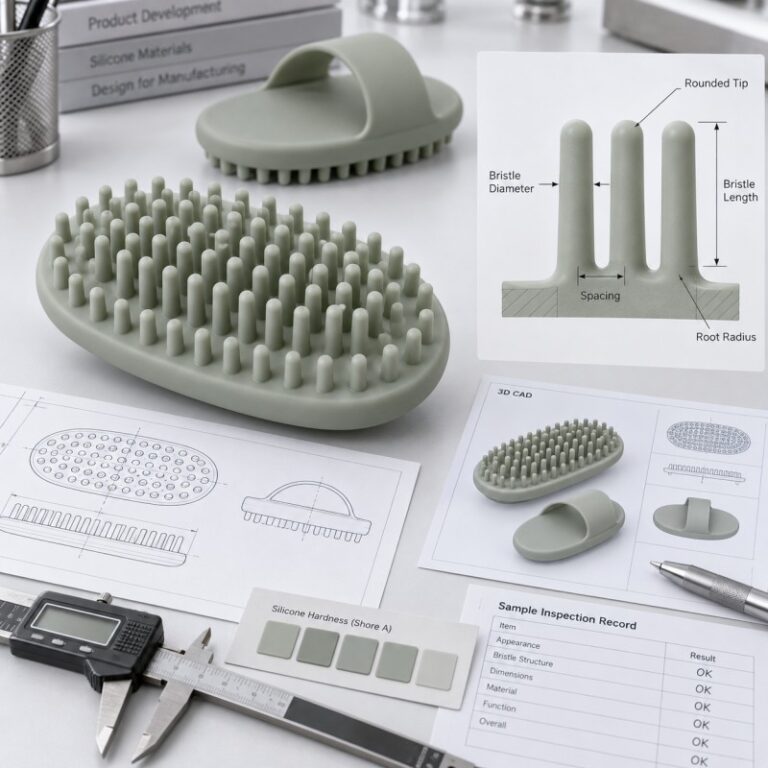
Grooming brushes
5. Manufacturing Process Matters More Than Material Alone
Even high-quality silicone can become unsafe if processed incorrectly.
Key manufacturing factors include:
-
Raw material purity control
-
Accurate curing temperature and time
-
Avoidance of secondary contamination
-
Clean molding environments
As a direct silicone manufacturer, LYA Silicone controls the full process:
-
Material selection & testing
-
LSR injection molding or compression molding
-
Post-curing and odor removal
-
Batch-level quality inspection
6. Compliance & Certifications Global Buyers Care About
For international B2B customers, compliance is not optional.
Our silicone pet products can be produced to meet:
-
FDA (Food Contact Safety – USA)
-
LFGB (Germany / EU food-grade standard)
-
RoHS & REACH
-
Custom third-party testing upon request
7. Recommended Non-Toxic Silicone Pet Products from LYA Silicone
Based on current market demand, our most popular OEM silicone pet products include:
-
Slow Feeder & Anti-Choking Bowls
-
Silicone Lick Mats (Anxiety Relief & Training)
-
Silicone Dog & Cat Grooming Brushes


FAQ – Non-Toxic Silicone Pet Products
Q1: Are all silicone pet products non-toxic?
No, only food-grade or medical-grade silicone made with proper manufacturing processes is truly non-toxic.
Q2: Why is silicone safer than plastic for pet products?
High-quality silicone is chemically inert and does not release BPA, phthalates, or other harmful substances.
Q3: Can silicone pet products leach chemicals over time?
Properly cured silicone remains stable and does not leach toxins even with long-term use and frequent cleaning.
Q4: What is the difference between food-grade and medical-grade silicone?
Medical-grade silicone offers higher purity and biocompatibility than food-grade silicone for more sensitive applications.
Q5: Do you support OEM and private label silicone pet products?
Yes, LYA Silicone provides full OEM/ODM services including mold development, branding, and packaging.
Q6: Can your products meet international safety standards?
Our silicone pet products can be manufactured to comply with FDA, LFGB, RoHS, and REACH requirements.
Q7: How does manufacturing quality affect product safety?
Even safe materials can become unsafe if curing, contamination control, or quality inspection is not properly managed.
Build Safer Pet Products with the Right Silicone Partner
If your brand values true non-toxic safety, manufacturing transparency, and long-term quality, choosing the right factory matters.
- Email: sale11@lyasilicone.com
- Phone: +86-13420974883
- Website: www.lyasilicone.com