 Japanese
  English
  French
  German
  Spanish
  Polish
  Chinese
  Korean
  Russian
 内容
Answer Excerpt
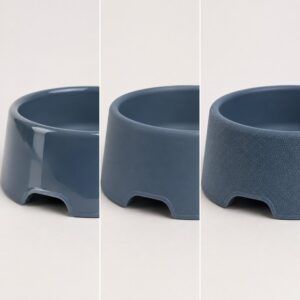
The best surface finish for a custom silicone product depends on product use, cleaning requirements, grip, brand appearance, color, logo method and packaging. Glossy surfaces can appear smooth and bright, matte finishes provide a softer visual effect, and textures can improve grip or product differentiation. Buyers should approve the final finish on molded samples because mold condition, color and product geometry can change the result.
Surface finish is often treated as a visual decision.
However, on a custom silicone product, surface finish may also affect:
- Cleaning performance
- Grip
- Dust visibility
- Color appearance
- Logo clarity
- Printing adhesion
- Product release from the mold
- Inspection standards
- Packaging contact
- Customer perception
A surface that looks attractive on a computer rendering may feel very different after silicone molding.
For this reason, the finish should be selected during product and mold development rather than after the mold has already been completed.
What Creates the Surface Finish on a Silicone Product?
The final silicone surface is influenced mainly by the mold surface.
A polished mold cavity normally produces a smoother and glossier product surface.
A sandblasted, etched or textured mold surface can produce a matte or patterned appearance.
The final result may also be influenced by:
- Silicone material
- Product color
- Product hardness
- Wall thickness
- Mold temperature
- Curing conditions
- Mold cleanliness
- Release conditions
- Product geometry
- Post-production handling
The same mold texture may not look identical on every color or product shape.
Dark colors may show surface differences more clearly, while light or pastel colors may produce a softer visual effect.
What Is a Glossy Silicone Surface?
A glossy silicone surface is normally created by a highly polished mold cavity.
It reflects more light and can make the product color appear brighter or more saturated.
Glossy finishes are commonly considered for:
- Silicone baby bowls
- Silicone cups
- Protective sleeves
- Silicone lids
- Decorative products
- Products requiring a smooth appearance
Main Advantages
- Smooth visual appearance
- Strong color brightness
- Fine molded details may appear clearer
- Usually easier to wipe on simple surfaces
- Suitable for modern or clean product styling
- Can make transparent or translucent silicone look clearer
Main Limitations
- Fingerprints may be more visible
- Scratches or surface marks can be easier to notice
- Flash and parting lines may appear more obvious
- Light reflection can exaggerate small molding differences
- Smooth surfaces may provide less grip in wet conditions
A glossy finish is not automatically easier to clean if the product contains deep grooves, narrow corners or complex textures.
Product geometry remains important.
What Is a Matte Silicone Finish?
A matte finish reflects less light and creates a softer, less reflective appearance.
It is often selected for premium baby products, pet products and lifestyle accessories.
Main Advantages
- Soft and premium appearance
- Fingerprints may be less noticeable
- Provides a comfortable visual and tactile effect
- Can improve perceived grip
- Reduces strong surface reflection
- Suitable for pastel and neutral color palettes
Main Limitations
- Deep matte textures may trap visible particles
- Dust may be more difficult to wipe from rough surfaces
- Fine printed details may appear less sharp
- Texture inconsistency may become visible between mold areas
- Very heavy texture may affect cleaning
- Color may appear slightly less bright than on a glossy surface
A matte finish should be evaluated at the actual molded-product scale.
A texture that looks fine on a small sample plate may feel too rough when applied across a large feeding mat or baby bib.
What Is a Textured Silicone Surface?
A textured surface contains a deliberate pattern rather than a uniform glossy or matte finish.
Common patterns include:
- Fine grain
- Dots
- Lines
- Geometric patterns
- Anti-slip ribs
- Brushed textures
- Raised grip areas
- Decorative molded patterns
Texture can be used for both functional and visual purposes.
Functional Texture
Functional textures may improve:
- Grip
- Anti-slip performance
- Product handling
- Sensory feedback
- Water drainage
- Product positioning
Decorative Texture
Decorative textures may help:
- Differentiate the product
- Create a premium visual identity
- Hide minor surface variation
- Coordinate several products in one collection
- Support brand recognition
However, texture depth and spacing must be suitable for cleaning, molding and demolding.
Very narrow grooves or deep patterns may collect food, dust, pet hair or cleaning residue.
Matte vs Glossy vs Textured Silicone
| 比較 | Glossy | Matte | Textured |
|---|---|---|---|
| Appearance | Bright and reflective | Soft and low-reflection | Patterned or functional |
| Color effect | Usually appears brighter | Usually appears softer | Depends on pattern depth |
| Grip | Lower on smooth wet surfaces | Moderate | Can be designed for higher grip |
| クリーニング | Easy on simple smooth geometry | Depends on texture depth | Deep patterns require more cleaning |
| Dust visibility | Can show fingerprints and marks | May show dust in rough textures | Depends on color and pattern |
| Logo clarity | Good for fine molded details | Good when texture is controlled | Logo may need a separate smooth area |
| Mold requirement | Polished mold surface | Sandblasted or etched surface | Custom mold pattern |
| Best use | Clean modern appearance | Premium soft appearance | Grip, sensory or visual differentiation |
How Should Buyers Choose the Surface Finish?
1. Start with Product Use
The surface should support the way the customer uses the product.
For example:
- A silicone cup may require grip around the outside
- A baby bowl may need a smooth, easy-clean interior
- A pet lick mat may require functional raised textures
- A silicone brush needs controlled bristle and handle texture
- A collapsible cup should not use aggressive texture on folding lines
Different areas of one product can use different finishes.
The inside of a bowl may be smooth while the outside uses a fine matte or anti-slip texture.
2. Consider Cleaning Requirements
Products that contact food, saliva, pet food or cosmetics should avoid unnecessary deep grooves.
Check whether the product will be cleaned by:
- Hand washing
- Dishwasher
- Boiling
- Wiping
- Brush cleaning
- Repeated rinsing
A surface can look premium while still being difficult to clean.
Rounded transitions and suitable texture depth are often more important than choosing matte or glossy alone.
3. Evaluate Grip and Touch
Grip requirements depend on the product.
A very smooth glossy surface may become slippery when wet.
A fine matte or patterned texture may improve handling, but excessive roughness can reduce comfort or make cleaning more difficult.
Grip areas should be placed where users actually hold the product instead of applying the same heavy texture across the entire surface.
4. Review Color on the Final Surface
The same Pantone target can appear different on glossy and matte silicone.
Glossy surfaces normally reflect more light, while matte surfaces scatter light and may appear softer or slightly lighter.
Color approval should therefore use:
- Final silicone material
- Final product thickness
- Final mold texture
- Final curing conditions
- Agreed lighting conditions
Do not approve color only from a digital rendering or flat color card.
5. Reserve a Suitable Logo Area
A heavy texture can reduce the clarity of:
- Embossed logos
- Debossed logos
- Printed logos
- Small text
- Laser markings
- Measurement marks
Products with a strong texture may need a dedicated smooth logo area.
The logo position should also avoid:
- Folding lines
- Suction edges
- Sealing surfaces
- Deep texture
- Parting lines
- High-abrasion areas
Logo and surface finish should be reviewed together before final mold machining.
6. Consider Dust and Packaging Contact
Silicone surfaces can collect visible dust, fibers or packaging particles.
The result depends on:
- Surface texture
- Product color
- Static
- Packaging material
- Handling
- クリーニング
- Storage environment
Dark matte silicone may show light-colored fibers clearly.
Glossy surfaces may show fingerprints and contact marks.
Packaging should be tested with the final surface instead of assuming one finish will always remain cleaner.
Common Surface-Finish Problems
Uneven Gloss
One area may appear shinier than another because of differences in mold polishing, temperature, filling or mold maintenance.
Texture Inconsistency
Texture depth may differ around:
- Parting lines
- Mold inserts
- Logo areas
- Repaired mold surfaces
- Different mold cavities
Visible Flow Marks
Flow patterns may become more visible on glossy or large flat surfaces.
Polished Spots
Repeated rubbing, packaging pressure or mold wear may create local areas that appear smoother than the surrounding matte surface.
Surface Scratches
Glossy silicone may show scratches more clearly, while heavy matte textures may hide small scratches but collect more particles.
Poor Logo Definition
A logo applied directly over strong texture may lose edge clarity.
The quality standard should define the acceptable finish before mass production begins.
What Should Buyers Approve Before Production?
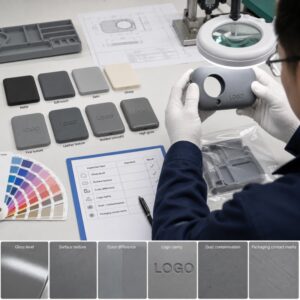
Buyers should approve the surface finish using actual molded samples.
Check:
- Overall gloss or matte level
- Texture depth
- Texture direction
- Surface consistency
- Color appearance
- Logo clarity
- Grip
- Cleaning performance
- Dust visibility
- Packaging marks
- Mold-cavity consistency
Samples should also be evaluated after:
- Washing
- Drying
- Folding
- パッケージング
- ストレージ
- Repeated handling
A small mold-texture plate can help during early selection, but final approval should be based on the production-intent product.
Product-Specific Recommendations
シリコーンベビー用品
Suitable finishes may include:
- Smooth interior food-contact surfaces
- Fine matte exterior surfaces
- Controlled grip textures
- Shallow, easy-clean decorative patterns
Avoid deep textures around food-contact grooves, bib pockets and oral-contact areas.
シリコーンペット製品
Pet bowls, feeding mats and grooming tools may use:
- Anti-slip base textures
- Functional lick patterns
- Grip texture on handles
- Smooth food-contact surfaces
Texture depth should consider pet food, hair and cleaning.
シリコーン屋外製品
Outdoor and travel products may require:
- Grip when wet
- Scratch-resistant visual design
- Controlled folding surfaces
- Easy-clean drinking areas
Do not place heavy texture on sealing rims, lid interfaces or folding joints.
How LYA Silicone Supports Surface-Finish Development
LYA Silicone supports OEM and ODM development for silicone baby, pet, household, outdoor and educational products.
Project support may include:
- Product drawing review
- Surface-finish selection
- Mold-polishing evaluation
- Matte and textured mold development
- Pantone color matching
- Logo-area planning
- Sample production
- Surface-quality inspection
- Cleaning and grip evaluation
- Packaging validation
- Pilot production
- Mass-production control
Before mold development, buyers should explain the product application, target appearance, cleaning requirements, grip areas, logo method and packaging concept.
This allows the product surface to be evaluated as both a visual and functional feature.
Frequently Asked Questions
Is Matte Silicone Better Than Glossy Silicone?
Not automatically.
Matte silicone may provide a softer appearance and better perceived grip, while glossy silicone may appear brighter and smoother.
The correct finish depends on product use and brand design.
Which Finish Is Easier to Clean?
A smooth surface with simple geometry is generally easier to wipe.
However, wall shape, grooves, corners and texture depth also affect cleaning.
Does Matte Silicone Attract More Dust?
Not always.
Rough or deep textures may make particles more visible or more difficult to wipe, but color, static, packaging and handling also influence dust appearance.
Can One Product Use Different Surface Finishes?
Yes.
A product can use a smooth interior, matte exterior and textured grip area when the mold design supports these zones.
Does Surface Finish Change the Silicone Color?
It can change how the color appears.
Glossy and matte surfaces reflect light differently, so molded color samples should be approved on the final surface.
Can the Surface Finish Be Changed After the Mold Is Finished?
Some mold surfaces can be polished, etched or modified, but changes may require mold rework and new sampling.
The finish should be confirmed before final mold approval.
Select the Surface Before Final Mold Approval
Surface finish affects more than appearance.
It can influence:
- クリーニング
- Grip
- カラー
- Dust visibility
- Logo quality
- パッケージング
- Inspection
- Customer experience
To review the appropriate surface finish for your custom silicone product, send リヤ・シリコーン the product drawing, application, target color, logo, cleaning method, packaging concept and estimated quantity.