 English
  French
  German
  Spanish
  Polish
  Chinese
  Japanese
  Korean
  Russian
 Contents
Introduction:
Ensuring the safety and health of infants is a top priority for every parent. With the rising popularity of silicone baby products—such as teething toys, pacifiers, feeding utensils, and bath accessories—there is an increasing risk of counterfeit or low-quality items infiltrating the market. These products may contain impurities, harmful chemicals, or substandard materials that pose serious health risks to your child.
This comprehensive guide provides expert insights and detailed steps to help parents, caregivers, and retailers accurately identify fake, low-quality, or contaminated silicone baby products. By understanding the key indicators of authenticity and quality, you can make informed purchasing decisions that prioritize your child’s safety.
Understanding the Risks of Fake and Low-Quality Silicone Baby Products
Fake silicone baby products often originate from unregulated sources and are manufactured without adherence to safety standards. These products are typically made from subpar materials, which may contain impurities, BPA, phthalates, lead, or other toxic substances.
Low-quality silicone may appear similar to high-grade medical or food-grade silicone but often fails to meet strict safety standards. The risks include chemical leaching, allergic reactions, and long-term health issues such as hormonal disruptions or developmental delays.
Key Indicators of Fake or Low-Quality Silicone Baby Products
1. Visual Inspection: Surface Finish and Color
High-quality silicone products exhibit a smooth, matte, or slightly glossy surface with uniform color. Fake or low-grade items often have:
- Uneven color distribution or discoloration
- Visible bubbles, air pockets, or seams
- Poor finishing, such as rough edges or uneven surfaces
- Bright, unnatural colors that are overly vibrant or inconsistent
2. Smell Test: Absence of Chemical Odors
Authentic silicone is odorless or has a very faint, neutral smell. In contrast, counterfeit or low-quality products may emit:
- Strong chemical, plastic, or rubber odors
- An unpleasant chemical scent that persists even after washing
3. Flexibility and Texture: Feel and Resilience
Premium silicone is soft, pliable, and resilient, returning to its original shape after bending. Fake products often:
- Feel stiff or brittle
- Lack flexibility or springiness
- Exhibit hard spots or uneven texture
4. Heat and Cold Resistance Test
High-quality silicone can withstand extreme temperatures without deforming or releasing chemicals. To test:
- Place the product in hot water (~100°C) for a few minutes
- Check for deformation or odor release
- Conversely, freeze the product and observe if it becomes brittle or cracks
5. Labeling and Certification Verification
Always scrutinize product labels for compliance marks, such as:
- FDA approval or FDA compliance
- LFGB certification (European safety standard)
- ISO standards for silicone safety
- Clear ingredient lists indicating food-grade silicone
Laboratory Testing and Professional Inspection
For absolute certainty, especially with high-value or critical items, consider professional testing:
- Chemical analysis to detect impurities such as BPA, phthalates, or heavy metals
- Material composition verification through third-party labs
⭐ Recommended Products
1. Food-Grade Silicone Baby Teething Toys
Made from LFGB & FDA-certified platinum-cured silicone, ensuring zero BPA, phthalates, fillers, or odors.
Features: Soft-safe texture, high elasticity, heat-resistant, dishwasher safe.
2. Silicone Pacifiers & Pacifier Clips
100% medical-grade silicone with seamless molding to eliminate choking hazards and bacteria buildup.
Why It’s Safe: One-piece LSR injection molding, no glue, no detachable parts.
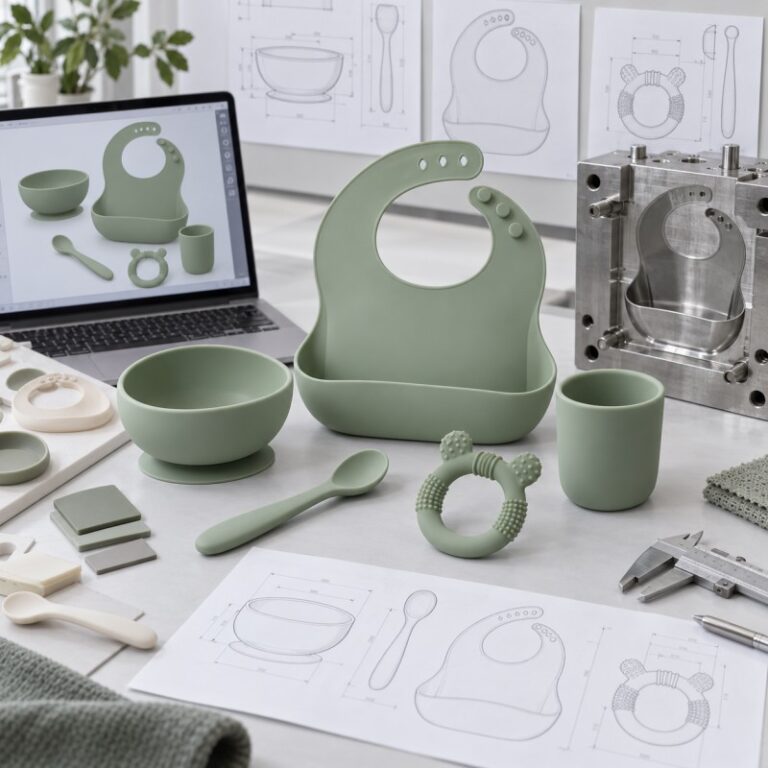
3. Silicone Baby Feeding Set (Bowl, Spoon, Bib, Plate)
Perfect for infants transitioning to solid foods.
Safety Advantage:
– High-temperature resistance
– Does not absorb odors
– Free of harmful chemicals
– Smooth matte finish ideal for babies


Common Signs of Impurities and Contaminants in Silicone Products
Presence of Additives or Fillers
Fake or substandard silicone may contain fillers or additives that can leach harmful substances. Look for:
- Unusual textures or color streaks
- Cracking or peeling over time
Chemical Leaching and Toxicity Risks
Impurities such as BPA, phthalates, lead, or volatile organic compounds (VOCs) can migrate into food or saliva, posing health hazards. Indicators include:
- Persistent chemical smell
- Discoloration after exposure to heat or sunlight
- Skin irritation or allergic reactions after contact
Why Choose LYA Silicone?
-
20+ Years of Silicone Expertise
-
ISO9001, ISO13485, FDA, LFGB certified production
-
Medical-grade LSR injection molding technology
-
Strict quality control & impurity-free formulations


Conclusion: Prioritize Safety with Informed Choices
Identifying fake or low-quality silicone baby products requires attention to detail, informed inspection, and adherence to safety standards. Remember, your child’s health depends on the quality of the products they interact with daily.
By following the comprehensive guidelines outlined above—visual checks, smell tests, flexibility assessments, and certification verification—you can confidently distinguish authentic, safe silicone items from counterfeit or hazardous alternatives.
Investing in high-quality, certified silicone ensures peace of mind and long-term safety for your little one, making every purchase a step toward healthier, happier childhoods.
- Email: sale11@lyasilicone.com
- Phone: +86-13420974883
- Website: www.lyasilicone.com
✅ FAQ — One-Sentence Summaries
Q1: What makes LYA Silicone baby products safer?
They are made from certified medical/food-grade silicone with strict quality control and no harmful substances.
Q2: Do your products contain BPA, phthalates, or heavy metals?
No—every product is free from BPA, phthalates, PVC, latex, and heavy metals.
Q3: How can I tell if a product is pure silicone?
Check for no odor, uniform color, soft flexibility, and resistance to heat or cold.
Q4: Are your products safe for boiling or sterilizing?
Yes, they withstand −40°C to 230°C and are safe for boiling, microwaving, and dishwashing.
Q5: Do you offer OEM/ODM customization?
Yes, we support full customization including molds, colors, logos, and packaging.
Q6: How do you ensure product safety and consistency?
We use a five-step QC system covering raw materials, molding, curing, and full inspection.
Q7: Do silicone baby products expire?
They last long but should be replaced if cracks, discoloration, or wear appear.
Q8: Can you provide safety test reports?
Yes, we offer FDA, LFGB, and ISO safety and biocompatibility reports upon request.