 English
  French
  German
  Spanish
  Polish
  Chinese
  Japanese
  Korean
  Russian
 Contents
When global brands and product designers source durable pet toys, one question always comes up: what design features actually improve the chew resistance of a toy? At LYA Silicone , we help OEM/ODM partners answer that question with scientific materials engineering, thoughtful structural design, and industry-grade silicone molding expertise. Below is a detailed, trustworthy explanation that aligns with what international buyers search for when evaluating a supplier.
🧪 Why Chew Resistance Matters in Pet Toy Design
Chew resistance isn’t just a marketing term — it’s based on material science and mechanics. Dogs exert significant bite forces and repetitive chewing loads, especially in larger or power-chewer breeds. A toy that isn’t engineered to distribute those forces can crack, tear, or shed fragments, increasing the risk of choking or ingestion. Durable design helps ensure long life, better safety, and stronger B2B reputation.
🧬 Core Design Principles That Enhance Chew Resistance
✔️ 1. Material Selection — Beyond “Just Silicone”
Although many pet toys use generic elastomers, high-quality, food-grade silicone offers a scientifically advantageous balance of properties:
-
Elastic viscoelastic behavior: Silicone can flex and recover repeatedly without cracking. This resilience helps it absorb bite pressure and return to shape instead of tearing.
-
Wide temperature and chemical stability: Silicone remains flexible in challenging climates and won’t degrade from saliva or outdoor conditions.
-
Non-toxic and pet-safe grades: Platinum-cured and medical-grade silicones reduce risks of harmful leachates.
🧩 2. Structural Features — It’s Not Just What You Use, It’s How You Shape It
Even with top-tier silicone, geometry and surface texture dramatically influence durability:
📌 a. Thick Sections & Reinforced Cores
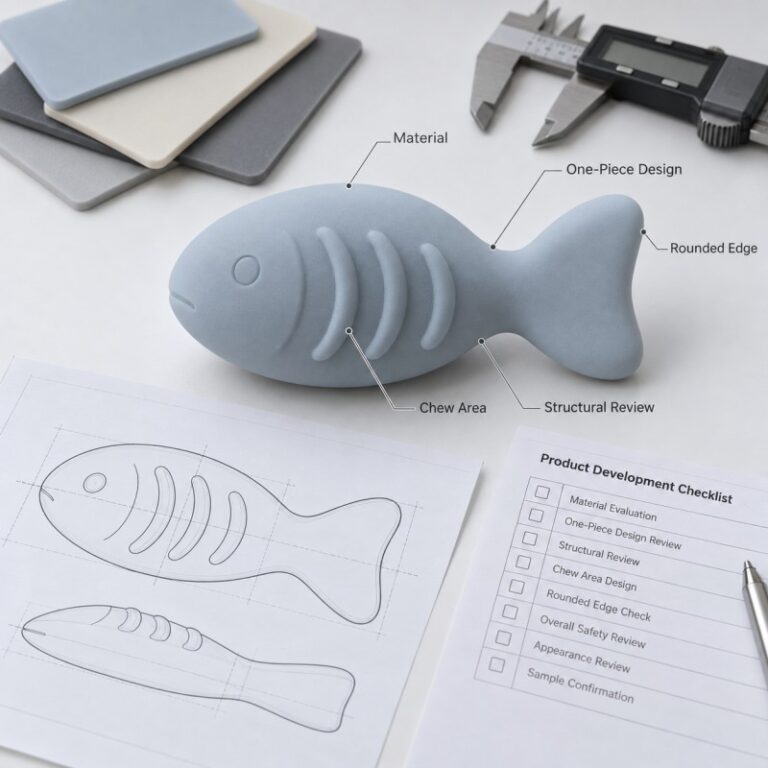
Thicker walls and reinforced internal structures distribute bite forces over a larger area, reducing stress concentration that leads to failure.
📌 b. Textured Surfaces
Raised ridges, bumps, and nubs aren’t just for play — they redirect bite points and spread stress across the toy instead of letting a pet gnaw at a single weak spot. These features also massage gums and can reduce plaque buildup during chewing.
📌 c. Integrated Openings and Treat Puzzles
Toys designed with cavities for treats or puzzles create purposeful engagement mechanics. These designs redirect chewing behaviors toward interactive play rather than destructive gnawing — engaging the dog mentally while protecting the toy’s structure.
📌 d. Balanced Flex-Stiff Regions
Using LSR (Liquid Silicone Rubber), we can engineer toys with variable thickness or integrated harder inserts — softer where you want comfort, firmer where you need durability.
🐾 3. Surface Patterning and Bite Force Distribution
Dogs apply force unevenly when chewing. Well-designed toys mimic how engineers reinforce load-bearing components in mechanical systems:
-
Concave/convex geometries help split biting forces instead of focusing them in one place.
-
Honeycomb-like or repeating patterns can dissipate stress and delay material fatigue.
🔎 Recommended Silicone Pet Toy Solutions from LYA Silicone
To support brands looking to launch chew-resistant, safe, and long-lasting pet toys, LYA Silicone offers a growing range of customizable silicone pet products, including:
-
Chew-Resistant Silicone Dog Toys
Designed with reinforced wall thickness, optimized Shore A hardness, and stress-dispersing textures to withstand repetitive biting from medium to heavy chewers. -
Interactive Silicone Treat-Dispensing Toys
Engineered with internal cavities and flexible openings to reduce destructive chewing while promoting mental stimulation and longer engagement time. -
Food-Grade Silicone Pet Accessories
Made from high-quality, non-toxic silicone materials suitable for direct contact with food, saliva, and prolonged chewing.


🏭 Why Work With LYA Silicone for Durable Pet Toy Projects
At LYA Silicone, we don’t just provide silicone — we bring:
🔹 Material Expertise
We tailor silicone formulations to match desired chew resistance, Shore hardness, flexibility, and safety requirements.
🔹 Custom Mold & Prototype Engineering
Our in-house design team supports from concept to production mould, optimizing geometry for durability and manufacturability.
🔹 Quality & Compliance
We help clients meet international standards for pet products, including food-grade and safety certifications where applicable.
🔹 Full OEM/ODM Capabilities
Branding, color customization, textures, and packaging design can be developed under one roof for efficient scaling.


❓ FAQ: Chew-Resistant Silicone Pet Toys
Q1. Are silicone toys safer than rubber or nylon?
Silicone is inert and stable, and when properly formulated it resists repeated chewing while minimizing harmful leachates. Rubber and nylon have their places too, but silicone excels in flexibility and long-term resilience.
Q2. Can texture really improve durability?
Yes — surface texture helps distribute bite force and reduces localized stress that leads to tearing.
Q3. What’s the right Shore hardness for dog chew toys?
Mid-range Shore A values balance safety and resilience. Softer materials feel gentle but wear faster; harder materials resist chewing but may stress teeth. The right choice depends on target animal size and chew style.
Q4. How long should quality silicone toys last?
While no toy is completely indestructible, scientifically designed silicone toys can outperform many alternatives in chewing cycle tests, lasting significantly longer under typical bite forces.
Contact Information
LYA Silicone – Your Trusted Silicone OEM Partner
-
 Email: sale11@lyasilicone.com
 -
 Phone: +86-13420974883
 -
 Website: www.lyasilicone.com