 English
  French
  German
  Spanish
  Polish
  Chinese
  Japanese
  Korean
  Russian
 Contents
As global regulations on baby products become stricter and consumer awareness around material safety continues to rise, silicone baby feeding products are rapidly replacing traditional plastic tableware in international markets.
For brand owners, distributors, and retailers sourcing baby feeding solutions, understanding the material science, safety standards, and long-term performance behind silicone is essential when selecting a reliable manufacturing partner.
At LYA Silicone, we specialize in designing and manufacturing food-grade and medical-grade silicone baby feeding products for global B2B clients. This article explains—based on scientific evidence and industry standards—why silicone baby tableware offers clear advantages over conventional plastic alternatives.
. Material Safety: Food-Grade Silicone vs Plastic
Silicone: Chemically Stable & Non-Toxic
Food-grade silicone is a synthetic polymer made primarily from silicon (Si), oxygen (O), carbon (C), and hydrogen (H). Unlike plastics, silicone does not rely on petroleum-based additives to maintain flexibility.
Key safety characteristics of silicone:
- Free from BPA, BPS, PVC, phthalates, lead, and heavy metals
- Chemically inert and non-reactive with food
- Does not release toxic substances under heat or prolonged use
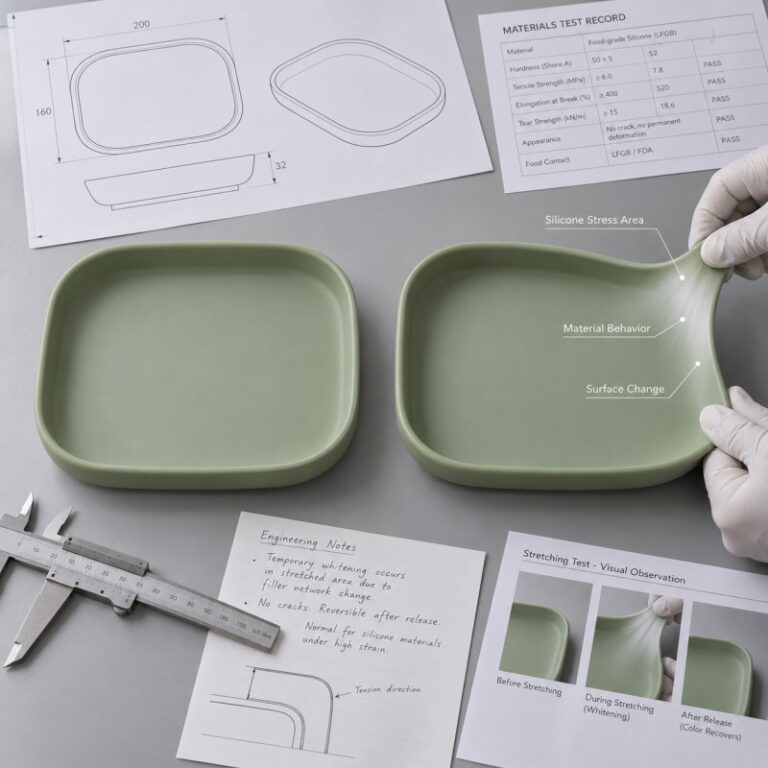
- Approved for food-contact applications under FDA (USA) and LFGB (Germany/EU) standards
Scientific studies show that silicone remains stable across a wide temperature range, reducing the risk of chemical migration during feeding.
Plastic: Additive-Dependent & Migration Risks
Most plastic baby tableware relies on plasticizers and stabilizers to maintain flexibility and durability. Under heat, repeated washing, or aging, these additives may migrate into food.
Common risks associated with plastic products:
- Degradation at high temperatures
- Microplastic shedding over time
- Odor retention and discoloration
- Shorter lifecycle due to cracking or warping
2. Heat Resistance & Sterilization Performance
Silicone baby feeding products can withstand temperatures from -40°C to 230°C, making them suitable for:
- Boiling water sterilization
- Steam sterilizers
- Dishwashers
- Microwave heating
Plastic alternatives often deform or degrade above 100°C, limiting sterilization methods and increasing hygiene risks.
For B2B buyers, silicone’s thermal stability translates into:
- Compliance with infant hygiene standards
- Reduced product returns
- Higher consumer trust
3. Hygiene, Mold Resistance & Easy Cleaning
Silicone has a non-porous molecular structure, which prevents:
- Absorption of liquids
- Bacterial growth
- Mold formation
- Food odor retention
Compared with plastic, silicone feeding products:
- Are easier to clean thoroughly
- Maintain appearance after long-term use
- Perform better in humid or high-use environments
4. Durability & Long-Term Cost Efficiency
Silicone is highly elastic and tear-resistant. It does not crack, chip, or become brittle over time.
From a commercial standpoint, silicone baby tableware:
- Has a longer product lifecycle
- Reduces replacement frequency
- Minimizes customer complaints
- Supports premium pricing strategies
5. Soft Touch & Baby-Friendly Design
Unlike rigid plastic, silicone provides:
- Soft, skin-friendly texture
- Reduced risk of mouth or gum injury
- Quiet, impact-resistant use (less noise when dropped)
This makes silicone especially suitable for:
- Teething-stage babies
- Baby-led weaning (BLW)
- First-stage feeding products
6. Sustainability & Environmental Considerations
Although silicone is not biodegradable, it is:
- Extremely durable
- Reusable for years
- Less likely to become disposable waste
7. Why Global Brands Choose LYA Silicone as Their Manufacturing Partner
With over a decade of experience in silicone molding, LYA Silicone provides full-service OEM/ODM solutions for baby feeding products:
- Food-grade & medical-grade silicone materials
- In-house mold design and tooling
- Liquid silicone rubber (LSR) injection molding
- Custom colors, logos, packaging, and certifications
- Compliance with FDA, LFGB, REACH, and RoHS


Our product range includes:
- Silicone baby bowls & plates
- Silicone spoons & forks
- Silicone bibs
- Silicone baby feeding sets
- Custom-designed baby tableware solutions


Frequently Asked Questions (FAQ)
Q1: Is silicone safer than plastic for baby feeding products?
Yes. Food-grade silicone is chemically stable, free from harmful additives, and approved for food contact by FDA and LFGB standards, making it safer than many plastic alternatives.
Q2: Can silicone baby tableware be sterilized?
Absolutely. Silicone withstands boiling, steam sterilization, dishwashers, and microwaves without deformation or chemical release.
Q3: Does silicone absorb food odors or stains?
High-quality silicone is non-porous and resistant to odor absorption and staining. Proper molding and surface treatment further enhance hygiene performance.
Q4: Is silicone suitable for private label and OEM projects?
Yes. LYA Silicone specializes in OEM and ODM manufacturing, offering full customization including molds, colors, logos, and packaging.
Q5: What certifications can LYA Silicone provide?
We support FDA, LFGB, REACH, RoHS, and other region-specific compliance documentation required by international B2B buyers.
Contact Information
LYA Silicone – Your Trusted Silicone OEM Partner
-
 Email: sale11@lyasilicone.com
 -
 Phone: +86-13420974883
 -
 Website: www.lyasilicone.com